
Everybody walks into their first Muay Thai class not knowing what is about to happen. That includes the coach who runs the session now. It includes the person who just competed at a regional level. It includes the most experienced practitioner in the room, who at some point put on a pair of borrowed gloves, had no idea which foot went in front, and felt exactly as visible and uncertain as you are about to feel.
The anxiety before the first session is universal and honest. It is not a sign that you are not cut out for this. It is a sign that you are about to do something that matters enough to make you nervous. That distinction is worth holding onto when you are standing outside the door trying to talk yourself out of going in.
Here is what actually happens inside a beginner Muay Thai class, from the moment you arrive to the moment you leave. No mythology, no gym-poster heroics. Just the real thing.
Before You Arrive
What to bring: hand wraps, shorts or training trousers, a t-shirt, water, and a small towel. Most gyms keep spare gloves for beginners, though the shared glove tradition is one of Muay Thai's least glamorous features. If you plan to continue past the first session, buying your own pair in the first week is a good decision both hygienically and psychologically.

Arrive twenty to thirty minutes early. Not to demonstrate enthusiasm, but because arriving late to a class you have never attended is disorienting, and arriving with time to spare gives you something more useful: a chance to settle. Find someone who works at the gym and confirm you are in the right place and at the right time. It sounds obvious and people skip this step all the time, standing awkwardly near the entrance wondering if the advanced fighters drilling in the corner are going to become their classmates.
Use the time before class to stretch. Some gyms run a thorough group warm-up and stretch at the start of every session, which means you are covered. Others launch straight into training and expect you to have taken care of it yourself. You will not know which type of gym you are at until the coach opens their mouth, so stretch anyway. Put your phone away and leave it away. Nobody learns faster by half-watching a bag session through their camera roll. Look around, watch the people who have clearly been doing this a while, and notice how they move. That is your first lesson, before anything has officially started.
Tell the coach or reception that it is your first class. This matters more than it sounds. A good coach will adjust how they introduce material, make sure you are paired with someone patient, and check in on you throughout the session. If you do not tell them, they may not know, and a well-meaning coach working with an unknown beginner can sometimes move faster than is useful for you. There is no badge of honour in not mentioning it.
When You Walk In
The gym will look like a gym. Bags hanging from the ceiling or frames, a ring if it is a serious training facility, mirrors on one wall, floor mats, and the particular smell of well-used leather and old canvas that becomes instantly familiar after a few sessions. If there are fighters sparring in the ring, ignore them. They are not thinking about you.
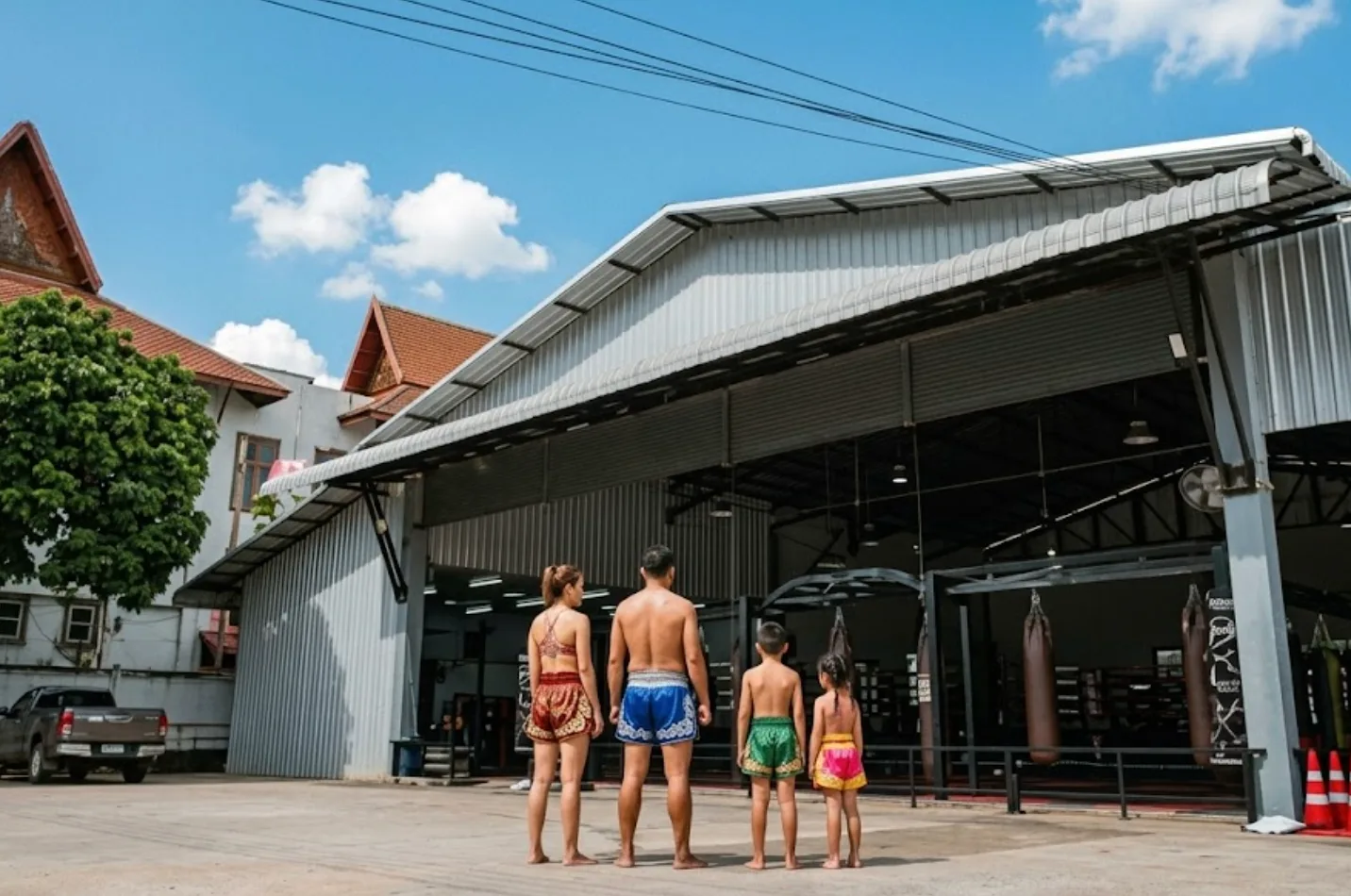
Find somewhere near the edge to put your bag, put your wraps on if you know how, and wait for the session to begin. If you do not know how to wrap, do not worry about it. Someone will show you before training starts if you ask.
Introduce yourself to the person nearest to you. Most Muay Thai practitioners are friendly, particularly to new faces. The culture of the sport, especially in Thailand where most of the traditions originate, is genuinely warm and welcoming to beginners. The intimidating gym exists but it is the exception. The majority of people training around you are hoping you come back next week, because a fuller class is a better class.
The Warm-Up
The session will begin with a warm-up, usually involving skipping, light jogging around the space, or dynamic movement drills. The warm-up at a Muay Thai gym is more demanding than the warm-up at a fitness class. By the time the actual technique work begins, your heart rate will already be elevated.
Skipping is woven into Muay Thai in a way that surprises most beginners. You will see advanced students arrive early, bypass the group entirely, and skip alone for fifteen minutes before class even starts. Some gyms will get everyone skipping together as part of the session. Either way, the rope is coming. Some people take to it immediately, some need weeks before it stops feeling like a punishment. When the rope whips your heel for the third time in a minute, or catches the back of your head in front of everyone, do not spiral. Half the people watching you have felt exactly that, probably that morning.
Do not try to keep up with the advanced students during the warm-up. Work at your own pace, signal to your body that something demanding is coming, and do not exhaust yourself in the first ten minutes of a session that still has fifty to go. Coaches expect new students to work at a different level. Nobody in the room is waiting for you to fail.
If something hurts during the warm-up, stop and tell the coach. This seems obvious and is regularly ignored by people too keen to make a good impression. A tweaked ankle in week one can set your progress back by three weeks. No first impression is worth that cost.
The Technique Work
After the warm-up, most beginner sessions move into technical drilling. The coach will demonstrate a technique and ask the class to practise it. Common starting points: the jab, the cross, the guard position, the basic stance and footwork, and often the roundhouse kick if the group can get there.
The technique will feel wrong the first time. It will probably feel wrong for several sessions. This is not a sign of any particular failing. Motor skills in combat sports take repetition to establish, and the coordination required for a decent roundhouse kick is significantly more complex than it looks when someone who has thrown ten thousand of them demonstrates it at speed.
The roundhouse kick specifically can take up to three months before the hip rotation feels natural and the strike lands with any real weight behind it. Three months. Give yourself permission to be in that process without expecting it to arrive early. What is happening underneath the frustration is worth understanding: your hips are getting stronger, your body is learning a new pattern, and the nervous system is quietly building the wiring that will one day make it feel effortless. You are not failing to perform the kick. You are building the foundation for it.
Focus on the core principle of each technique rather than perfection. Where is your weight? Where are your hands? Are you rotating your hip? Leave the fine detail for week three. The foundations are what matter in the first month, and the foundations are simple enough to work with quickly.
Pad Work
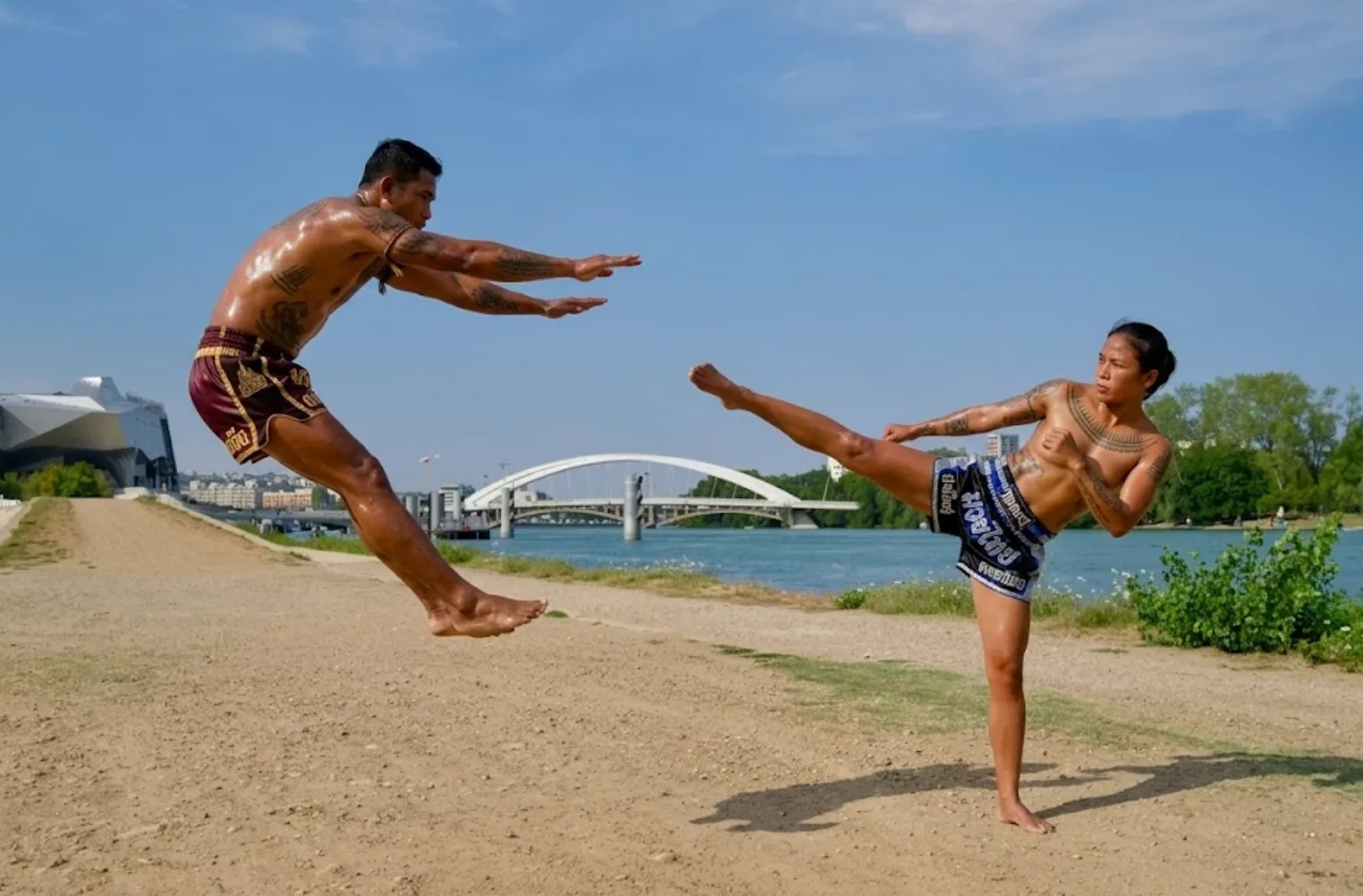
Most beginner sessions include a round or two of pad work, either with a coach holding the pads or a more experienced student. If it is with a coach, they will call the combinations and hold the pads in the correct position for you to strike. If it is with another student, the same principle applies.
Pad work tends to feel like the highlight of early sessions. You are working one-on-one with a real Muay Thai trainer, usually a fighter themselves, getting immediate feedback and real attention. It is addictive. Enjoy it for that. But the most honest tip for developing technique is this: watch other people. Not their fists, not just the point of impact. Watch the whole body. How the weight shifts before the strike, how the shoulder drops before the elbow, how the foot pivots. Then go to the bag or find space to shadow box and try to replicate what you saw. That is where technique actually gets built, in the quiet repetition between the coached rounds.
Hit with your body, not just your arm. The power in Muay Thai comes from the rotation of the hips and the commitment of the whole body into the strike. This is the kind of thing that is difficult to understand from a description and becomes obvious the first time you feel a well-thrown kick connect properly. Trust the instruction and try to rotate rather than reach.
The pad rounds are short, typically two minutes with a rest between them. They will feel long. This is normal. The cardiovascular demand of Muay Thai is significant even at technical drilling pace, and the body takes time to adapt to it.
Bag Work
Bag work is usually the most accessible part of the session for beginners because the bag does not move, does not hit back, and does not require a partner to hold anything correctly. Work on what the coach demonstrated in the technique section. Do not simply throw everything you have at the bag with no structure.
The bag gives back what you put into it, technically. A beginner who uses the bag to practise the jab-cross combination shown in the drilling section will leave the session with better mechanics than one who spent the same time throwing unstructured punches as hard as possible. Use it with intention and the investment compounds quickly.
If you are not sure what to work on, watch what the more experienced practitioners around you are drilling and mirror it at whatever level you can manage. Gyms are generally forgiving of this kind of quiet learning.
The End of Class
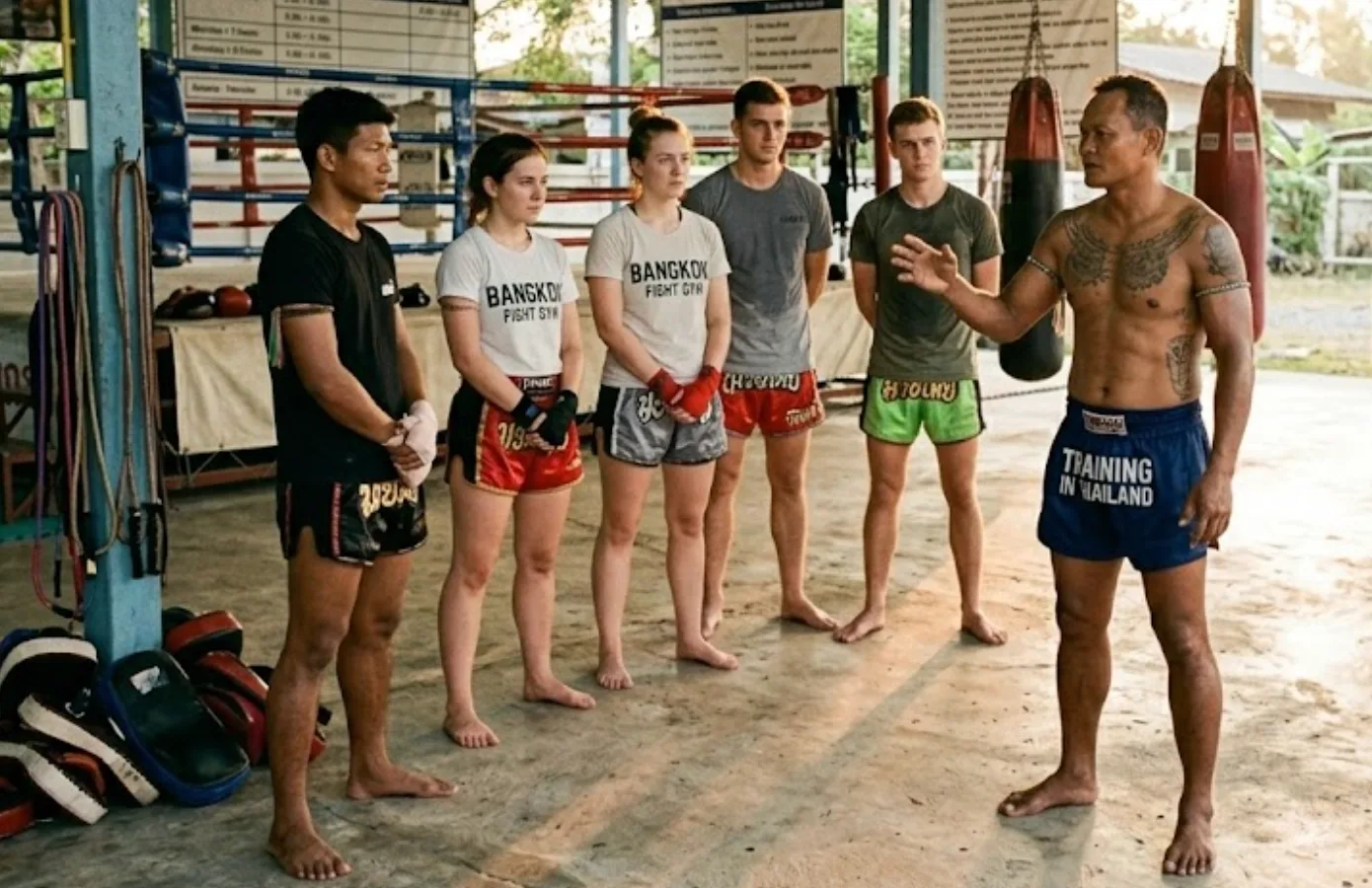
Most sessions end with conditioning work, some form of core exercises, and a cool-down. When the session closes, bow to the coach and to your training partners if the gym has that tradition, which a good gym should. The bow is not a formality. It is an acknowledgement of what just happened between people in a shared space, and that acknowledgement matters in a sport built on mutual respect.
Drink water. Eat something with protein within an hour if you can manage it. Tomorrow, you will be sore in muscles you were not aware had been working. The hip flexors and the calves tend to be the loudest. This is normal and passes within a few sessions as your body adapts to the demands.
The Most Important Thing You Do After the First Session
Book the next one before you leave. Not because the second session is uniquely essential, but because the habit of booking forward keeps you from talking yourself out of it during the two days of soreness that follow. If you are still deciding whether the gym you visited is the right one, our guide to choosing your first Muay Thai gym covers exactly what to look for and what to walk away from. The soreness will tell you that you have done something wrong. You have not. You have done something right, and the only way to get past the soreness is to go back.
After three sessions, the anxiety at the door drops considerably. After six, you will have found one or two training partners you naturally gravitate toward. After a month, the movements start to feel less strange and more familiar. After three months, there will be a moment in a pad round where something clicks, where the hip rotates properly and the kick lands with real weight behind it, and you will understand exactly why people come back to this for years.
That moment will not come on the first day. It does not need to. Show up, do the work, ask questions when you have them, and leave your ego outside the door in the most literal sense possible. The door opened once for you already. Trust that walking back through it is always the right call.
Frequently Asked Questions
What should I bring to my first Muay Thai class?
Hand wraps, shorts or training trousers, a t-shirt, water, and a small towel. Most gyms provide spare gloves for beginners, though buying your own in the first week is a good idea if you plan to continue. You do not need shin guards or a mouthguard for an introductory session, though a mouthguard is worth having once you move into any form of sparring.
Do I need to be fit before starting Muay Thai?
No. Every gym that handles beginners well expects new students to arrive at a range of fitness levels. The first sessions are designed to introduce technique, not to test your conditioning. The fitness comes through the training itself. Starting before you feel ready is almost always the right call.
Will I be expected to spar at my first class?
No. Any reputable gym introduces sparring gradually and only after a student has developed sufficient technical foundation. Your first session will involve drilling, pad work, and bag work. Sparring, when it is introduced, starts at a very light technical level. No serious gym throws a new student into hard sparring on the first day.
What if I have no idea how to wrap my hands?
Tell the coach or a more experienced student. Someone will show you. Hand wrapping is a fundamental part of Muay Thai and every practitioner has been taught at some point. It takes a few minutes to learn the basics and longer to develop a wrap you are genuinely happy with. Do not let it be a reason to avoid the class.
Is it normal to feel completely lost at the first session?
Completely normal. Every single person currently training Muay Thai walked into their first session not knowing what was happening and feeling visible in the worst possible way. The techniques feel strange, the coordination is difficult, and nothing comes naturally. This is how every physical skill begins. It passes with repetition, usually faster than you expect.