
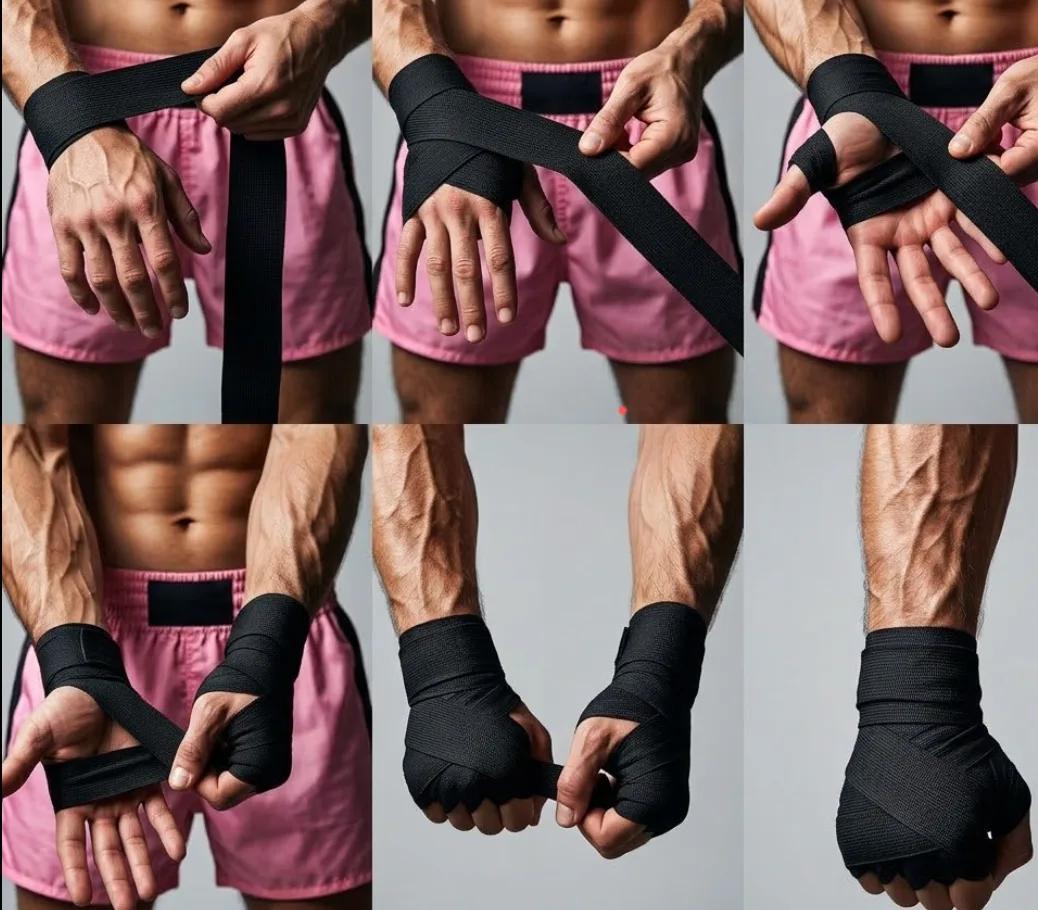
Every experienced Muay Thai practitioner has an opinion on hand wrapping. Ask five coaches how they wrap and you will get five different answers, each delivered with the kind of conviction that suggests the other four are dangerously wrong. They are all right about the same thing, even when they are doing it differently. The goal is the same regardless of method: protect your wrists, support your knuckles, and keep everything aligned under the glove when impact happens.
What changes is how each style achieves that goal, and which parts of the hand each approach prioritises. Your hands are your primary tools in Muay Thai. Protecting them is not optional, and learning to wrap them properly is one of the first practical skills the sport asks of you.
This guide walks through the main wrapping styles, explains what each one does and why, and covers the practical considerations that go beyond technique. Because there is a conversation about the wraps themselves that nobody in the gym is usually motivated to have until someone ends up with a cheap pair and discovers the problem the hard way.
Why the Wrap Matters Before the Glove Goes On
A boxing or Muay Thai glove distributes impact across a padded surface, but it does not stabilise the small bones and joints within your hand. The wrap does that job. Without a properly applied wrap, the wrist can flex under impact in ways that accumulate stress over time, and the knuckles absorb force without the compression that helps keep the hand's structure intact.
The wrist is the most important thing to protect. Wrist injuries from inadequate wrapping are common, insidious, and often slow to heal. A poorly supported wrist that rolls slightly on every punch across a hundred training sessions creates a chronic issue that can be much harder to resolve than a single acute injury. Getting your wrist locked is not an optional refinement. It is the whole point of wrapping.
Knuckle padding is secondary to wrist support but still meaningful. The extra compression over the knuckles reduces the abrasion and bone bruising that comes from extended pad and bag work. You will feel the difference after a long session on the heavy bag if you have ever trained with and without a proper wrap.
The Main Wrapping Styles
1. The Basic Wrist-First Wrap
This is where every beginner starts. The wrap goes around the wrist four or five times before moving to the hand and knuckles. It prioritises wrist support above everything else, which is exactly the right priority for someone new to the sport. The limitation is that the knuckle coverage is lighter, and more experienced practitioners often find the basic method insufficient for hard bag or pad work.
2. The Knuckle-Lock Wrap
The knuckle-lock approach spends more material on securing the knuckles before returning to the wrist. It creates a firmer fist platform by building compression specifically over the metacarpals. Fighters who do a lot of sparring or heavy bag work often prefer this because the knuckle protection is noticeably better. The trade-off is that wrist support requires careful attention to make sure the base coverage is still adequate.
3. The Figure-Eight Wrap
The figure-eight is the most commonly taught method in dedicated boxing and Muay Thai instruction. The wrap weaves between the fingers in a figure-eight pattern before covering the wrist and knuckles, which spreads the compression more evenly across the entire hand and locks the fingers into a more natural alignment. It takes longer to learn but produces a more consistent result across different hand sizes.
4. The Thai Style Wrap
Traditional Thai wrapping prioritises the wrist almost exclusively, using long strips of material wound tightly around the joint with relatively minimal coverage elsewhere. You see this style in older Thai gyms and in pre-fight preparation footage from the classic stadium era. It reflects a tradition where pad and bag work volume was very high and the wraps were practical tools rather than comprehensively protective ones. It works well when combined with the hand conditioning that comes from serious volume training.
The Knockoff Problem: Why Your Wraps Matter
Hand wraps are one of the gear items where the gap between quality and knockoff is most consequential and least obvious to a beginner. A cheap pair of gloves at least looks like a cheap pair of gloves. A cheap hand wrap looks almost identical to a quality one until you are three rounds into a heavy bag session and something starts to feel wrong about your wrist.
The primary issue with low-quality wraps is the material. Quality wraps use a cotton-elastic blend that stretches under load without losing tension or bunching. Cheap knockoffs use materials that feel similar when new but compress unevenly, lose elasticity quickly, and can actually create pressure points under the glove rather than distributing force across the hand as intended. A wrap that bunches inside the glove is worse than no wrap at all because it creates specific pressure points where none would otherwise exist.
The Velcro closure is another failure point. Budget wraps use Velcro that loses grip within a few months of regular washing. A wrap that comes undone mid-session is an annoyance. A wrap that was failing slowly and quietly for weeks before you noticed is a more serious problem, because by the time you notice, your wrist has been unsupported through every session in that period.
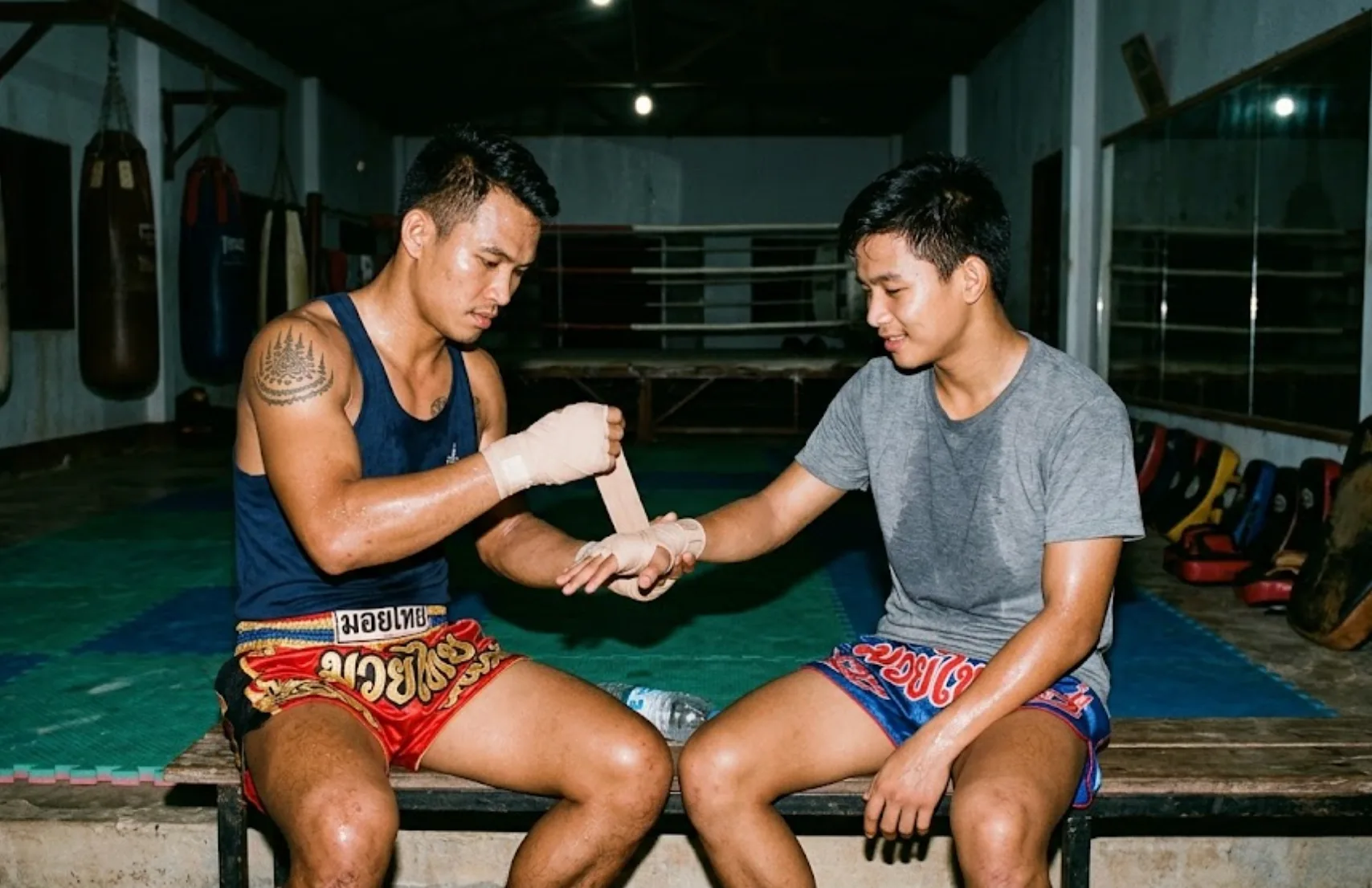
Buy wraps from established brands you can verify: Fairtex, Top King, Twins, Yokkao, Title, Venum at the reputable end of the mainstream market. The price difference between a genuine pair and a knockoff is small. The difference in how well they protect you is not.
Caring for Your Wraps
Wraps absorb sweat during every session. If you do not wash them regularly, they become a hygiene problem and the fabric degrades faster than it should. Wash your wraps after every session, either in a machine inside a mesh laundry bag to prevent tangling, or by hand. Let them dry completely before the next use. A damp wrap inside a glove is a good way to grow something you do not want near your face.
On the subject of glove hygiene and maintenance, there is a full guide on the site covering everything from airing methods to deodorising to when it is time to replace a pair. Read the glove maintenance guide here. The principles that apply to your gloves apply to everything in your kit bag, and your wraps are no exception.
Learn to wrap your own hands. Relying on a training partner or coach to do it every session is a habit that will catch up with you eventually. The first time you arrive at a session without your usual helper available, you want to know that you can do it yourself and do it properly. Ten minutes of practice at home with a tutorial video is all it takes to get the fundamentals right. After that, it is just repetition.
Frequently Asked Questions
How long should hand wraps be for Muay Thai?
180 inches, approximately 4.5 metres, is the standard length for adult hand wraps and the most versatile option for most hand sizes. Shorter wraps of around 120 inches work for smaller hands or lighter training. Longer wraps of up to 200 inches are available for fighters who want maximum coverage or prefer additional wrist support. When in doubt, go longer. You can always use less material but you cannot create more.
Should I wrap my hands for every training session?
Yes. You should wrap your hands for every session that involves bag work, pad work, or sparring. The wrist support that wraps provide matters even in lighter technical sessions, because small amounts of misalignment under impact accumulate over time. Making wrapping a consistent pre-training habit protects you from the kind of chronic wrist issues that develop gradually and are difficult to diagnose.
What is the difference between cotton and gel hand wraps?
Traditional cotton-elastic wraps are the standard and are preferred for most Muay Thai training. They mould to the hand, provide consistent compression across the wrist and knuckles, and are easy to wash and reuse. Gel wraps are quick-wrap alternatives that slip on like a glove and offer padding without the wrapping process. They are convenient but provide less wrist stability than a correctly applied traditional wrap, making them a compromise option rather than a true substitute.
How do I stop my hand wraps from unravelling during training?
If your wraps are unravelling during training, there are two likely causes. First, the Velcro closure has worn out, which happens with low-quality wraps after heavy use. Second, you may have too much tension in some areas and not enough in others, creating an uneven wrap that shifts under the glove. Practice wrapping with consistent, moderate tension throughout. If the Velcro is genuinely failing, replace the wraps.
Can I use hand wraps without gloves?
Wraps alone are not sufficient protection for any training involving significant impact. They provide wrist support and light knuckle compression, but without the padding of a glove, the bones and skin of the hand are exposed to direct impact force. Some fighters train bag work with wraps only for conditioning purposes, but this is an advanced practice and not something a beginner should attempt. Always use gloves over your wraps for pad work, bag work, and sparring.