

Muay Thai is a combat sport. Its techniques are designed to strike a human body with precision and force. It would be dishonest to open this piece by softening that fact or surrounding it with so many qualifications that it disappears. The sport involves contact, and contact carries risk.
The question is not whether Muay Thai carries risk. Everything worth doing carries some risk. The question worth asking is what kind of risk, at what level of exposure, and how much of it is genuinely within your control. The answers to those questions are more reassuring than most people standing outside a gym for the first time would expect.
Here is an honest account of what the dangers are, how they compare to other sports, and what separates the practitioners who train for decades without serious harm from the ones who accumulate damage they did not need to.

The Three Categories of Risk
The risks in Muay Thai are not one thing. They separate cleanly into three categories, each with a different profile and a different level of control.
Training injuries are the first category and the most common. Shin bruising from the early months of kicking, soreness in the hands and wrists, the occasional rolled ankle or strained hip flexor. These are the ordinary costs of learning a physically demanding sport. They are not fundamentally different from the injuries you accumulate playing football or taking up distance running. They are temporary, they teach you something, and they diminish as your body adapts.
Sparring injuries are the second category and the more significant one. Cuts above the eye from an elbow, a nose broken in a hard exchange, a knee to the thigh that leaves a deep bruise. These happen in sparring, and the frequency and severity depend almost entirely on the culture of the gym. In a gym with a thoughtful, technical sparring culture, these injuries are infrequent and minor. In a gym where sparring is treated as a proving ground and beginners are thrown into hard rounds regardless of experience, they happen with distressing regularity. The risk here is not inherent to the sport. It is a management and culture question.
Long-term neurological risk is the third category and the one that deserves the most serious treatment. Repeated head trauma is real, cumulative, and not fully reversible. Any striking art that includes head punching carries this risk. The honest position is to acknowledge it rather than dismiss it, and to understand that the way you manage your sparring, over years of training, will do more to determine your long-term neurological health than any other single variable.
How It Compares
Dangerous compared to what? This question matters, and the honest comparison is often surprising.
Rugby union and rugby league produce concussion rates that exceed most combat sports. American football, cycling, horse riding, and downhill skiing all carry injury rates that compare unfavourably with recreational Muay Thai. The image of Muay Thai as a uniquely dangerous activity comes partly from the visual nature of the sport, fighters bleeding in a stadium, the ceremony of controlled violence. It is more dramatic to watch than to participate in, particularly at recreational level.
Boxing arguably carries a higher head-injury risk than Muay Thai at the sparring level, because the presence of kicks, knees, and elbows in Muay Thai changes the dynamics of an exchange. Practitioners spend less time in the punching pocket, absorbing punches at close range, than boxers do. That does not make Muay Thai safe. It makes the comparison more nuanced than a surface reading suggests.
The most dangerous version of any striking martial art is not the sport itself. It is the specific gym culture that treats every session as a preparation for a world title fight and accepts that sparring partners will regularly sustain avoidable damage. That culture exists in some gyms. It is not representative of Muay Thai as a whole.
The Gym Culture Factor
This cannot be overstated. The gym you choose will determine your injury profile more than any other single decision you make.
Ask directly before you join: what does their sparring culture look like? How long are new students in the gym before they start sparring? Is sparring technical and controlled, or do they run hard rounds by default? A good gym has considered answers to these questions. A gym that looks at you blankly or tells you everyone just gets in and goes for it is telling you something important about how it manages its students.
The best gyms in Thailand, the ones with decades of reputation and fighters who train for years without unnecessary damage, are almost universally disciplined about sparring intensity. Hard rounds exist, but they are earned over time and managed with care. The culture of mutual respect that defines Muay Thai at its best extends into how people spar.

What You Can Actually Control
Several things are in your hands from the start.
Hand wrapping and gloves protect your hands and wrists. Shin guards reduce the impact on both you and your partner during sparring. A mouthguard is not optional if you are sparring. A headguard reduces the surface impact of clean shots without eliminating the rotational forces that cause concussion, but it is still worth wearing in harder sessions.
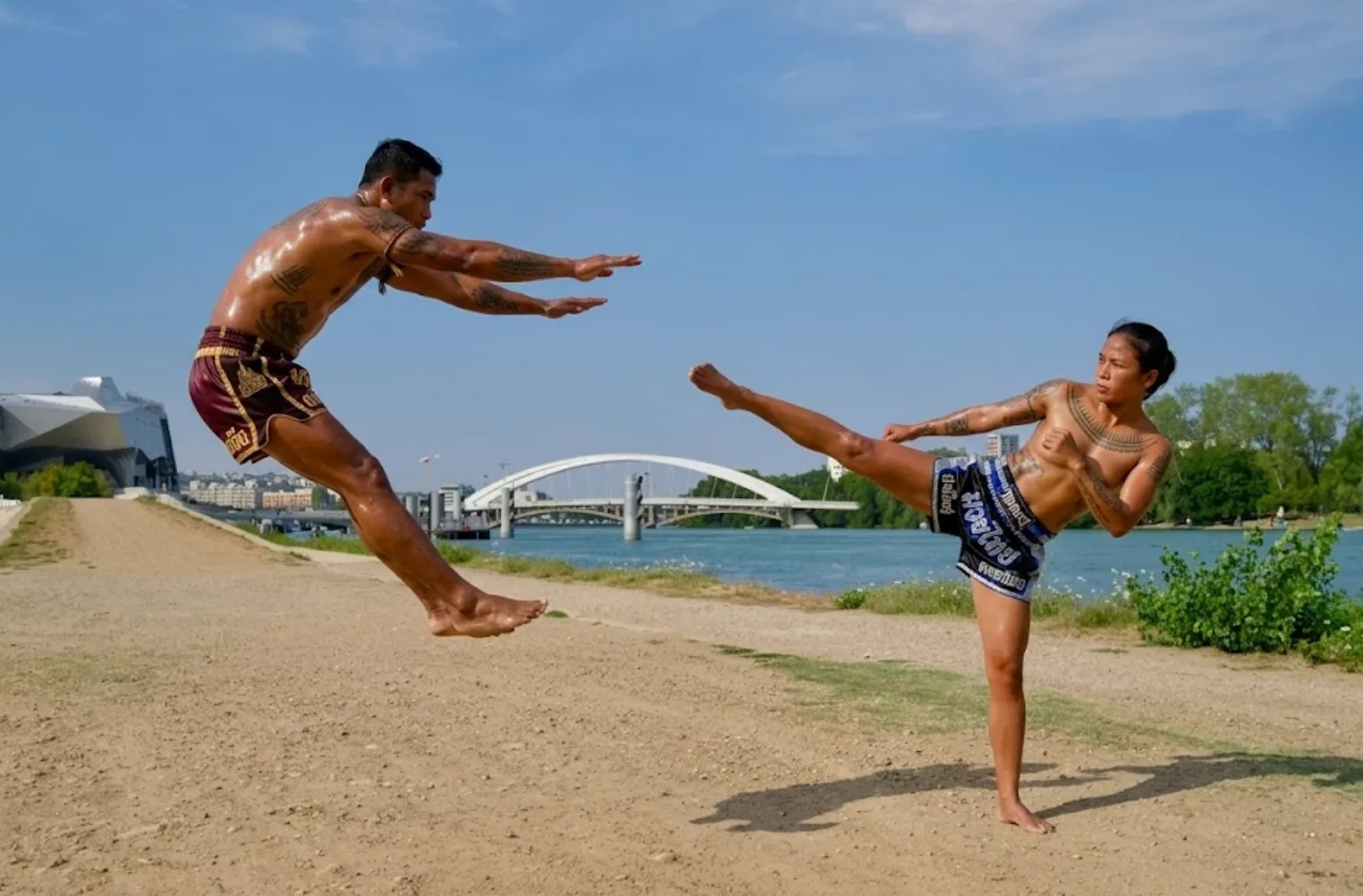
Beyond equipment, the two biggest controllable factors are your sparring intensity and your sparring frequency. Hard sparring once a week, in a disciplined gym, is a very different exposure to hard sparring four times a week in a gym with no culture of control. The former carries manageable risk. The latter accumulates damage at a rate that will eventually show.
Rest and recovery are not optional. The body repairs itself between sessions. Training through pain rather than around it tends to turn minor issues into significant ones. This is not a uniquely Muay Thai problem, but the culture of toughness that attracts people to the sport can make it harder to acknowledge when an injury needs rest.
The Honest Verdict
Muay Thai is not a dangerous sport in the way that phrase is usually meant when people ask the question. It is not reckless, not designed to injure, not a shortcut to a damaged body. It is a contact sport with real risks that are meaningfully within your control.
Train at a gym with an intelligent sparring culture. Build your volume gradually. Use appropriate protection. Take rest seriously. Be honest about where you are in your development before you start going hard.
The people who have trained for twenty years and carry few injuries did not get lucky. They trained with intelligence, in the right environment, and understood that the sport rewards consistency over recklessness. That outcome is available to anyone who approaches it the same way.
Frequently Asked Questions
Is Muay Thai dangerous for beginners?
Muay Thai carries contact risk, but the danger for a beginner is largely within your control. A reputable gym introduces new students to technique and drilling long before any sparring begins. Accumulated impact, joint stress, and sparring injuries are all risks that come with volume and intensity of contact, not with the act of learning the sport. Choose your gym carefully and the early months are significantly safer than people fear.
What are the most common Muay Thai injuries?
The most common training injuries are minor: shin bruising from kicking, hand and wrist soreness from punching, muscle soreness, and occasional foot or ankle strains. More serious injuries, including torn ligaments, fractures, and cuts, tend to occur in sparring and competition rather than in drilling or pad work. The frequency of serious injury is directly linked to sparring intensity and the culture of the gym where you train.
Is Muay Thai dangerous for the brain?
Repeated head trauma is the most significant long-term concern in any striking martial art. The honest answer is that frequent hard sparring over many years accumulates damage that no amount of technique can fully prevent. The risk is real and worth taking seriously. Most recreational practitioners who train at a sensible intensity, avoid hard sparring, and do not compete at high levels manage their exposure considerably. The people most at risk are those sparring hard multiple times a week for years, particularly in gyms without a culture of controlled sparring.
Is Muay Thai safer than boxing?
Muay Thai tends to produce fewer head injuries in sparring than boxing, partly because the presence of kicks, knees, and elbows means practitioners cannot spend as much time in the pocket throwing and receiving head punches as boxers do. The broader range of targets also changes the rhythm of exchanges. That said, both sports carry meaningful contact risk, and the culture of the specific gym matters more than the ruleset.
Can I train Muay Thai without sparring?
Yes. Many practitioners train extensively on pads, bags, and in drilling sessions without ever sparring. Skipping sparring reduces your exposure to contact significantly and is a perfectly valid approach, especially for people who are training primarily for fitness, technique, or personal development rather than competition. A good gym will never pressure you into sparring before you are ready, or at all if that is not your goal.