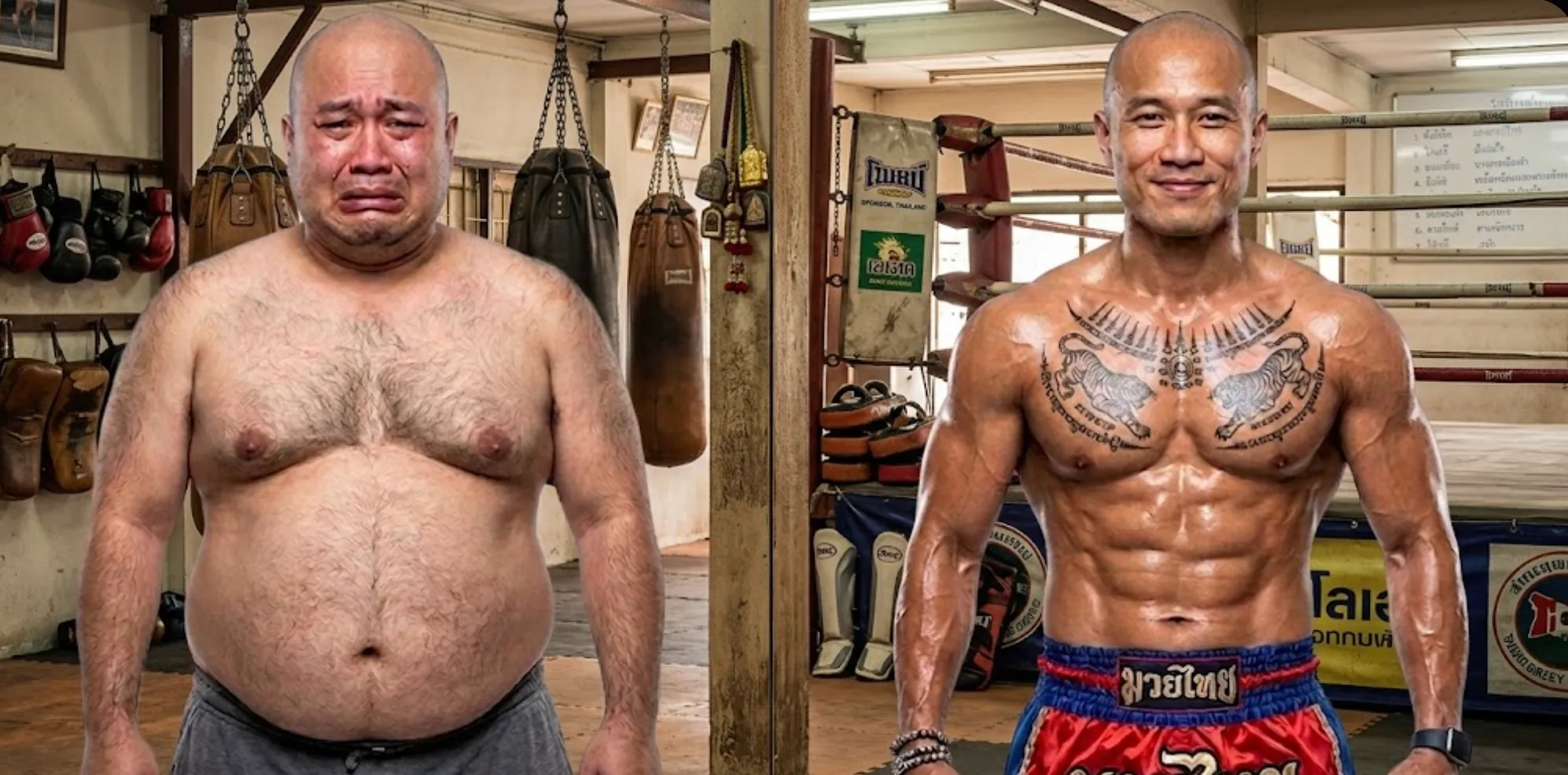
Every few weeks, somebody asks the question in a gym or a forum. They have seen the fighters on YouTube, the pad-work reels on Instagram, the documentary footage of Thai fighters running in the predawn dark, lean and fast and seemingly made of wire and purpose. They want to know if training Muay Thai will do that to them.
It is an honest question and it deserves an honest answer rather than the kind of gym-poster optimism that leads to disappointment three months in. The short version is that Muay Thai will change your body, genuinely and significantly, but probably not in the exact way you are picturing from those reels.
Here is what actually happens.
The Physique You Are Looking At
The fighters you are watching online are professional athletes who have been training since childhood. Many of them started between eight and twelve years old. By the time they look the way they look, they have a decade or more of twice-daily training behind them, a diet structured around performance, and bodies that have spent years adapting to a very specific set of demands.
That physique is real and it is extraordinary. It is not achieved through Muay Thai training alone. It is achieved through Muay Thai plus daily running plus a structured diet plus a training camp lifestyle that removes most of the choices that recreational practitioners make every single day. The comparison is worth naming clearly so it does not become a quiet source of frustration.
You are probably not going to look like a Thai stadium fighter. That is fine, because what you will look like is still considerably better than when you started, and it will have been earned in a way that means something.
What Muay Thai Actually Does to Your Body
Six to eight weeks of consistent training will change your cardiovascular fitness substantially. Three months of consistent training will produce body composition changes you can see. Six months of consistent training, three or more sessions per week, will develop a version of yourself that is leaner, more coordinated, and stronger in a functional sense than most people who spend equivalent time in a weights room.
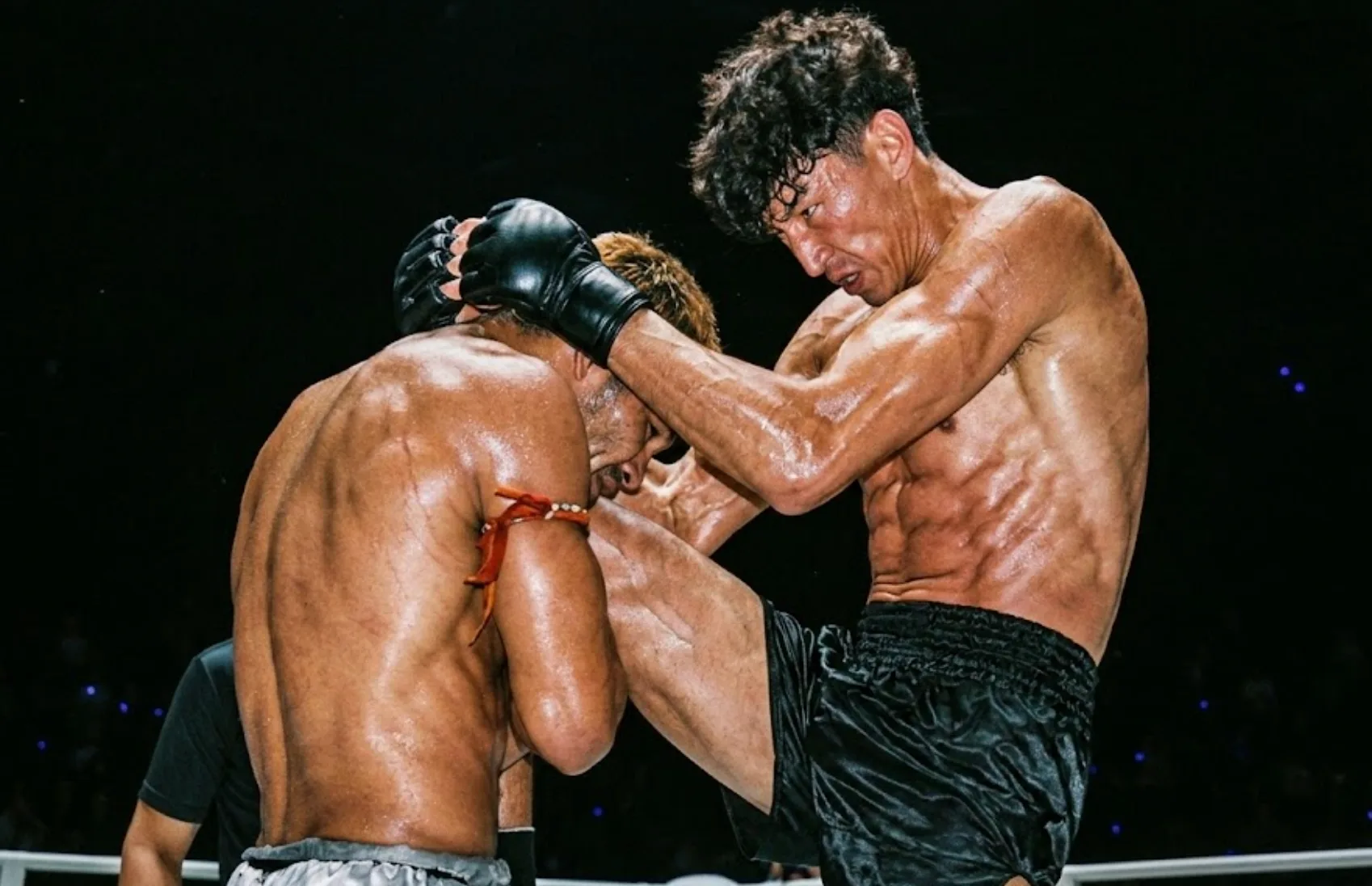
The sport engages muscle groups that most gym routines do not combine. The hip extension in a kick, the rotational power in a cross, the shoulder and arm load in the clinch, the core stability required to absorb and deliver strikes. All of it, every session, working together. The total-body demand is one of the reasons Muay Thai produces the physique it does over time.
What it does not do is isolate aesthetic muscle development the way bodybuilding does. You will not develop the same kind of mass that a dedicated weights programme builds. What you will develop is a leaner, more capable body. Defined, not swollen. There is a reason fighters look the way they do and powerlifters look the way they do. They are training for entirely different outcomes.
Diet Is Not Optional
This section always disappoints people, and here it is anyway. Muay Thai sessions burn between 600 and 800 calories per hour at serious training intensity. That is a meaningful number. It is also entirely possible to eat in a way that cancels it out.
You can train three sessions a week and gain weight if your diet does not support your goals. Many people do exactly this and are then genuinely baffled that the scales have not moved after two months of training. The training is working. The diet is working against it.
You do not need to be clinical about nutrition, especially in the first months when building the training habit matters more than optimising every meal. But some awareness of what you are eating around sessions, and what your overall daily intake looks like, makes the visible results arrive considerably faster. The training opens the door. The diet determines whether you walk through it. For a deeper look at how training and diet interact specifically around fat loss, Muay Thai for Weight Loss covers the numbers and the timeline in full.

What You Will Actually Look Like in Six Months
Leaner across the shoulders and arms from punching. Stronger through the hips and legs from kicking. Tighter through the core from the constant rotation and bracing. Better posture from the guard position. A kind of physical confidence in how you carry yourself that is hard to pinpoint but becomes obvious to people who know you well.
The visible changes come later than the functional ones. You will feel genuinely different inside three months. You will look noticeably different inside six. After a year of consistent training at three or four sessions per week, the change in your body composition is real and it is sustained.
This is not transformation-poster territory. It is something better: a body that has become more capable through use. One that looks the way it does because of what it can do, not because of how it was sculpted in isolation. That is a different relationship with your own body, and for most people who commit to it, a more satisfying one.
The Thing Nobody Usually Mentions
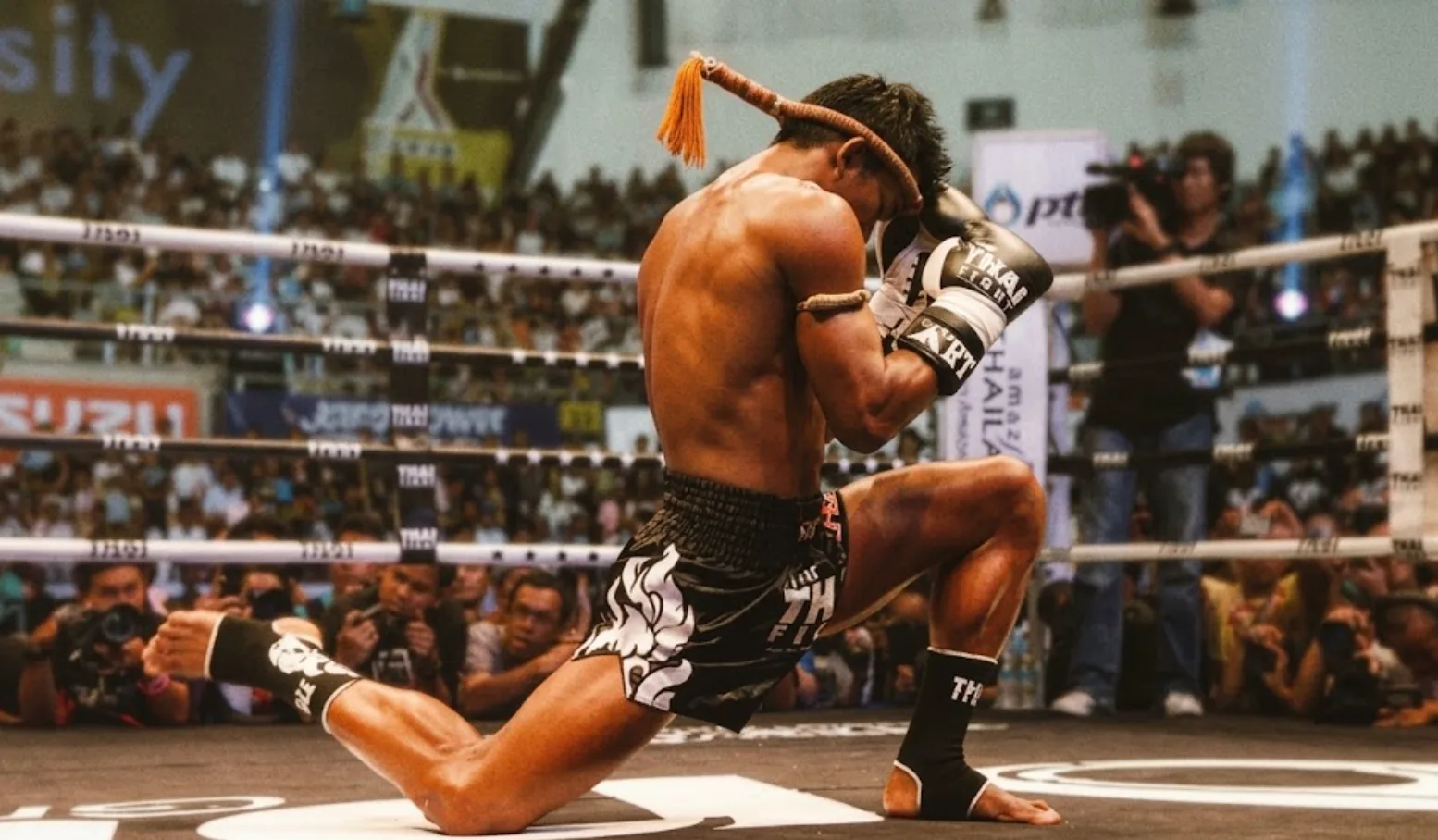
The people who train Muay Thai for years and look genuinely impressive are not, for the most part, primarily thinking about how they look. They are thinking about the next technique, the next pad session, the next progression. The physique is a by-product of a practice they love.
That is worth holding onto if you are starting with purely aesthetic goals. The goals that keep people training consistently across years are almost never aesthetic in the end. They are the pleasure of learning something genuinely difficult, the community of the gym, the satisfaction of a good pad round, the quiet pride of knowing you can do something that most people cannot.
Come for the body composition goals if that is what gets you through the door. You will almost certainly be distracted by something more interesting before very long. Most people are.

Frequently Asked Questions
Does Muay Thai build muscle?
Yes, though not in the way a dedicated weight training programme does. Muay Thai builds lean, functional muscle across the legs, hips, core, shoulders, and arms through the demands of striking, clinching, and conditioning. The result tends to be a defined, capable physique rather than the mass associated with bodybuilding.
How often do I need to train Muay Thai to see physical results?
Three sessions per week is the minimum for meaningful body composition change over time. Four to five sessions per week, combined with reasonable dietary habits, will produce noticeable results within three to four months for most people. Two sessions per week will improve your fitness and skill but produces slower visible change.
Why do Thai fighters look so lean?
Thai fighters train twice a day, run significant distances, eat modest diets high in protein, and have been doing this since childhood in many cases. Their physique reflects a training camp lifestyle that removes most of the choices recreational practitioners face every day. The comparison between a camp-based professional and a recreational student training three times a week is not a fair one.
Will Muay Thai help me lose belly fat?
Yes, as part of a combined approach. Muay Thai burns significant calories and builds the kind of full-body lean muscle that elevates your resting metabolism over time. Fat loss in specific areas is determined by overall calorie balance rather than the type of exercise, but consistent Muay Thai training combined with reasonable dietary awareness will reduce body fat across the body, including the midsection.