
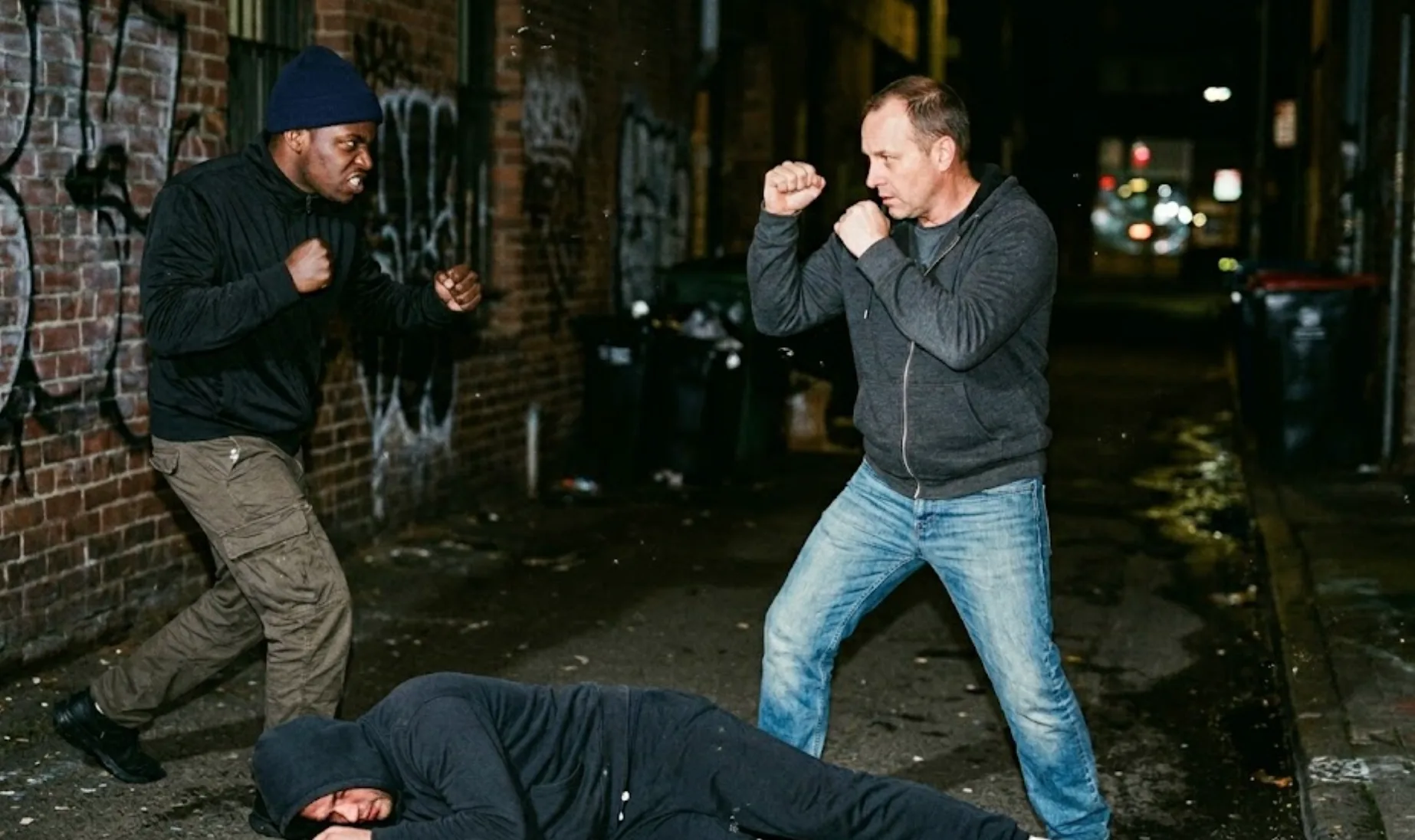
It is one of the most frequently searched questions in Muay Thai, and it deserves an honest answer rather than a martial arts forum argument or a YouTube fight compilation. People ask whether Muay Thai is effective in a street fight for different reasons. Some are curious about the practical value of what they are training. Some are new and trying to decide whether the sport is worth committing to. Some have had an experience that made them think about it for the first time.
The question is worth taking seriously even if the answer requires more nuance than a yes or no. Muay Thai is a combat sport built around real striking, real clinch work, and real pressure. The techniques are tested under resistance in sparring. Its practitioners are used to being hit and hitting back with intent. There is something to be said for that, and it would be dishonest to pretend otherwise.
But street confrontations are not Muay Thai. They are not fights in any organised sense of the word. Understanding what the training actually prepares you for, and what it does not, is worth considerably more than a clean answer to a messy question.
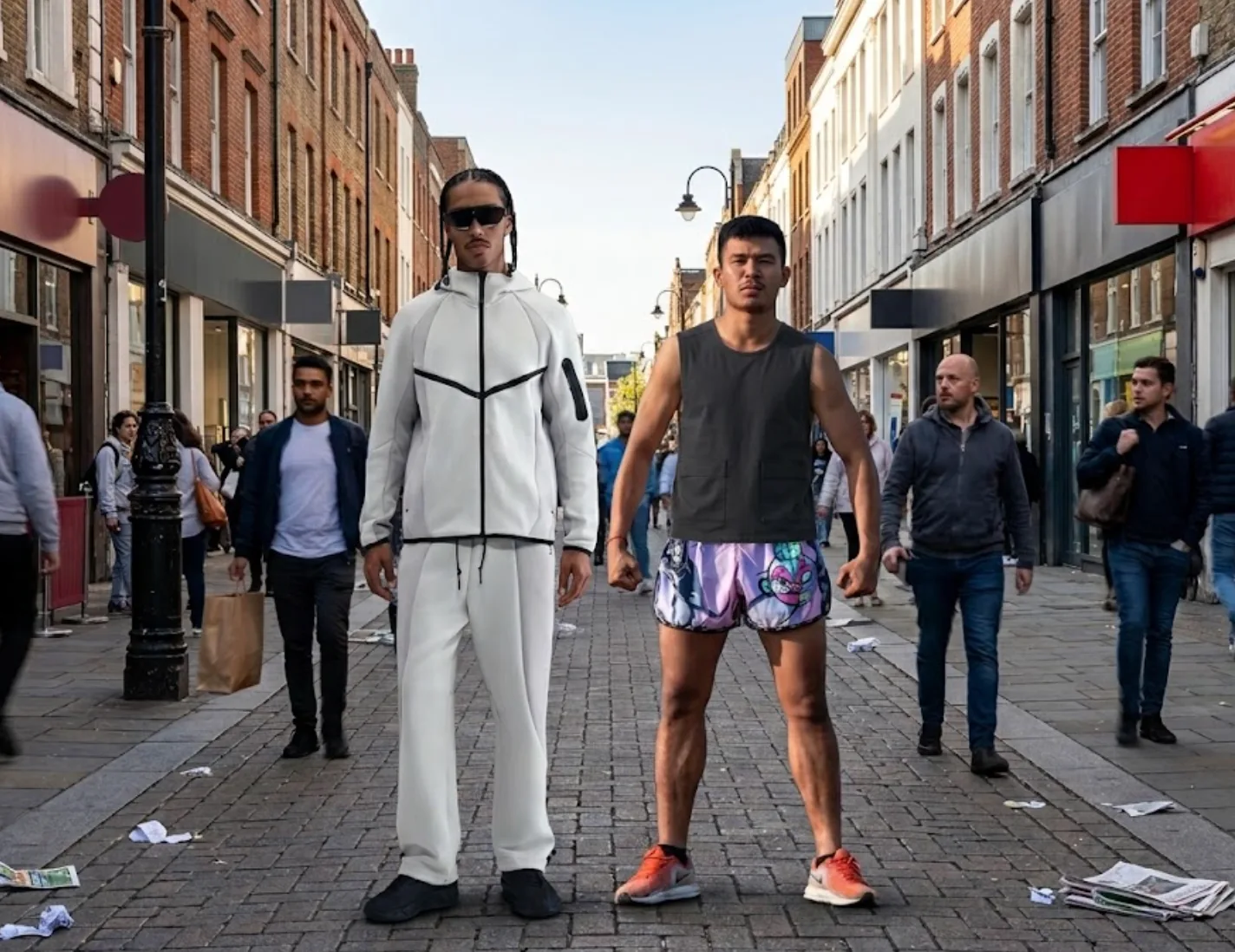
What Muay Thai Actually Gives You
The striking range is genuine. Muay Thai trains you to generate real power from the hands, elbows, knees, and feet. The techniques are built for contact, not demonstration, and they are practised against resistance rather than in the air. An experienced practitioner who has trained seriously for a year or two has thrown and received enough real strikes under pressure that the mechanics are ingrained in a way that deliberate thought cannot disrupt.
The clinch work is particularly relevant outside a controlled environment. Most untrained confrontations close to short range quickly, and Muay Thai's clinch system, using neck tie control, arm position, and knee strikes, is one of the most practically applicable skill sets in any striking art for that specific scenario. The clinch is where Muay Thai lives and where most untrained people have almost nothing.
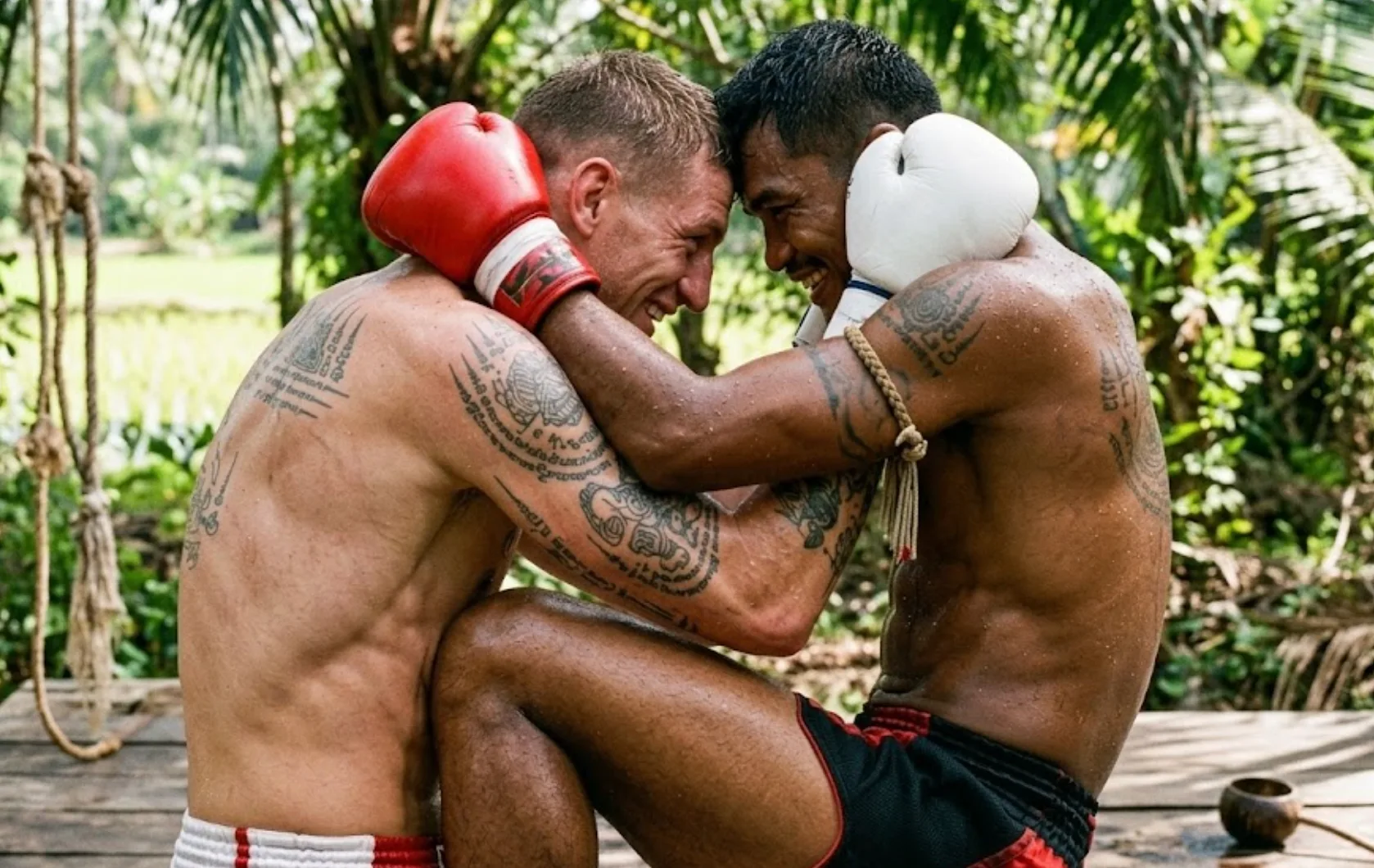
The conditioning matters too. A practitioner who has spent time in hard sparring has trained under genuine pressure, managed adrenaline in real time, and been hit hard enough to know they can absorb it and keep functioning. That reference experience is not trivial. Most people who have never trained any combat sport have no point of comparison for what it actually feels like to be struck with intent. Having that reference changes how you respond to it.
What Street Confrontations Are Not
A street confrontation is not a round-based contest between two people of similar ability in a controlled environment. It involves unknown variables in every direction. The surface underfoot. Other people present. Weapons. Multiple attackers. What happens immediately after. The legal context of what constitutes reasonable force and what does not.
Muay Thai training does not cover all of these variables, and no single martial art does. The claim that any system fully prepares you for the unpredictability of an uncontrolled confrontation is worth treating with scepticism. The best fighters in the world have also been blindsided, ambushed, and overwhelmed in situations that bore no resemblance to their training environment.
What training provides is an edge in the specific scenario where two people are exchanging strikes at close range with no weapons involved and some degree of mutually understood conflict. That scenario exists. It is not the only scenario, and it is probably not the most common one.
How It Compares
Muay Thai tests better than most traditional karate styles, wing chun, or classical martial arts that do not involve live resistance training. The sparring culture within Muay Thai means that practitioners are accustomed to being struck, to closing distance under pressure, and to the reality that real contact feels nothing like hitting air. The distinction between live-resistance training and cooperative drilling is a consistent finding in martial arts and combat sports research. Practitioners who regularly spar against resisting opponents develop faster, more reliable conditioned responses than those whose training never involves unpredictable incoming contact.
It compares well to boxing for striking range and conditioned response, though boxing training addresses only the upper body. Against a practitioner of a grappling art, Muay Thai has a real vulnerability once the confrontation goes to the ground, which in uncontrolled environments tends to happen quickly and unpredictably.
A year of serious Muay Thai training makes you considerably more capable than you were before it. That is a straightforward assessment. It is also not a small thing, because most people who have never trained anything at all are operating from a very low baseline.
The Mental Component Is Under-Discussed
The most overlooked benefit of what Muay Thai training provides in any confrontational scenario is not a specific technique. It is familiarity with pressure. Most people who have never trained a contact sport have never been in a situation where someone is actively trying to strike them hard and they must respond clearly while their heart rate operates at near-maximal capacity. Research on Muay Thai's physiological demands documents heart rates consistently above 85 per cent of maximum during competitive sparring, placing it among the most cardiovascularly demanding striking arts studied.
Muay Thai sparring normalises that experience to a meaningful degree. The person who has been through hard rounds and kept their composure has a reference point that most people simply do not have. The freeze response that affects untrained people in genuine confrontations is reduced through controlled, progressive exposure to pressure. This is the mechanism behind what academic psychology calls stress inoculation training, a framework developed by Donald Meichenbaum in the 1980s and since applied in military, emergency service, and elite sport contexts. Not eliminated. Reduced. That is a real advantage.
And that adaptation is not transferable from YouTube. It comes from showing up, putting gloves on, and going through the experience with a real person on the other side.
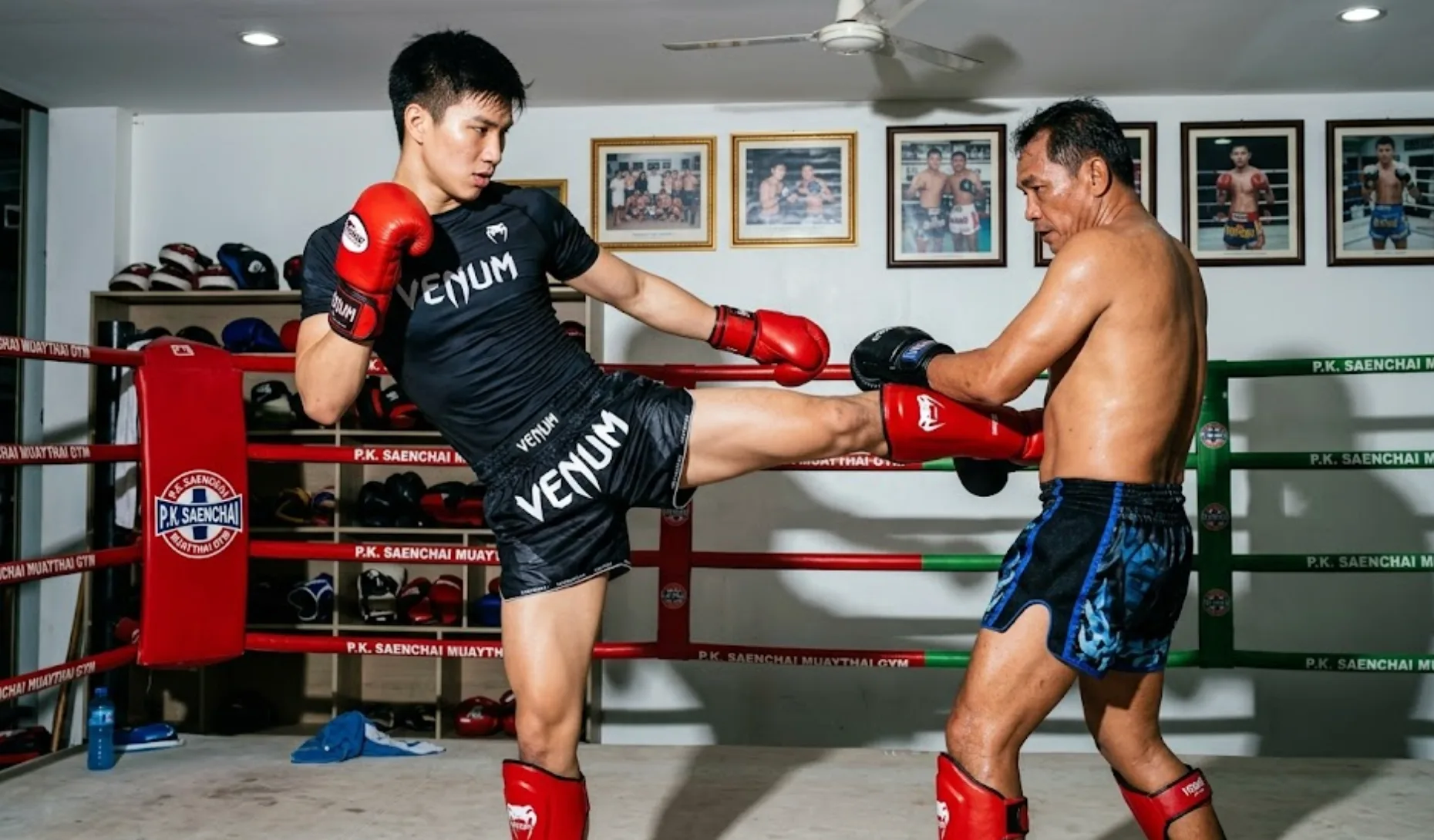
The Question Worth Asking Instead
Whether Muay Thai is effective in a street fight is ultimately a less interesting question than what it actually does for the people who train it. It makes you physically capable, mentally composed under pressure, and significantly more confident in your own body. It builds a community around shared effort and honest confrontation with your own limits.
The violence of the question misses the point of the practice. Train because the sport is extraordinary to learn. Train because the community it builds is worth having. Train because it asks something real of you every single session and rewards you for answering.
Whether that capability is ever tested in a context you did not choose is beside the point. If it is, you will be better prepared than if you had never trained at all. That is probably the most honest answer this question is ever going to get.
Sources
- Meichenbaum, D. Stress Inoculation Training: A Preventive and Treatment Approach. Pergamon Press, 1985. The foundational academic text establishing progressive controlled exposure to stressors as a method for building psychological resilience. Widely applied in military, emergency services, and elite sport preparation.
- Bracha, H.S., Ralston, T.C., Matsukawa, J.M., Williams, A.E., Bracha, A.S. "Does 'Fight or Flight' Need Updating?" Psychosomatics, 45(5):448–449, 2004. Documents the freeze response as a distinct and primary human reaction to sudden threat, separate from fight-or-flight, and explores its modification through habituation and repeated exposure.
- Ouergui, I., et al. "Time Motion Analysis and Physiological Responses of Muay Thai Fighting." Journal of Strength and Conditioning Research, 2014. Physiological documentation of heart rate and metabolic demands during Muay Thai training and competition, confirming near-maximal cardiovascular output during sparring rounds.
- Buse, G.J. "No Holds Barred Sport Fighting: A 10 Year Review of Mixed Martial Arts Competition." British Journal of Sports Medicine, 40(2):169–172, 2006. Comparative analysis of training methodologies in combat sports, including the documented performance gap between live-resistance practitioners and those training exclusively through cooperative drilling.
Frequently Asked Questions
Is Muay Thai good for self-defence?
Muay Thai provides genuine self-defence capability. The striking range covers hands, elbows, knees, and feet. The clinch work is particularly applicable at close range. Most importantly, the sparring culture means practitioners train under real pressure against resisting opponents, which develops composure and conditioned responses that are absent in arts that do not test techniques live.
How does Muay Thai compare to other martial arts for street situations?
Muay Thai tests better than most traditional martial arts that do not involve live resistance training. Its sparring culture produces practitioners who are accustomed to real striking pressure. It is less comprehensive than mixed approaches when ground grappling is involved, as Muay Thai does not train extensively for what happens after a takedown.
What is the biggest weakness of Muay Thai in a real confrontation?
The biggest gap is ground work. Street confrontations frequently end up on the ground, and Muay Thai does not train grappling or ground positioning. A practitioner with no grappling background who ends up on the floor against someone with wrestling or jiu-jitsu experience is at a significant disadvantage.
Does Muay Thai training build mental composure under pressure?
Yes, and this is arguably more valuable than any specific technique. The sparring culture exposes practitioners to genuine adrenaline, real incoming strikes, and the need to think clearly while their heart rate spikes. This reduces the freeze response that affects most untrained people in confrontational situations. It does not eliminate it, but it reduces it meaningfully.