

Most people who ask whether Muay Thai is good for weight loss are really asking two separate questions. The first is whether the training burns enough calories to make a meaningful difference. The second is whether they will look different after a few months of it. Both deserve a proper answer, and neither is as straightforward as a gym poster would have you believe.
Muay Thai is one of the most physically demanding combat sports on the planet. A serious session, cycling through pad rounds, bag work, drilling, and sparring with minimal rest, puts more demand on your cardiovascular system than most people encounter in any other form of exercise. The calorie burn is real and it is significant.
But calorie burn alone does not tell the whole story. What Muay Thai actually does to your body over time is more interesting, and more nuanced, than most fitness articles are willing to admit. Here is an honest account.
What a Muay Thai Session Actually Does
Estimated calorie burn: 600 to 900 calories per hour, depending on intensity, body weight, and how hard you actually work. A pad session at full effort sits at the high end. A technical drilling session sits lower. The number matters less than the cumulative effect over weeks of consistent training.
The work is interval-based by nature. Rounds of two or three minutes of high-intensity effort, followed by sixty-second rests, repeating. This is a training pattern that consistently produces superior fat-burning results compared to steady-state cardio. Your heart rate spikes and recovers, spikes and recovers, and that cycling effect keeps your metabolism elevated for hours after training ends.
The muscles involved are not small ones. Muay Thai uses your legs, hips, core, shoulders, and arms in every session. The hip extension in a kick, the rotation in a cross, the full-body engagement of a clinch exchange. The compound demand builds functional muscle while burning through fuel reserves. You are not isolating a muscle group. You are using your whole body as a weapon.

The Honest Role of Diet
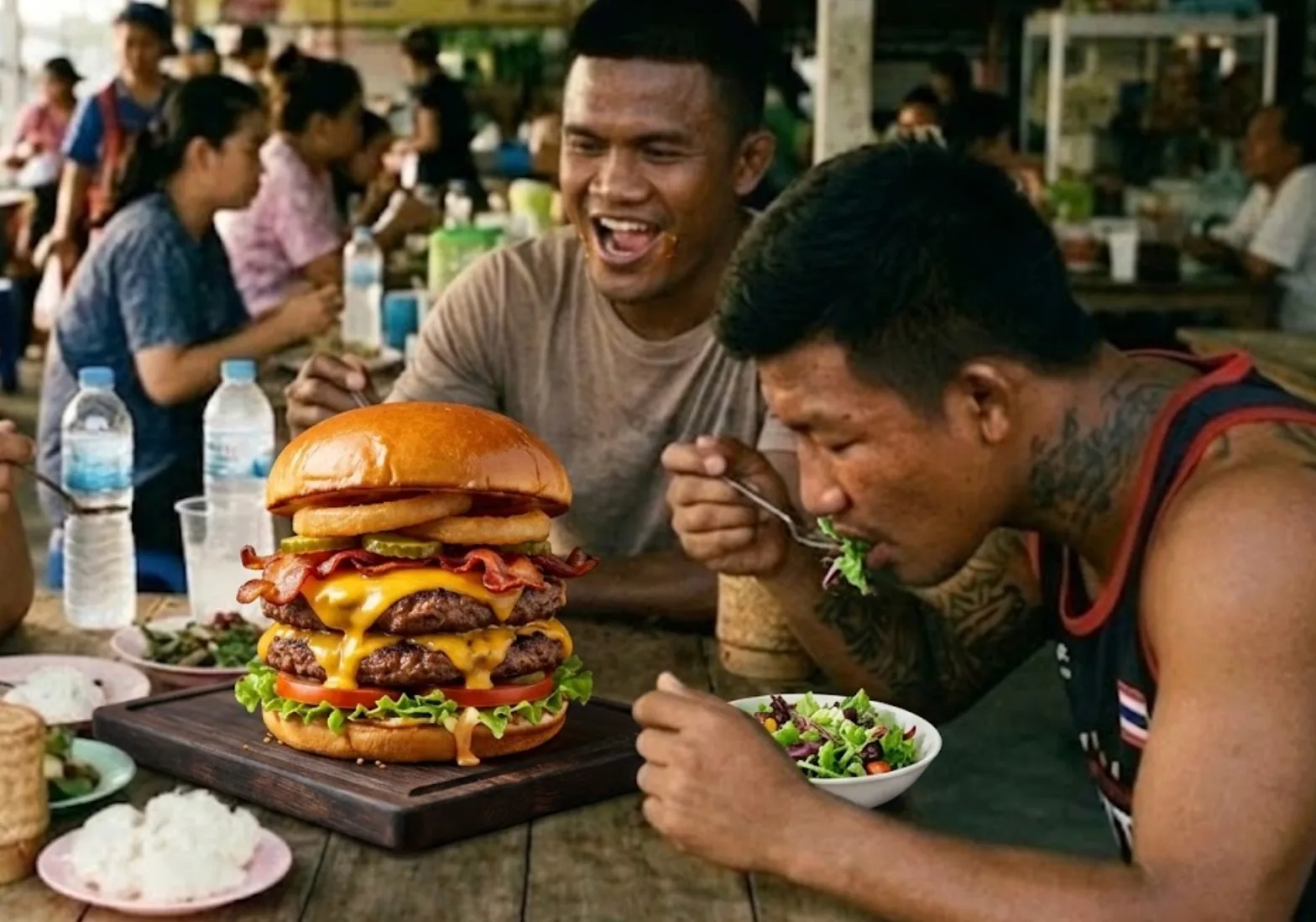
Here is where most fitness conversations fall apart, and this one is not going to. You can train Muay Thai four times a week and gain weight if your diet does not support your goals. The training burns calories. What you eat around it either enables the fat loss or cancels it out.
Thai fighters who are genuinely lean are not lean because of training volume alone. The traditional camp lifestyle is modest on food, high in protein, and stripped of most of the choices recreational practitioners make every single day. It is not a fair comparison, and pretending otherwise misleads people who are starting from a very different context.
If you are training three sessions a week and eating without much structure, you will get significantly fitter. Your cardiovascular base will improve. Your strength and mobility will develop. But if your goal is specifically fat loss at speed, the training is only one half of the equation. What happens in the kitchen has more influence on the number on the scale than what happens in the gym. That is not a pessimistic statement. It is a useful one.
What Body Composition Changes Actually Look Like
This is the more useful question than the scale number. Muay Thai does not make you bulky. It tends to produce a lean, functional physique over time. Defined shoulders, a stronger core, leaner legs. The shoulders and arms develop through punching. The legs and hips develop through kicking. The core develops through everything, because everything in the sport runs through it.
What changes first is not how you look. It is how you move. After six weeks of consistent training, most new students notice they feel lighter on their feet, that climbing stairs requires noticeably less effort, that they can sustain physical output for longer before gasping. The visible physical changes follow the functional ones, typically arriving between eight and twelve weeks in for someone training consistently.
The changes are not dramatic in the short term. Anyone who tells you Muay Thai will give you a fighter's physique in three months is selling you something. What it gives you, over time, is a body that is genuinely capable. That is a different thing from a purely aesthetic goal, and in most people's experience, a better one. If the body composition question is your primary focus, Will Muay Thai Get You Ripped takes a direct look at what the training actually builds.
The Gap Between Thai Fighter and Recreational Practitioner
It is worth being direct about this because the comparison gets made constantly. Thai fighters who live at training camps, run twice a day, train two full sessions a day, eat clean, and have been doing this since childhood develop a very specific physique. It is extraordinary and hard-won over years of sacrifice most people never experience.
A recreational practitioner training three times a week in Bangkok, London, or Los Angeles will not develop that physique. This is not a failure. It is simply a different context. What the recreational practitioner develops is something genuinely valuable: improved cardiovascular fitness, functional strength, better coordination, real confidence in their own body, and an athletic practice that rewards commitment across years.
Set your expectations for the life you are actually living, not for the camp in Isaan where a fighter runs at 5am before most of the world has had breakfast. Both are valid approaches to the sport. They are just different things entirely.

What Training Frequency Actually Means
Two sessions a week will improve your fitness. Three sessions a week will start to produce visible change over a few months. Four to five sessions a week, combined with reasonable dietary awareness, will produce meaningful body composition changes within three to four months for most people.
The gap between two sessions and four sessions is significant. It is not simply twice the training. The cumulative metabolic effect, the increased skill development that allows you to train harder within each session, and the consistency of effort compound in ways that two sessions a week cannot replicate. Frequency is the variable with the most leverage.
One thing that experienced coaches will not always tell you upfront: the first two months are the hardest and the least visually rewarding. Your body is adapting to a new demand. You may retain water, you may not see the scale move much, and you may feel like the effort is not producing results. This is normal and it passes. The practitioners who get the body composition results they came for are almost always the ones who trained through the first two months without requiring the scale to validate their effort.
What You Can Actually Expect
Train consistently, pay some attention to what you eat, and within three to four months you will be lighter, leaner, and significantly fitter than when you started. After six months, you will notice differences in how your clothes fit, how you carry yourself, and how much effort familiar activities require.
After a year of consistent training, the changes are real and sustained. Not a transformation poster. Not a before-and-after photograph designed to sell a programme. A version of yourself that is genuinely more capable, more disciplined, and more comfortable in your own skin.
That is what Muay Thai actually does to your body. It does not happen on a marketing timeline, and it does not require moving into a camp and eating rice with fish sauce at every meal. It requires showing up, being consistent, and trusting a process that has been developing strong, capable people for a very long time. The work will show eventually. It always does.
Frequently Asked Questions
How many calories does Muay Thai burn per session?
A serious Muay Thai session burns between 600 and 900 calories per hour depending on your body weight and training intensity. Pad rounds at full effort sit at the high end. Technical drilling sessions sit lower. The interval-based nature of the training, alternating high-intensity rounds with short rests, also elevates your metabolism for several hours after the session ends.
How long does it take to see results from Muay Thai training?
Most people notice functional improvements, better cardiovascular fitness and lighter movement, within six weeks of consistent training. Visible body composition changes typically appear between eight and twelve weeks for someone training three or more sessions per week. After six months of consistent training with reasonable dietary awareness, the physical changes are meaningful and sustained.
Is Muay Thai better for weight loss than running?
Muay Thai burns significantly more calories per hour than steady-state running and engages the full body rather than primarily the legs. The interval structure of the training, high-intensity rounds followed by short rest, also produces a superior metabolic effect compared to sustained moderate-intensity cardio. For most people, it is also more engaging, which means they are more likely to continue long-term.
Will Muay Thai make me bulky?
No. Muay Thai builds lean, functional muscle rather than the kind of mass associated with dedicated weight training. The physique it tends to produce over time is defined and capable, with strong shoulders, a tighter core, and leaner legs. It does not isolate muscle groups for aesthetic development the way bodybuilding does.
Do I need to change my diet to lose weight with Muay Thai?
Yes. The training burns significant calories, but diet determines whether that deficit produces fat loss or simply allows you to maintain your current weight while getting fitter. You can train three sessions a week and eat in a way that cancels the calorie burn entirely. Some dietary awareness alongside the training dramatically accelerates visible results.