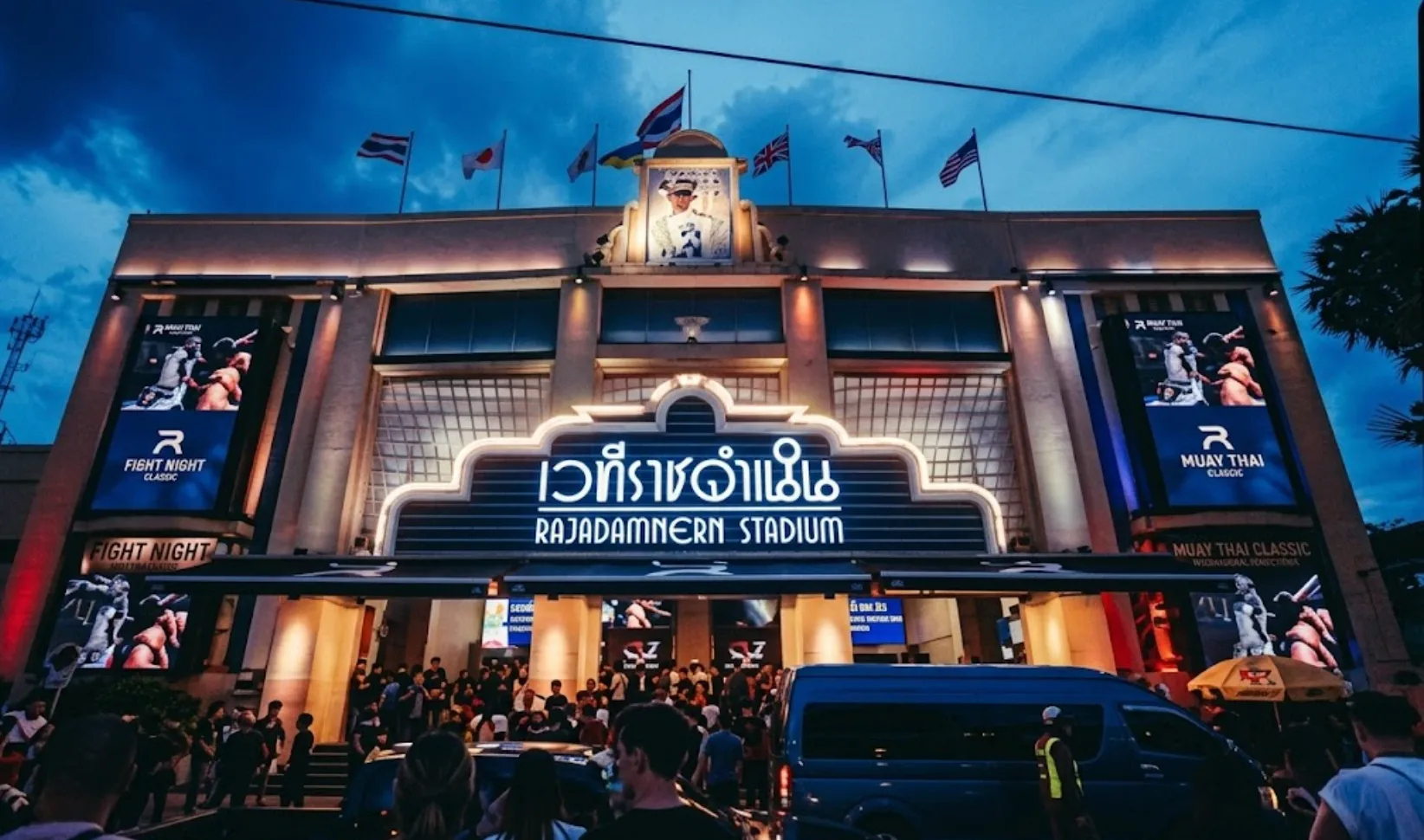
Bangkok has two stadiums that carry the full weight of Muay Thai history. Lumpinee is better known internationally, partly because of its association with ONE Championship and the frequency with which its fights appear on global streams. But Rajadamnern was first. It opened in 1945, over a decade before Lumpinee, and the context in which it was built tells you something important about what Muay Thai meant to Thailand at a particular moment in history.
Rajadamnern sits on Ratchadamnoen Nok Avenue, the wide ceremonial boulevard that connects the Royal Palace to the outer ring road. The avenue itself was a deliberate piece of urban planning, designed in the early twentieth century to show European visitors that Bangkok was a capital city with civic ambition. The Champs-Elysees comparison is one that locals and visitors have made since the road was completed.
A boxing stadium on that boulevard was not an accident. It was a statement. Understanding the statement requires a short trip into the political context of 1940s Thailand, because the story of Rajadamnern is, in part, the story of a nation making an argument for its own sovereignty through sport.
The Colonial Context: Muay Thai as Soft Power
By the mid-twentieth century, Southeast Asia had watched its neighbours fall under European colonial rule. Vietnam, Cambodia, Laos, Burma, Malaya, the Philippines. Thailand, then known as Siam, managed to remain nominally independent through a combination of diplomatic skill, strategic concession, and the careful cultivation of a modernised image.
Sport was part of that image-making. A nation that could host international sporting events in a purpose-built, well-ordered stadium was presenting itself as modern, organised, and capable of managing its own affairs. Rajadamnern, opened on the country's most ceremonially significant boulevard, was a visible piece of that argument. Muay Thai was not just a fighting art. It was evidence of a civilisation.
The stadium was built with government backing and positioned to demonstrate that Thai combat sport had a home worthy of it. Foreign visitors, diplomats, and reporters who attended fights at Rajadamnern were seeing Muay Thai in a context that deliberately invited comparison with established European sporting venues. The architecture said: we belong at this table.
The Stadium Itself: What You Find When You Go
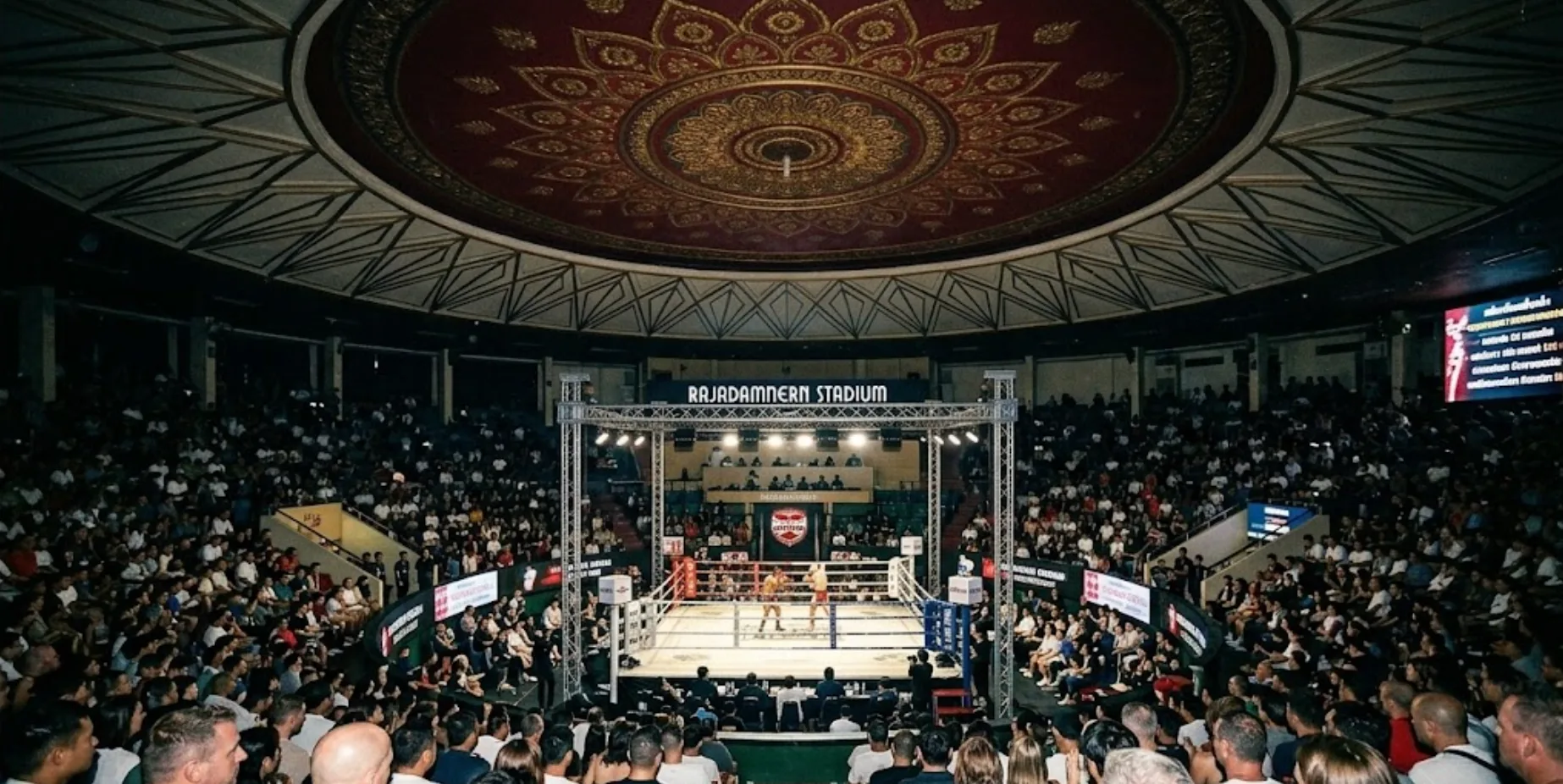
Rajadamnern is older than Lumpinee and it shows in the best possible way. The venue has a lived-in quality that newer facilities cannot manufacture. The seating areas retain a character that tells you people have been watching fights here for eighty years. The ringside atmosphere on a busy card has a density that more modern venues, with their improved sightlines and air conditioning, sometimes lack.
Fights at Rajadamnern run seven nights a week, every night of the year without exception. That makes it one of the most active fight venues on the planet, and for anyone spending time in Bangkok, it means there is always a card to watch. The crowd skews more Thai and more traditional than the international-facing ONE Championship events at Lumpinee.
The betting is active, the scoring is debated in real time, and the fighters on the card include established Thais alongside rising talent. If you want to understand how the sport actually works from a Thai perspective, sitting ringside at Rajadamnern is a better education than almost anything else available.
Seven Nights a Week: What's On and When
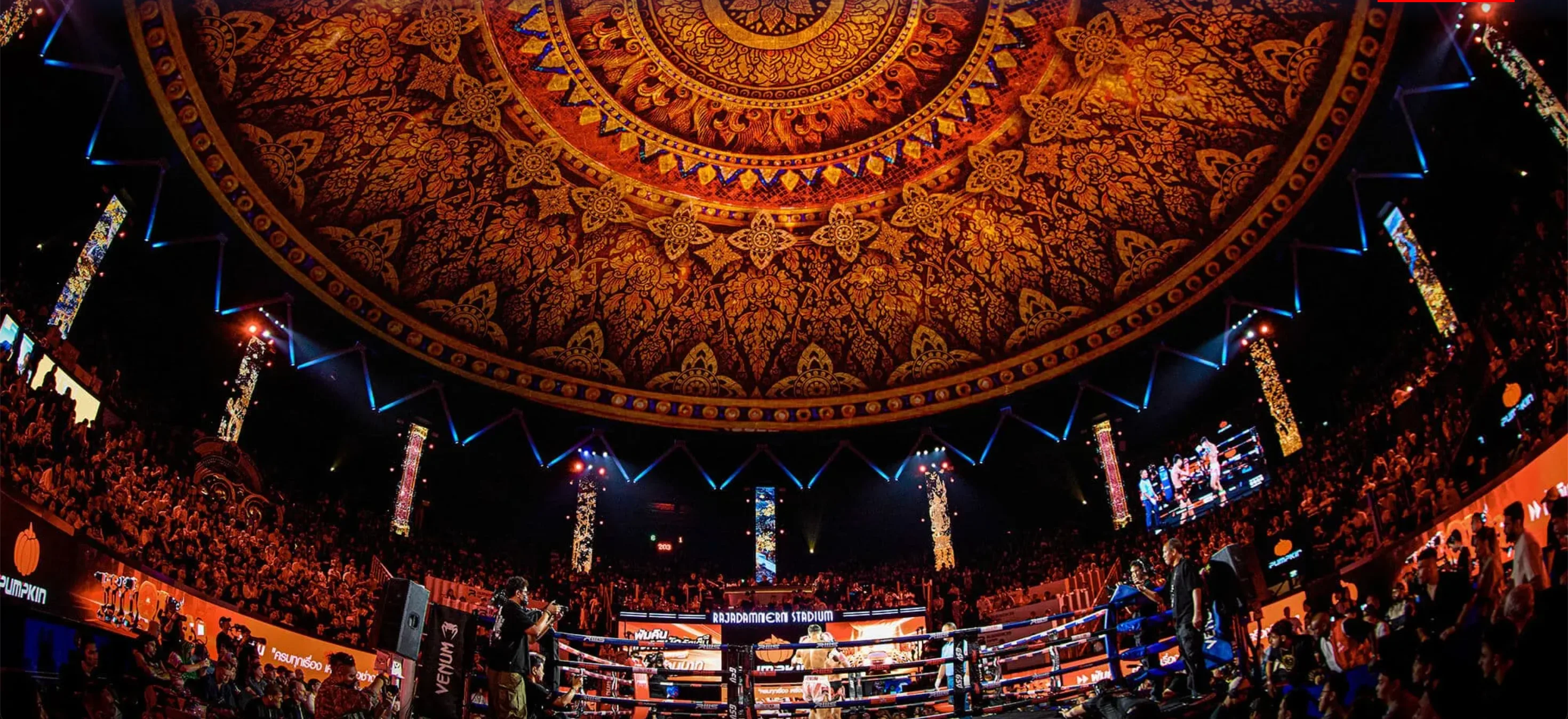
Each night at Rajadamnern runs under a different brand with its own format, gate time, and character. Here is what to expect every night of the week.
Monday, Tuesday, Friday, Wildest Muay Thai Event
The Wildest cards run three nights a week and offer seven bouts at three rounds each. Gates open at 6pm. These are fast-paced, action-heavy nights and a great entry point if it is your first time at the stadium. The shorter round format pushes fighters to commit early.
Wednesday, New Power
Wednesday is the night worth knowing about. New Power runs eight bouts at five rounds each, with gates at 5pm, and carries the prestige of the traditional format. The long-running Yokkao event used to own this slot and built a serious reputation for high-quality matchmaking. When Yokkao moved on, the promotion relaunched under the New Power brand, but the Wednesday night standard has remained. Five-round fights tell you a great deal more about a fighter than three-round ones. Arrive early.
Thursday, Top Traditional Muay Thai Event
Thursday mirrors Wednesday in format: eight bouts, five rounds, gates at 5pm. Another night for serious students of the sport who want to watch fights play out properly. The longer format rewards patience, scoring, and ring intelligence in a way that shorter cards cannot.
Saturday, Greatest Muay Thai Event (Rajadamnern World Series)
Saturday is the RWS night, Rajadamnern's flagship production. Seven bouts, three rounds, gates at 6pm, and the highest production values of the week. The Rajadamnern World Series was built to attract international attention and the matchmaking reflects it. If you are in Bangkok on a weekend and you want the full stadium Muay Thai experience with a show-ready card, Saturday is your night.
Sunday, Kiatpetch Event
Sunday runs nine bouts across a mixed format of three-round and five-round fights, with gates at 5pm. It is the longest card of the week by bout count and tends to have a more relaxed atmosphere. A good night for watching a wide range of fighters across different levels of competition.

A Note on Getting In for Free
This is genuine alpha and not something you will find on any official ticketing page. If you come to train in Thailand and spend real time at a gym, you will eventually befriend fighters and gym owners. Thai fight promotions are genuinely generous with complimentary tickets to the camps whose fighters are on the card. If a fighter you know is fighting at Rajadamnern that week, there is a reasonable chance you get invited along. It does not always happen, but it happens more than you might expect. Build the relationships first. The fight nights follow.
Rajadamnern Titles and the Weight They Carry
Like Lumpinee, Rajadamnern awards its own championships across the major weight classes. The two stadium belts have historically been treated as the twin peaks of achievement in Thai stadium Muay Thai. A fighter who holds titles at both venues has effectively conquered the sport's domestic competition structure.
Some of the greatest fighters in the history of Muay Thai built their reputations at Rajadamnern. Dieselnoi Chor Thanasukarn, whose teep was so dominant that opponents reportedly refused to fight him, is a Rajadamnern legend. Hippy Singmanee. Samart Payakaroon. The names that run through the stadium's history are the names that define the sport.
The difference between the two stadiums in terms of style preference is a subject of genuine debate among Muay Thai followers. The conventional wisdom is that Rajadamnern has historically favoured more aggressive, forward-pressing styles, while Lumpinee has rewarded technical fighters who score cleanly. Whether this is still true today is debatable, but the perception persists, and fighters and trainers still talk about preparing differently depending on which venue a fight is scheduled at.
Live Fight Calendar: Rajadamnern Events
If you want your own personal, filtered stream of Muay Thai events in Bangkok, MuayTab for Chrome puts a live fight calendar in every new tab you open. Seven nights a week at Rajadamnern, plus every other stadium and promotion, all in one place.

Eighty years of fights have passed through that building on Ratchadamnoen Nok Avenue. Seven nights a week, every week of the year, the oldest language Muay Thai knows is still being spoken in that ring. If you get the chance to sit ringside, take it.
Frequently Asked Questions
Where is Rajadamnern Stadium?
Rajadamnern Boxing Stadium is located on Ratchadamnoen Nok Avenue in Bangkok, near the Democracy Monument. It sits on the same wide ceremonial boulevard that connects the Royal Palace to the outer ring road, a road often compared to the Champs-Elysees for its scale and civic ambition.
When are fights held at Rajadamnern?
Rajadamnern Stadium holds Muay Thai fights seven nights a week, every night of the year. Each night runs a different branded event: Wildest Muay Thai on Monday, Tuesday and Friday; New Power (formerly the Yokkao event) on Wednesday; Top Traditional on Thursday; the Rajadamnern World Series on Saturday; and the Kiatpetch Event on Sunday. Gate times vary between 5pm and 6pm depending on the night.
How old is Rajadamnern Stadium?
Rajadamnern Stadium opened in 1945, making it the older of Bangkok's two major Muay Thai venues. It predates Lumpinee Boxing Stadium by over a decade. The stadium has operated continuously since its opening and remains one of the most historically significant sporting venues in Thailand.
What is the history behind Rajadamnern Stadium?
Rajadamnern was built in 1945 on Bangkok's most ceremonially significant boulevard during a period when Thailand was actively managing its image to avoid European colonisation. Placing a purpose-built sporting stadium on Ratchadamnoen Nok Avenue was a deliberate act of civic projection, presenting Muay Thai and Thailand as modern, organised, and sovereign.
Is a Rajadamnern title prestigious?
Yes. Alongside Lumpinee, a Rajadamnern Stadium title is one of the most coveted accolades in Thai Muay Thai. The two stadium belts are considered the twin peaks of achievement in domestic competition. Fighters who have held titles at both venues include many of the sport's all-time greats, including Dieselnoi, Samart Payakaroon, and Namkabuan.