
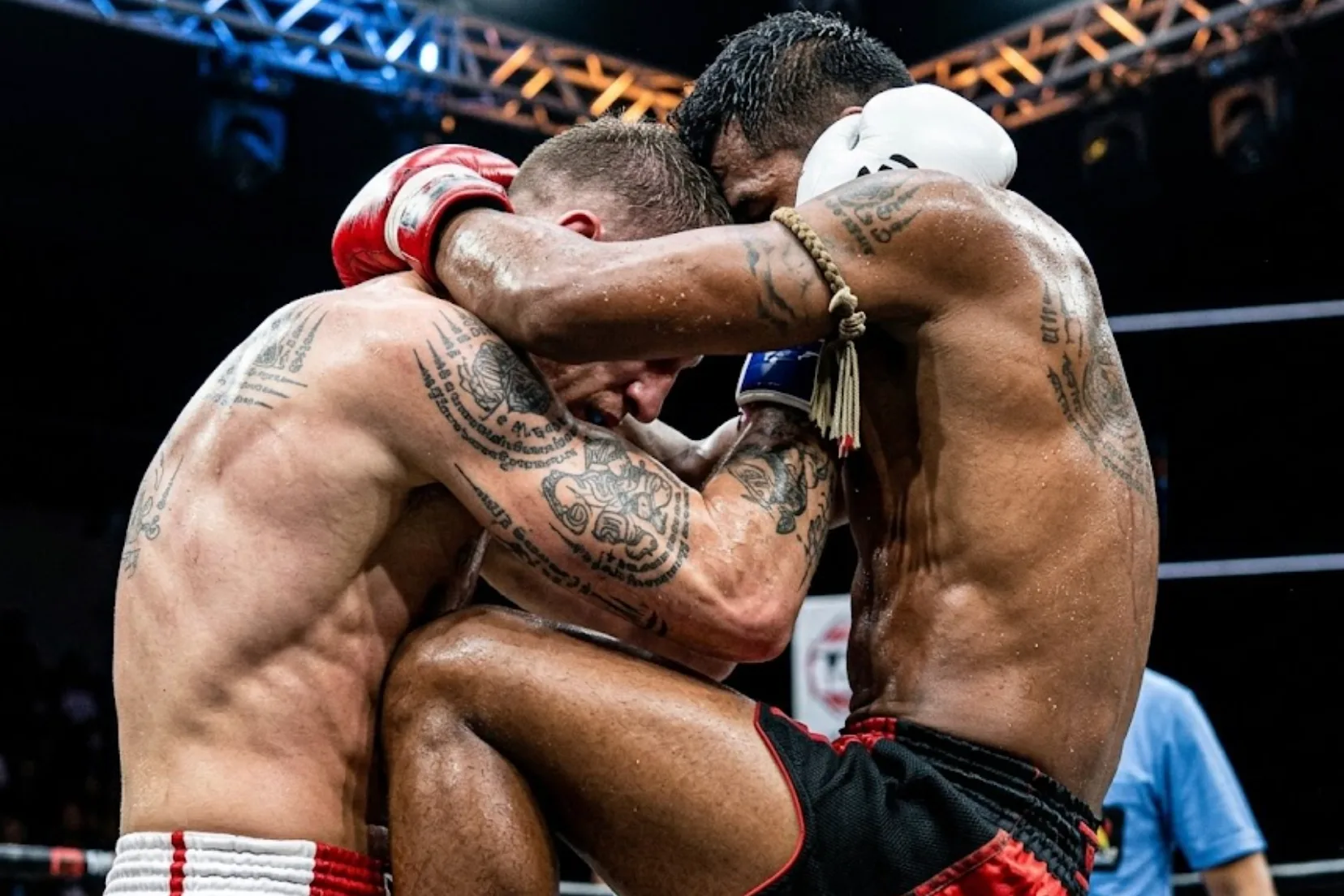
Every beginner who has ever watched a Muay Thai highlight reel has the same reaction to the clinch. When two fighters tie up and start working inside, the untrained eye sees two people who got too close to each other and are now waiting for the referee to separate them. That assumption is wrong in every possible way.
The clinch is not a pause in the action. It is a completely separate dimension of fighting, a close-range system of off-balancing, positioning, knee strikes, and elbows that has its own specialists, its own learning curve, and its own hall of fame. Some of the most dominant Muay Thai fighters in history have built careers almost entirely around what they can do in the clinch.
If you want to understand Muay Thai fully, the striking is only half of it. The clinch is the other half. And most people outside Thailand have barely started to explore it.
What the Clinch Actually Is
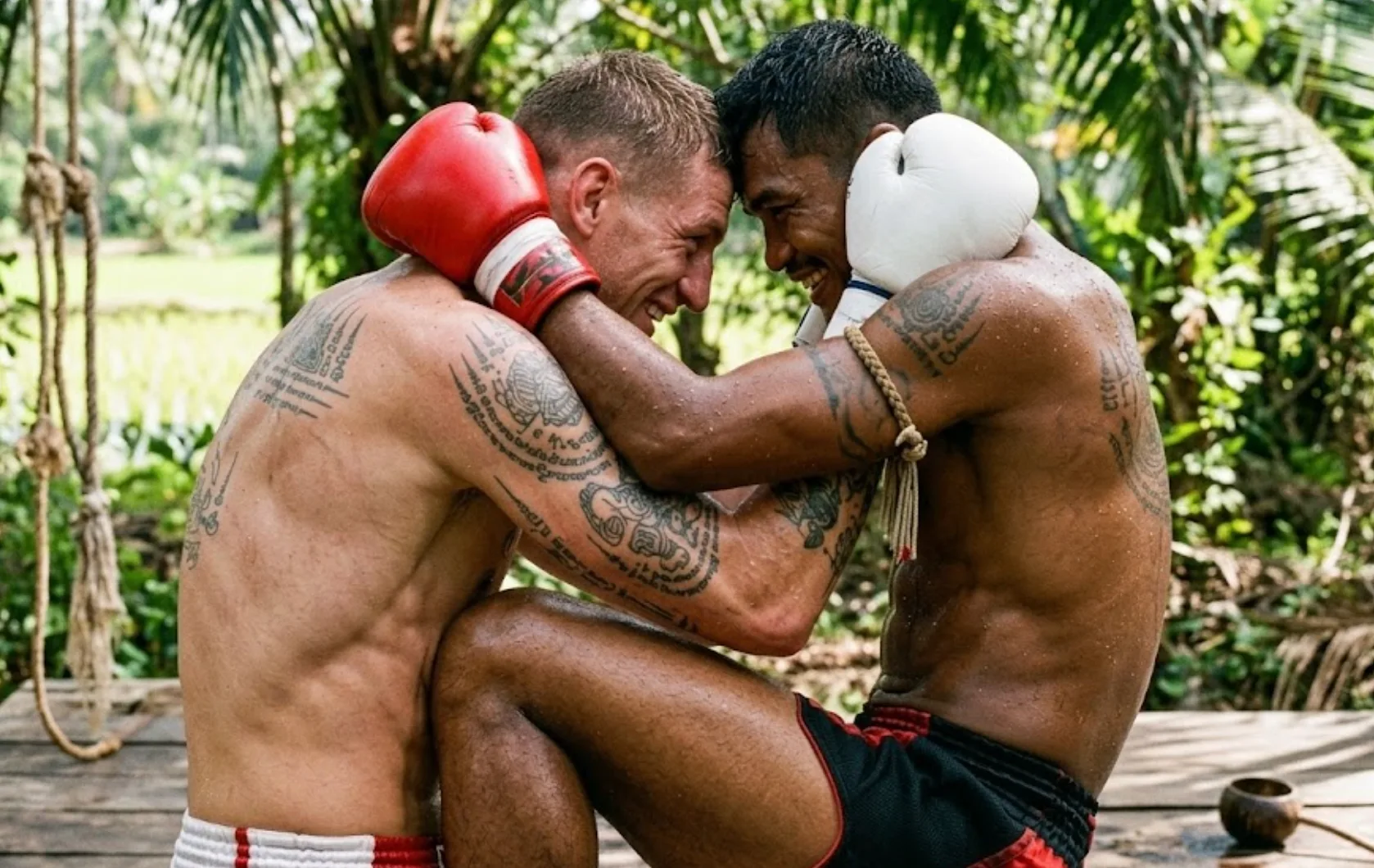
In Muay Thai, the clinch begins when two fighters close the distance to inside striking range and one or both establishes grip. The most common position is the double neck tie: both hands behind the opponent's head, controlling the direction of their movement and creating angles for knee strikes.
From that position, the clinch is a constant battle for control. Who controls the head controls the body. A fighter who dominates the neck tie can off-balance the opponent, walk them into corners, expose their midsection to knees, and create openings for short elbows at close range. The person being controlled spends most of their energy breaking the grip rather than landing anything offensive.
The clinch is a complete weapon system, not a rest position. It requires as much training to master as any striking technique, and considerably more upper-body strength and spatial awareness than most beginners expect.
The Muay Khao: Specialists of the Clinch
Within Muay Thai, fighters who specialise in clinch work are known as Muay Khao , knee fighters. They are built differently from their striking-focused counterparts. They tend to have exceptional upper-body strength, an instinct for creating angles in tight spaces, and an ability to off-balance opponents that looks almost effortless when done at the highest level.
The most famous Muay Khao gym in Bangkok is FA Group. The gym has produced a lineage of clinch specialists without comparison in the history of the sport. Two names in particular define what the FA Group tradition stands for.
Petchbunchu FA Group
Petchbunchu FA Group is widely considered one of the greatest knee fighters the sport has produced. His ability to establish inside position, control the head, and deliver knees from unexpected angles made him practically unstoppable at his peak. Opponents who fully understood what was coming still found themselves on the wrong end of it, because understanding the problem and solving it in real time are very different challenges inside the clinch.
Credit: fightTIPS
Yothin FA Group
Yothin FA Group operated in the same tradition. The same grip-based control, the same off-balancing mechanics, the same relentless pressure in tight spaces. Watching footage of either fighter in the clinch is an education in how much of Muay Thai exists in a space that most people outside Thailand never spend serious time studying.
Yothin is a special fighter to me. I train out of FA Group when I am in Bangkok, and he is genuinely gifted in a way that is difficult to put into words until you have watched him work close range. I have had many great moments in that ring. This footage gives you a sense of why.
Credit: RealZacSavage
The Weapons Available in the Clinch
The knee is the primary weapon. Delivered from the hip with the grip pulling the opponent's head downward, a clean knee strike is one of the most powerful shots available in striking sports. It can change a fight quickly when it lands on the body or the chin, and it is significantly harder to defend than most people who have not experienced it expect.
The elbow operates at close range in ways that are not available at kicking or punching distance. A short, sharp elbow from the clinch can open a cut in a single exchange. It does not require the full telegraphed arc of a longer elbow strike. The small, compact movement is what makes it dangerous.
Off-balancing and throws are the third tool. Muay Thai allows sweeps and partial throws from the clinch, and a fighter who can put their opponent on the canvas without falling themselves scores clearly under Thai scoring criteria. Dominance in the clinch is one of the things ringside judges pay closest attention to.
The Hygiene Rules Nobody Tells You About
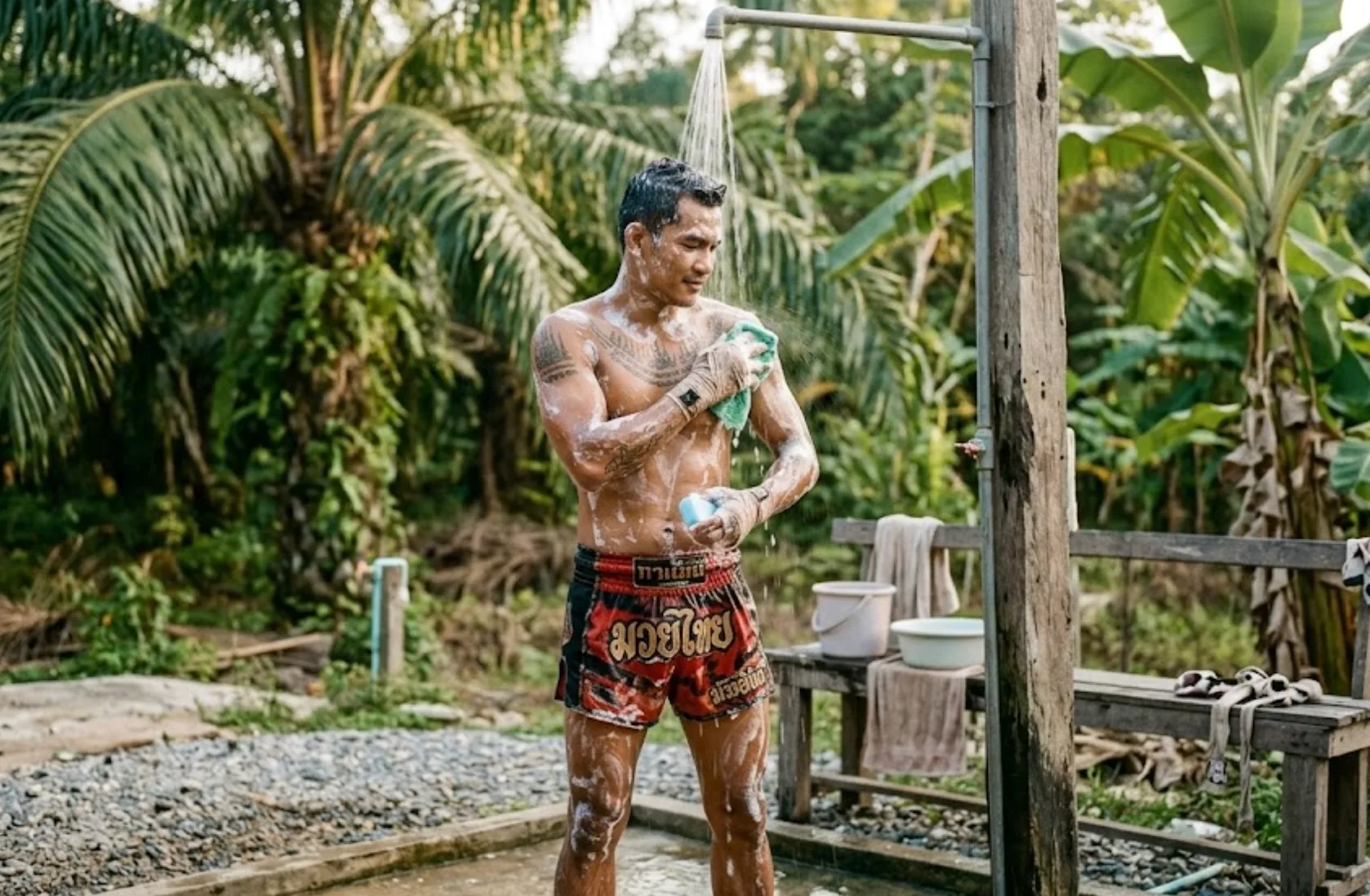
If you are going to work the clinch seriously, there is a set of rules that your training partners will silently thank you for following, even if nobody ever explicitly mentions them to you.
Shave, or commit to the beard. Stubble on the face and head causes friction burns on training partners during clinch work. A partner who ends every session with red marks on their forehead because of your two-day growth will quietly stop volunteering to clinch with you. If you are growing a beard, keep it conditioned. If you are between stages, choose one direction and go there.
Cut your fingernails before every session. In the clinch, hands are around the neck, the head, and occasionally the face. Long nails in that environment are a genuine hazard. Cut them before you train, not after you have already been reminded why it matters.
Tie your hair back. Long hair in the clinch creates problems for both fighters. It gets in eyes, wraps around hands, and disrupts grip for everyone involved. If your hair is long enough to be a factor, secure it before the round starts.
Wash your kit. The clinch involves more body contact than almost any other aspect of Muay Thai. The same standards of hygiene that apply to training in general apply here with extra emphasis. Clean gear is a sign of someone who takes the training seriously and respects the people they are sharing it with.
The clinch is intimate contact sport. The small preparations that protect your training partners reflect the same attention to detail that improves your technique. The people who train considerately get better training partners and better sessions. That is not a coincidence.
Most people who train Muay Thai spend years before they genuinely understand the clinch. The striking side of the art is visible, obvious, and exciting. The clinch takes patient study, regular drilling, and a willingness to look unglamorous for a long time before it starts to work. Find footage of the Muay Khao specialists. Find FA Group bouts from the classic Lumpinee era. Give the clinch the same attention you give the kicks. The fighters who do are playing a different game to everyone else. And if you have ever wondered how clinch proficiency translates outside the ring, this is worth reading.
Frequently Asked Questions
What is the clinch in Muay Thai?
The clinch in Muay Thai is a close-range grappling system where fighters establish grip, most commonly behind the opponent's head (the neck tie), and use that control to deliver knee strikes, short elbows, and off-balancing throws. It is a complete fighting system within Muay Thai, not a passive or resting position.
What is a Muay Khao fighter?
Muay Khao means knee fighter in Thai. It refers to fighters who specialise in clinch work and close-range combat, using knee strikes as their primary weapon. FA Group gym in Bangkok is the most famous producer of Muay Khao specialists, with fighters like Petchbunchu and Yothin among the most celebrated clinch fighters in the sport's history.
Why do referees separate fighters in the clinch?
Referees step in when fighters are holding without working, using the clinch as a rest or stalling tactic rather than actively throwing knees, elbows, or attempting sweeps. A productive clinch where both fighters are attacking is generally allowed to continue. It is the passive clinch, where nothing offensive is happening, that referees interrupt.
Is the clinch legal in Muay Thai competitions?
Yes. The clinch is a core and legitimate part of Muay Thai. Knee strikes from the clinch, short elbows, sweeps, and off-balancing throws are all permitted techniques. What differs across rulesets is how long the clinch can continue and what actions are allowed within it, but the clinch itself is fundamental to the sport.
How do you escape the clinch in Muay Thai?
The main clinch escape options are: creating space by pushing on the opponent's biceps to break the grip, stepping to the side and spinning out of the tie, using a push-down on their arms to separate, or stepping back and out quickly. The escape also depends on the grip: a double neck tie requires different responses than a single underhook or overhook position.