
Every Muay Thai fighter throws the teep. It shows up in the first round of every training session, in every pad combination, in every gym on every continent where the sport is practised. And yet most practitioners spend a fraction of their training time on it compared to the roundhouse, the cross, or the elbow.
That is a mistake. The teep is not a supplementary technique. It is one of the most important weapons in the entire art, and the fighters who understand it deeply fight a different game from everyone else.
What the Teep Actually Does
The teep is a straight push kick. You extend the leg directly forward and drive through the target with the ball of the foot or the heel, depending on range and intention. The primary effect is not damage. It is displacement.
A well-thrown teep moves the opponent backward, disrupts their timing, resets the distance on your terms, and drains their forward energy over the course of a fight. A fighter who lands ten teeps per round is not scoring ten individual points. They are exhausting their opponent and controlling the entire geography of the contest.
The teep is Muay Thai's range management tool. Boxers use the jab for the same purpose. The difference is that the teep works at a greater range, uses the whole body, and can be thrown with enough force to genuinely hurt when it finds the chin.
The Lead Teep and the Rear Teep
The lead teep comes from the front leg. It is faster, easier to throw without telegraphing, and ideal for intercepting opponents who are moving forward. The mechanics are similar to a snapping push. It does not require full commitment and can be used frequently without significant energy expenditure.
The rear teep comes from the back leg and carries considerably more power. It requires a weight transfer and is easier to read, but when it lands with good timing, the force is enough to sit an opponent down. Against opponents who are rushing in, the rear teep timed correctly is one of the most effective counters in the sport.
The best teep fighters use both. They mix the frequency of the lead teep with the occasional rear teep to keep opponents honest about the range.
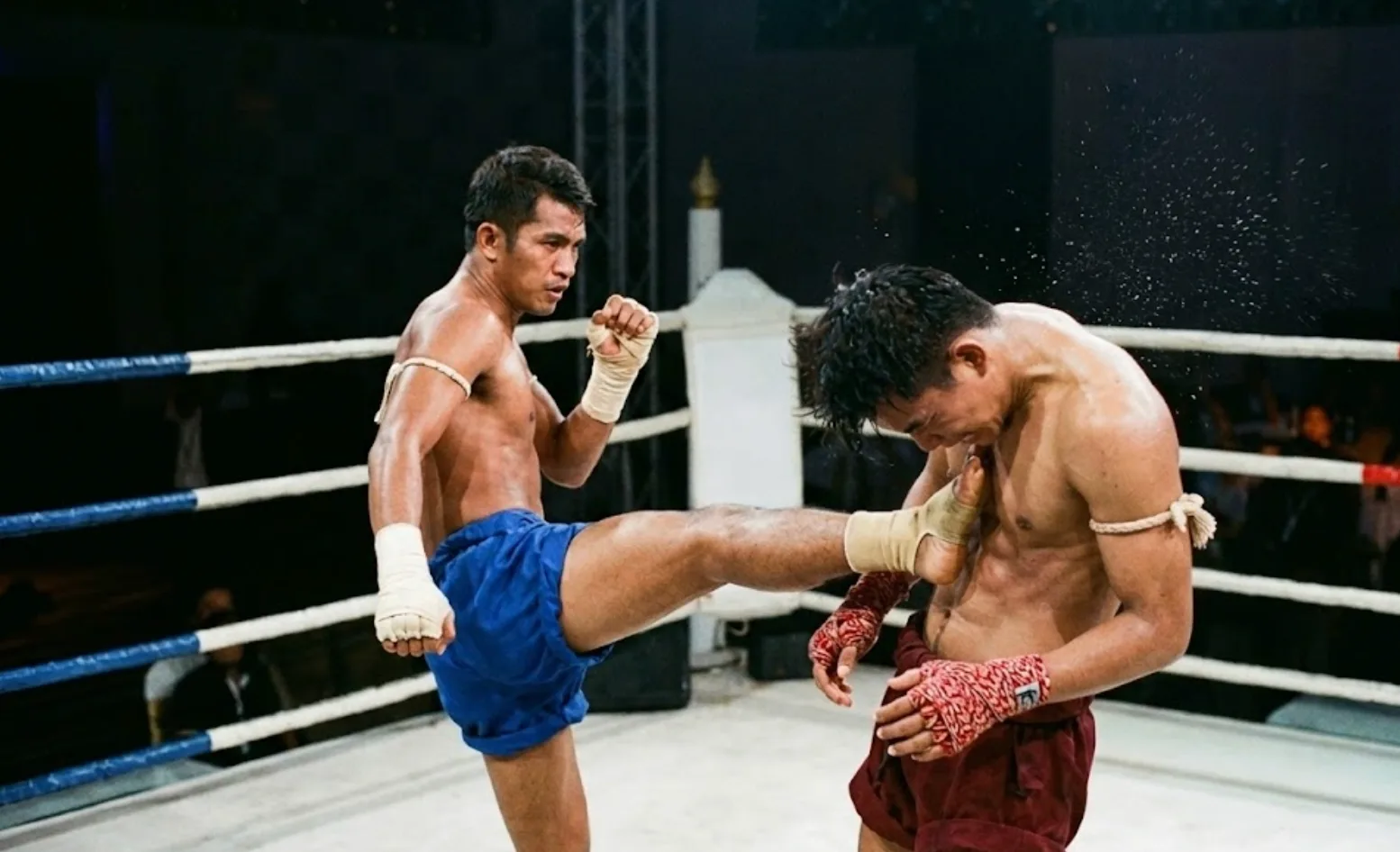
Watch the Masters to Understand the Range
Two fighters define what elite teep usage looks like.
Saenchai uses the teep as a creative tool rather than a mechanical one. He throws it from unusual angles, at unexpected moments, and occasionally with both feet in sequences that make it feel more like an art form than a technical weapon. Watching his clinch work and teep sequences together shows how the two complement each other: the teep creates the range, the clinch closes it.
Dieselnoi Chor Thanasukarn built one of the most dominant careers in Lumpinee history almost entirely on his teep. His physical reach amplified the kick's natural range advantage to a point where opponents struggled to find a way inside. He reportedly became so difficult to fight that champions at his weight started refusing matches.
Find footage of both. The mechanics will look familiar. The timing and distance management will not.
How to Build It in Training
The teep improves faster than almost any other Muay Thai technique with focused repetition, because the mechanics are relatively straightforward. The difficulty is in developing the timing and range sense to use it effectively, not in learning the kick itself.
Three things to focus on in training. First, throw it from a realistic guard rather than as a standalone drill. The teep needs to flow from and back into your fighting stance without disrupting your structure. Second, practise the catch defence. Understanding how your teep gets countered makes you more aware of how to throw it safely. Third, use the mirror or video to check that your balance stays centred when you return the foot. A teep that leaves you off balance after extension is one that can be punished.
The fighters who use the teep best in competition are the ones who throw it ten thousand times in the gym before they need it to matter.
Frequently Asked Questions
What is a teep in Muay Thai?
A teep is a straight push kick delivered with the ball or heel of the foot, targeting the opponent's midsection, chest, or chin. It is Muay Thai's primary long-range control tool, used to set distance, disrupt rhythm, stop forward pressure, and score. Unlike a striking kick, the teep's primary effect is displacement rather than damage.
What is the difference between a teep and a front kick?
A teep and a front kick are mechanically similar but used differently. A front kick typically targets the body with the intention of causing damage or knockdown. A teep is a tool for range management and disruption as much as damage. Muay Thai practitioners use the teep constantly throughout a fight, not just as a power shot.
Who is the best teep fighter in Muay Thai history?
Saenchai is widely considered the most creative and effective teep practitioner in modern Muay Thai history. His timing and variety make it almost impossible to prepare for. Dieselnoi Chor Thanasukarn built an entire career on his teep, becoming so dominant at close range that champions reportedly refused to face him.
Can the teep be used offensively as well as defensively?
Yes. The teep is effective both offensively and defensively. Offensively it creates openings, sets up follow-up strikes, and can score clearly with judges. Defensively it stops incoming attacks, resets distance, and drains the opponent's forward energy over a full fight. Elite fighters use both applications fluidly.
How do you defend against a teep in Muay Thai?
The main teep defences are: stepping off the line to make the kick miss, catching the kick and sweeping or pushing off to counter, using your own teep first to beat the opponent to it, and covering the midsection with tight guard when a teep is committed. The catch-and-counter requires good timing but is one of the most effective responses at higher levels.