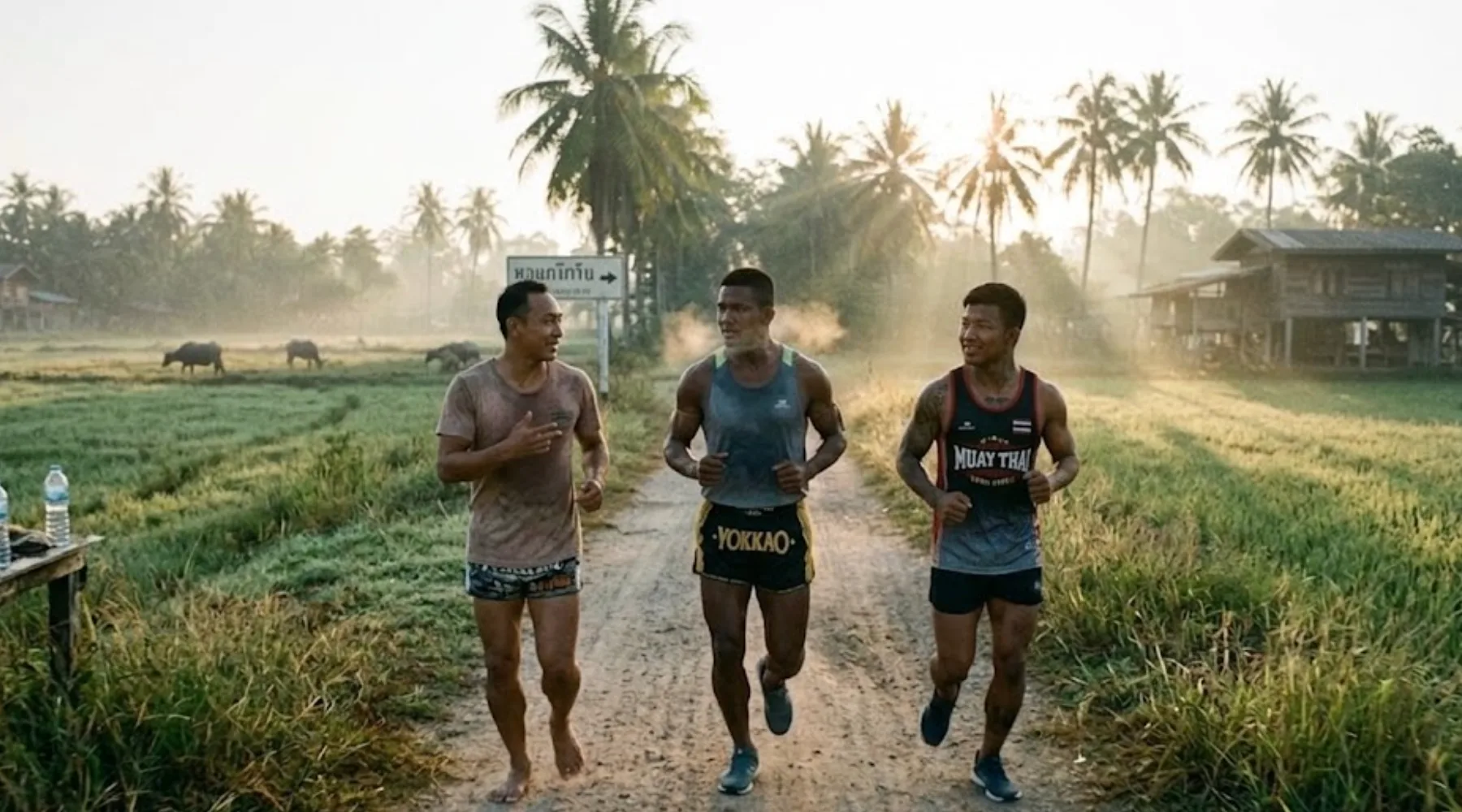
Everybody tells you to go to Thailand to train Muay Thai. They tell you about the early morning runs, the mist sitting low over the road, the fighters skipping rope in the dark before the city wakes up. They tell you the training will be harder, the fighters better, the pace relentless, and that you will come back transformed. All of that is true. None of it is what will actually surprise you.
The things nobody tells you are smaller and more specific. The twelve pairs of flip flops lined up at the gym entrance and not knowing where to leave yours. The trainer who hits harder on the pads than you expected and does not apologise for it. The way three weeks in Thailand does something to your technique that three years of training at home never quite managed.
This is for everyone who has been thinking about a trip but has not yet booked it. Here is what the brochure leaves out.
The Heat Is Not Background
Training outdoors in Thailand is not like training in a heated gym. It is a different category of experience entirely. The humidity sits above eighty percent before seven in the morning. The sweat starts within the first minute of the warm-up and does not stop.
The first few days, this will feel like a punishment. Your conditioning will feel worse than it does at home, not better. You will tire faster, feel slower, and struggle through things that would be comfortable back home. This is normal.
Your body is acclimatising, not failing. By the end of the first week something shifts. The heat becomes background rather than obstacle. And when you eventually get home and train in a cool gym, you will feel genuinely fast.
Train the early morning sessions where possible. The temperature is manageable, the light is extraordinary, and the serious fighters are there. Train hard, drink more water than you think you need, and do not fight the heat. Move with it.
The Gym Is Not There to Comfort You
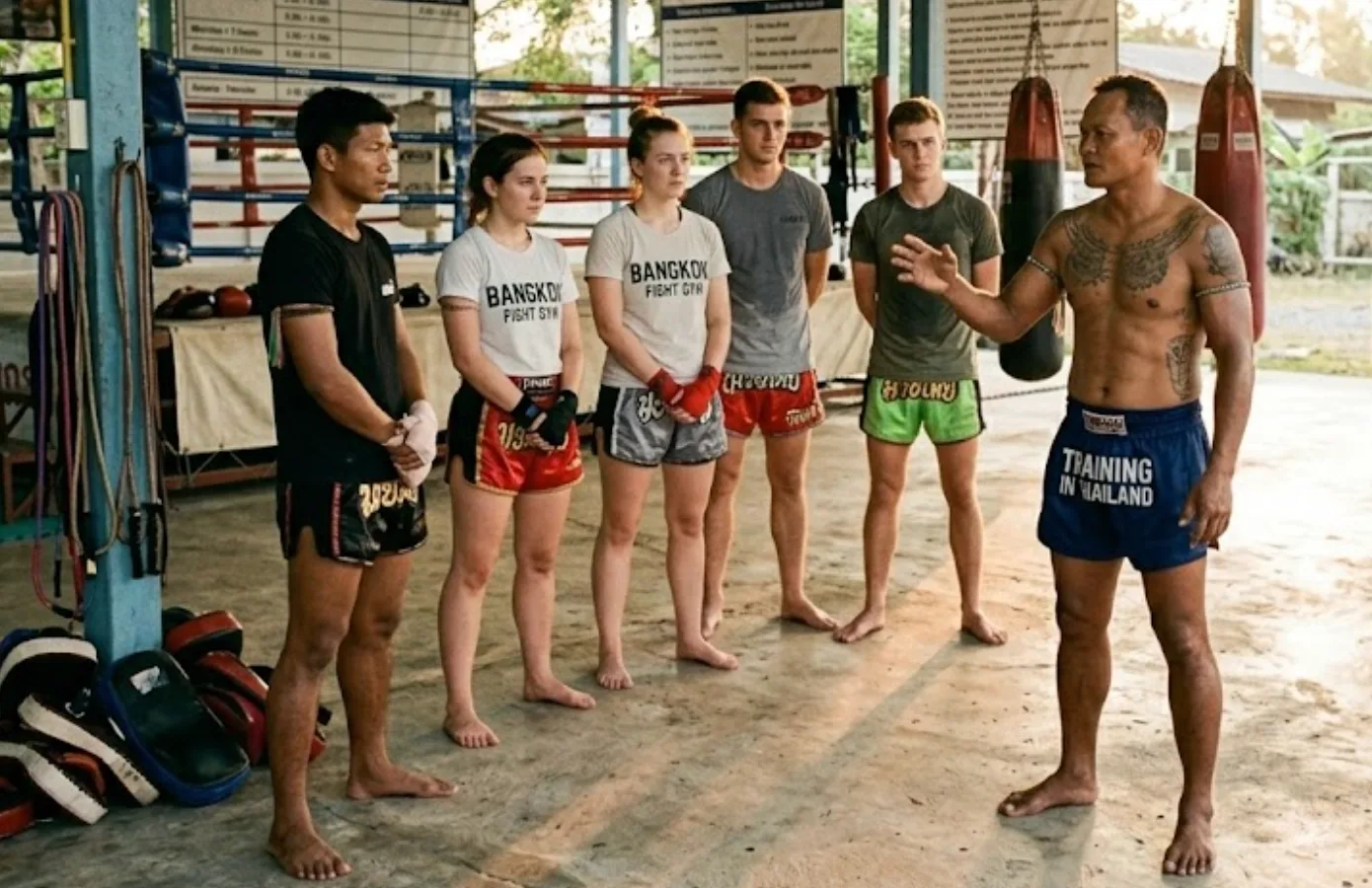
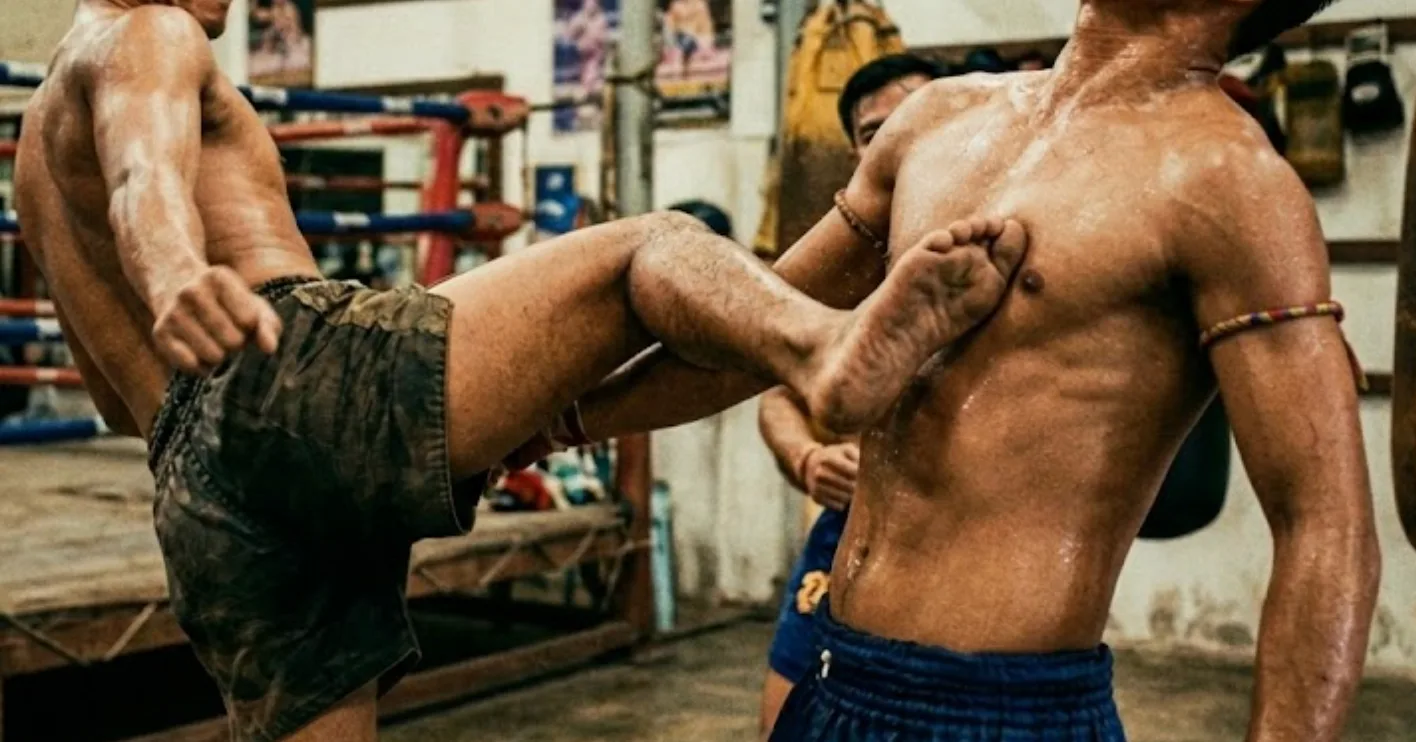
Thai gym culture is direct. There is no hand-holding, no checking in on how you are feeling, no praise after every pad round. The trainers have seen a thousand people come through and they identify within about thirty minutes how serious you are.
I turned up to a gym in Chiang Mai early in my training. It had been recommended and I went in expecting a warm welcome. Everyone looked moody, exhausted, fight-ready. Nobody said hello. I did not know where to go or what to do, and nobody came to guide me. The gym was covered in a thick layer of sweat and the mood was not friendly.
What I learned later is that the gym was simply doing what it always did. It was not hostile. It was focused. Once I stopped waiting for an invitation and just started working, everything changed.
Show up on time. Work hard from the first minute. Do not check your phone between rounds. If a trainer gives you a correction, apply it immediately without comment. These are the things that earn respect in a Thai gym, and once you have it, the training you receive is completely different.
The Pad Work Will Teach You More Than You Expect
Pad work in Thailand is a conversation. The trainer sets a rhythm, you match it, and somewhere in that exchange you find combinations you did not know you had. The flow is faster than most Western gyms, the transitions quicker, and the trainer's pads will come for you if you drop your guard.
Do not try to set the pace. Follow it. The trainers have been holding pads since they were teenagers and they know exactly how hard to push you without breaking you. Trust the process.
What pad work in Thailand gives you that drilling at home cannot is timing. Real, transferable timing built against another person's rhythm rather than your own. Three weeks of that and you will feel the difference in every session you do after.
Eat Where the Fighters Eat
The food in Thailand is not separate from the training. It is part of it. Rice, vegetables, protein, eaten simply and in reasonable portions. The ingredients are cleaner than most things you will find at home and your body recovers between sessions at a rate that will genuinely surprise you.
The mistake most first-time visitors make is reaching for familiar food because they are tired and the menu looks complicated. It is not complicated. Point at what the person next to you is having and eat it. It will cost almost nothing and it will be excellent.
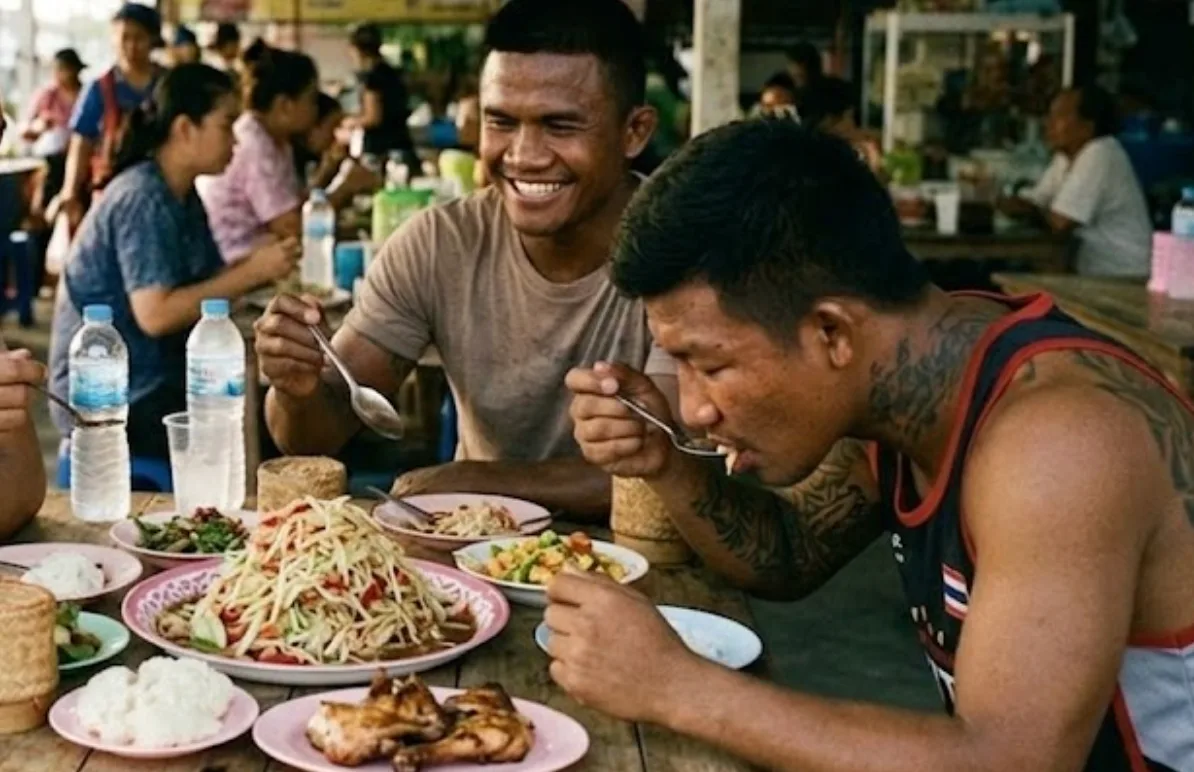
Eat where the fighters eat. Drink coconut water after training. Sleep as much as you possibly can. The sessions do the technical work, but the food and the rest do the physical work, and in Thailand the conditions for both are as good as they get anywhere on earth.
You Will Not Want to Leave
The first two days will be disorienting. The heat, the unfamiliarity, the intensity of the training, all of it landing at once. Most people push through it and find their rhythm by the end of the first week.
By the end of the second week, you will be counting the days you have left with something approaching grief.
Thailand does something specific to people who go there to train seriously. It gives them a version of themselves they did not know existed. The early mornings, the hard sessions, the simple food, the community of the gym. Stripped back to the things that actually matter, most people find they are significantly more capable than they thought.
If you are based in Bangkok, a night at Lumpinee or Rajadamnern is non-negotiable. Watching stadium Muay Thai live, with the pi phat orchestra and the betting crowd, is part of the education that the gym alone cannot give you.
The trip you are considering will be one of the best things you ever do. Book it. Train hard. Come back different.
Frequently Asked Questions
Is it worth training Muay Thai in Thailand?
Yes, unequivocally. Three weeks of training in Thailand does something to technique that years of training at home cannot fully replicate. The pace, the quality of pad work, the culture of the gym, and the heat-adaptation all combine to accelerate development in a way that is very difficult to reproduce elsewhere.
How long should you spend training Muay Thai in Thailand?
A minimum of two weeks gives you time to acclimatise to the heat and get into a real training rhythm. Three to four weeks is the sweet spot for most visitors, enough time to feel a genuine shift in technique and conditioning. Anything less than ten days means you spend most of it adjusting rather than improving.
What is training Muay Thai in Thailand really like?
Hard, direct, and unlike training in a Western gym. Thai trainers are not there to comfort you. They identify within thirty minutes how serious you are and train you accordingly. The pad work is faster, the transitions quicker, and the feedback is immediate. The first few days are disorienting. By the end of the first week, most people find their rhythm.
What should I eat when training Muay Thai in Thailand?
Eat where the fighters eat. Thai food, rice, vegetables, and protein, is clean, affordable, and excellent for recovery. Your body will recover between sessions faster than at home because the ingredients are fresher and the portions are sensible. Avoid reaching for familiar Western food out of exhaustion. Point at what someone nearby is eating and order that.
Which city in Thailand is best for training Muay Thai?
Bangkok, Chiang Mai, Phuket, and Pattaya all have strong gym options. Bangkok has the most gyms and the closest access to authentic Thai stadium fights. Chiang Mai is cooler and has excellent training camps at lower cost. Phuket is popular with international visitors. The best city depends on your experience level, budget, and whether you want to watch live fights.