The sport you watch on ONE Championship cards and at Lumpinee Stadium every week is approximately one hundred years old in its current form. The art behind it is several centuries older. Understanding the distinction between modern Muay Thai and its predecessor, Muay Boran , is understanding where the sport actually came from and why it looks the way it does today.
Muay Boran translates directly as ancient boxing. It is the collective term for the various regional unarmed combat systems that developed across mainland Southeast Asia over many centuries, practised by soldiers in the wars that shaped the region long before the modern nation states that exist today. Thailand, Cambodia, Myanmar, and Laos each developed variants of what we would now recognise as a form of kickboxing, and the connections between them are older and more complicated than any single national origin story suggests.
The full history is five centuries in the making. This is an attempt to trace its outline.
The Battlefield Origins
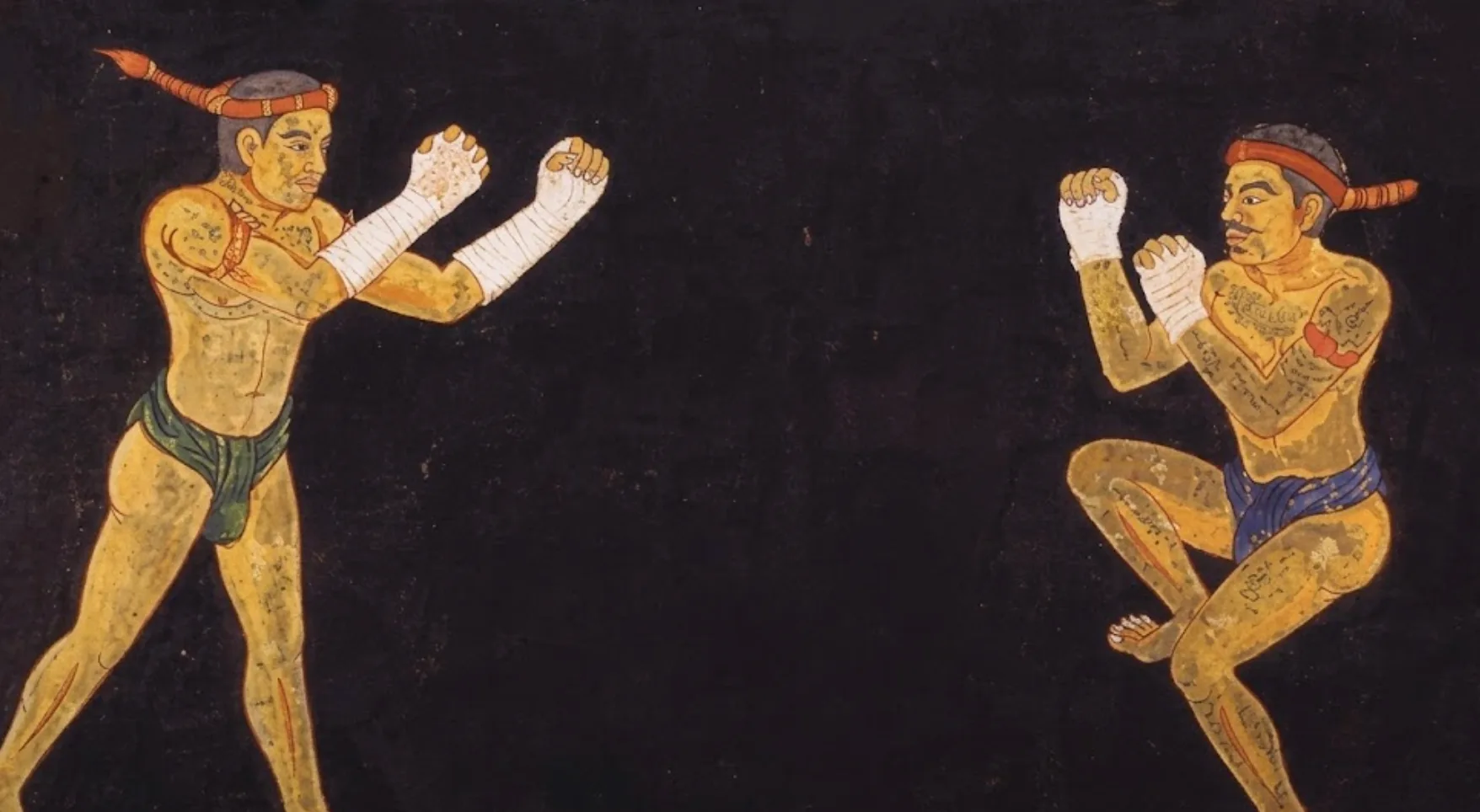
Muay Boran was not developed in a gym. It developed in warfare. The armies of the Ayutthaya Kingdom, the predecessor state to modern Thailand, needed a close-range fighting system for use when weapons were lost or broken in the chaos of battle. What emerged over generations of military conflict was a striking system that used every available weapon: fists, elbows, knees, shins, and the head, along with techniques that modern Muay Thai has removed for sport competition.
The techniques of Muay Boran were built for practical survival in actual combat. There were no rules about what was allowed, no ring, no referee, no rounds. The only objective was to be the person still standing. This is why the art contains techniques that were removed when it transitioned to sport, the headbutt being the most obvious example.
The training methods reflected this practical purpose. Fighters built their bodies against real resistance and developed the conditioning hardness that is the ancestor of the shin-conditioning work Muay Thai practitioners still do today. The training was preparation for actual war. Not for performance, not for points. For survival.
Nai Khanom Tom: The First Muay Thai Legend
The most famous story from the pre-sport era of Muay Boran centres on a warrior named Nai Khanom Tom, whose story dates to 1774 during the wars between Thailand and Burma. According to the account passed down across generations, Nai Khanom Tom was captured during the fall of the Ayutthaya Kingdom and held as a prisoner of war in Burma.
The Burmese king arranged a festival and, knowing of Nai Khanom Tom's fighting ability, brought him forward to contest against Burmese fighters in a test of the two countries' unarmed combat traditions. The story holds that Nai Khanom Tom defeated ten fighters in succession, each sent fresh against him after the one before was beaten. His only request after the final victory was his freedom, which was granted.
The historical accuracy of every detail in this account is impossible to verify from this distance. But the story has persisted for 250 years because it captures something important about the culture of the art. The willingness to fight under impossible conditions, the skill under pressure, and the sense of honour that surrounds the outcome connect directly to the values Muay Thai carries today. Nai Khanom Tom is now celebrated annually in Thailand on March 17, Muay Thai Day.
The Four Regional Styles: One Art, Four Traditions
One art, four distinct traditions. The differentiation between them came into focus in 1909, when King Chulalongkorn brought skilled fighters from across the country to Bangkok for a royal ceremony. Three fighters emerged victorious and were awarded the Muen title, an honorific that marked them as exemplary, coming from Korat, Chaiya, and Lopburi. A saying emerged from that occasion that is still quoted in the Muay Boran world today.
Hard Punch Korat. Wit Lopburi. Posture Chaiya. And faster than all of them, Thasao.
Muay Korat comes from Nakhon Ratchasima province and is built entirely on power. Its signature technique is the Mahd Wiang Kwai, the Buffalo Throwing Punch, a wide arcing strike delivered with the last three knuckles in a vertical fist. Korat fighters also carry more headbutt variations than any other regional style, a reminder of how close these techniques sit to their original battlefield purpose.
Muay Chaiya emerged from Surat Thani and is the defensive tradition, built around the principle of absorbing and counterattacking rather than engaging. Chaiya fighters are described as the durian: solid, protected, and difficult to crack open. Unusually for a striking art, Chaiya includes a developed ground-fighting system with genuine depth, something that looks closer to Japanese jujutsu than anything in modern Muay Thai.
Muay Lopburi draws its movement vocabulary from animals and mythical creatures, with elephants, monkeys, giants, and deities informing the weight and timing of its techniques. Lopburi fighters favour feints, jumping attacks, and unpredictability over linear power. Their signature weapon is the Mahd Soei, an uppercut thrown from a distinctive palms-up stance at an angle most opponents never train to read.
Muay Thasao from Uttaradit province is the speed tradition. Wide stance, light front foot, maximum distance maintained, then closing with kicks and diagonal elbows rather than straight punches. Its signature technique is the Naka Sabat Hang, the Naka Flickers its Tail, a high diagonal kick with a snapping finish unlike anything in the classical Thai round kick. In 1928, a Thasao fighter accidentally killed an opponent during a Kard Chuek competition. The incident prompted the introduction of modern gloves and formal rulesets. The tragedy that closed the Thasao era is, directly, what opened the modern Muay Thai era.
The Cambodian Parallel: Kun Khmer
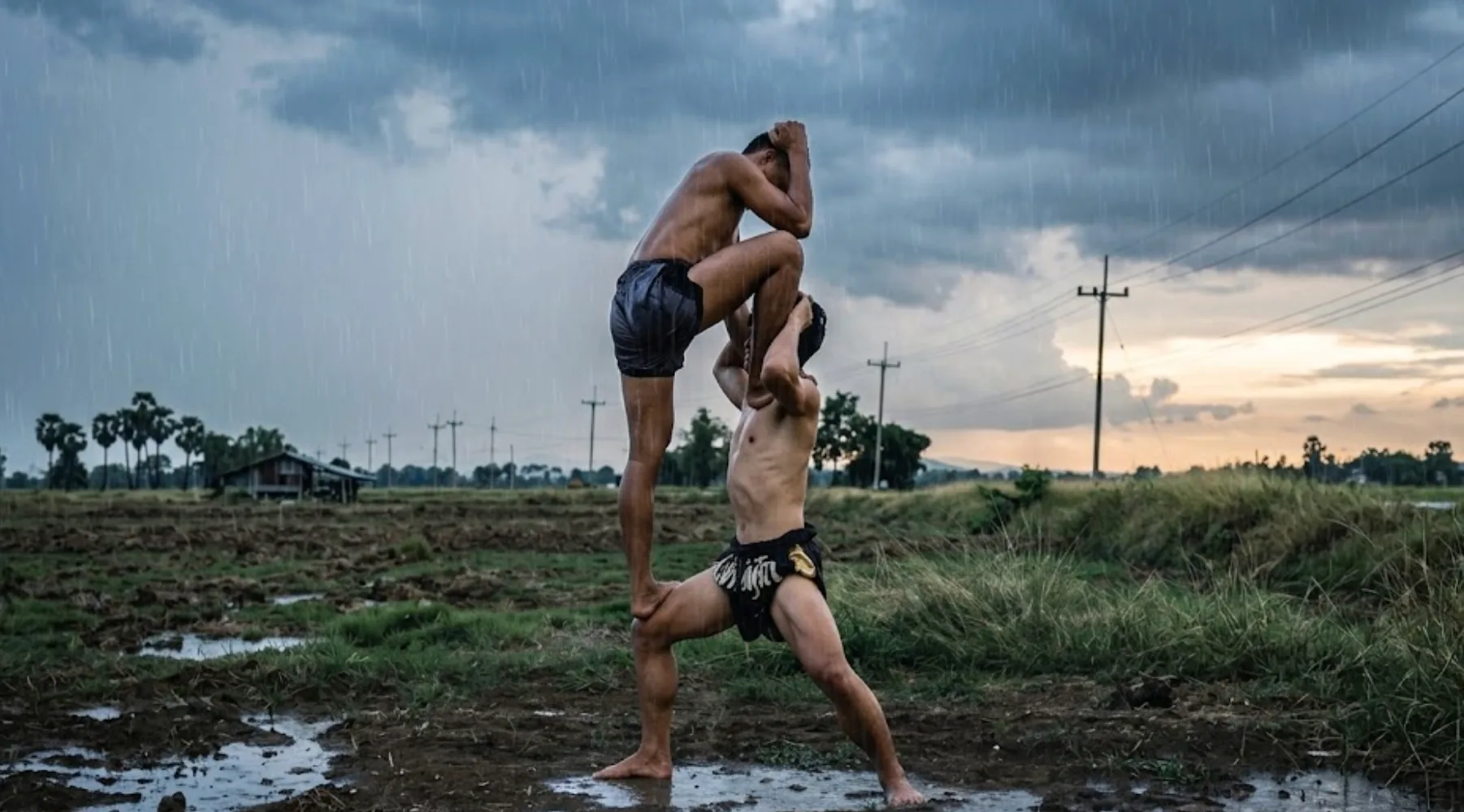
One of the most significant aspects of the history of Muay Boran is that it did not develop in isolation within what is now Thailand. Across the border in Cambodia, an almost identical tradition was developing simultaneously, known as Pradal Serey or Kun Khmer. The two arts share techniques, rhythms, and cultural DNA in ways that make attributing sole origin to one country or the other historically inaccurate.
Kun Khmer uses the same eight-limb striking system: fists, elbows, knees, and shins. It is practised with the same ceremonial respect and cultural significance as Muay Thai. Cambodia's national team competes internationally and has won at the highest levels. The art is legitimate, ancient, and as deeply embedded in Cambodian culture as Muay Thai is in Thai culture.
The debate between Thailand and Cambodia over which country can claim the origin of the art has occasionally become politically heated. The more historically honest position is that both countries developed these fighting traditions across centuries of shared geography, shared history, and regular cultural and military exchange. The art belongs to the region, not to a single flag.
From Battlefield to Stadium: How the Transition Happened
The formalisation of Muay Thai from a battlefield art into a competitive sport was a gradual process that accelerated in the late nineteenth and early twentieth centuries. Two forces drove it: the influence of Western boxing entering Thailand through colonial-era European contact, and the active promotion of the sport by the Thai royal family.
King Chulalongkorn (Rama V), who ruled from 1868 to 1910, actively promoted Muay Thai as both a sport and a symbol of Thai identity and physical capability. His reign also saw significant Westernisation of Thai institutions, and the introduction of boxing rings, structured rounds, and eventually padded gloves was part of that broader process. The hemp rope wrapped around the hands that had characterised the older tradition was replaced over the following decades by cotton wraps and gloves.
The first formal boxing rings appeared in the early 1900s. Organised events with written rules and referees followed. The headbutt was removed. Points-based scoring systems were developed. The transition was not sudden. It was a long conversation between an ancient tradition and modern sporting infrastructure, conducted over several generations, that eventually produced the sport we recognise today.
The first organised Muay Thai events with formal rules are generally traced to the early twentieth century, with venues like Suan Kulap in Bangkok hosting fights that looked closer to the modern sport than anything that had come before. By the 1920s and 1930s, the sport was recognisably what it is today in its core structure.
What Muay Boran Looks Like Today
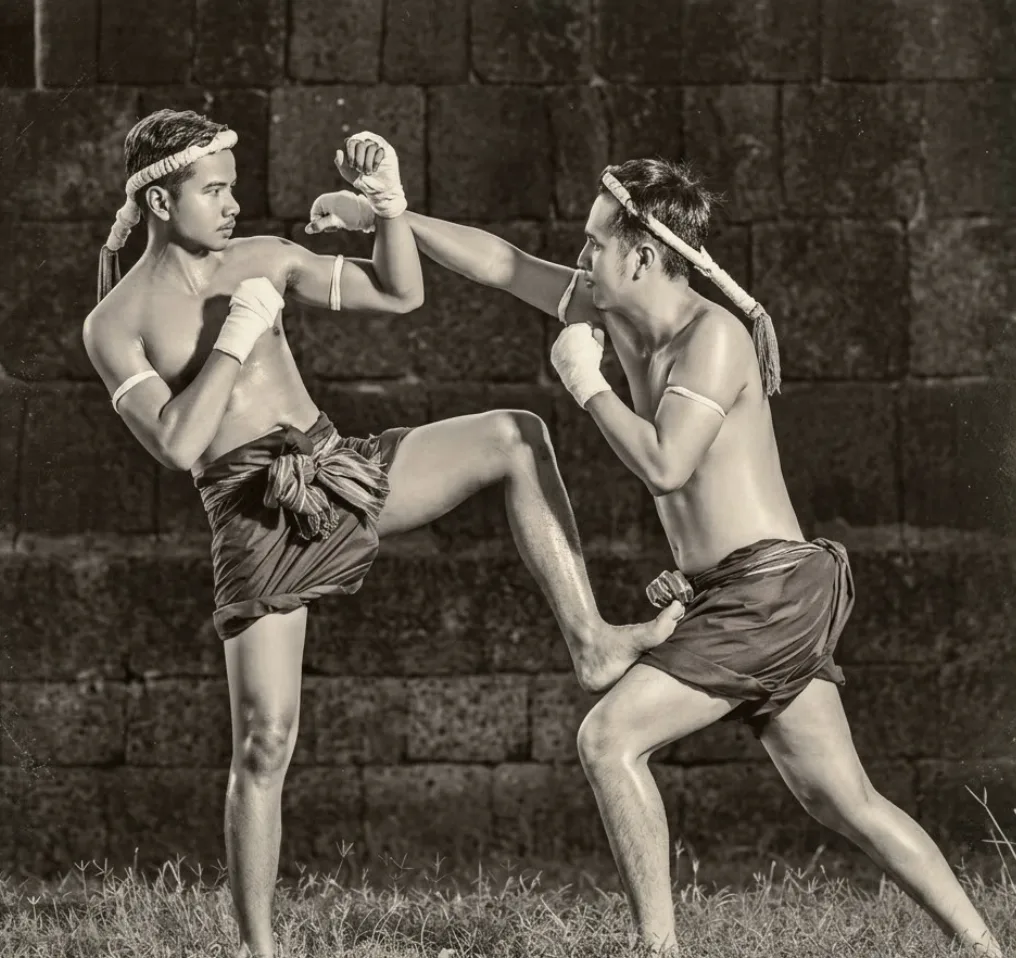
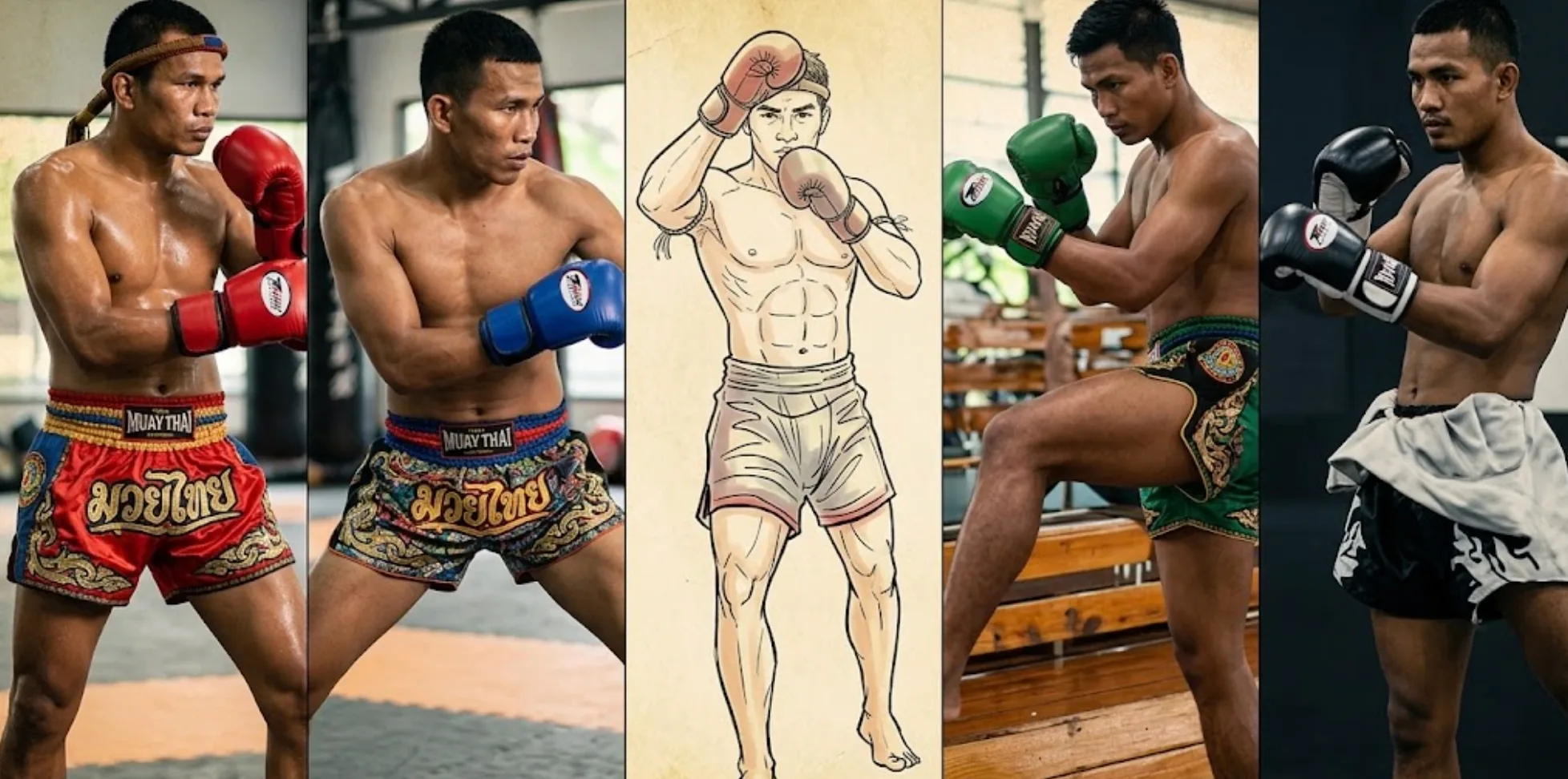
Muay Boran did not disappear when Muay Thai formalised. It continued as a separate practice, preserved by teachers who believed the complete art should not be lost to the sport's evolution. Today it is practised as a martial art form, a demonstration tradition, and in some cases as a historical exercise in understanding what the original techniques looked like in full.
Some gyms in Thailand teach Muay Boran alongside modern Muay Thai. Festivals and cultural events feature demonstrations by practitioners in traditional clothing, working through the ancient forms in a way that shows the connection between the battlefield origins and the sport that exists today. It is a living tradition, not a museum exhibit. The techniques have been continuously practised by someone, somewhere, for the entire period of Muay Thai's existence as a sport.
Modern Muay Thai is a sport built on centuries of something much older and more serious. The techniques in the gym today are distilled versions of things that were worked out under conditions none of us will ever face. The conditioning, the culture, the ceremony around the sport: all of it has roots that run deep into a history worth knowing. The more you understand where Muay Thai came from, the more sense it makes that it feels the way it does to be inside it.
Frequently Asked Questions
What is Muay Boran?
Muay Boran means ancient boxing in Thai. It is the origin of what we now call Muay Thai. It is the collective term for the traditional unarmed combat systems of mainland Southeast Asia, developed alongside traditions like the Wai Kru Ram Muay, developed as battlefield fighting arts over several centuries before being formalised into modern Muay Thai. Muay Boran includes techniques not permitted in sport Muay Thai, including headbutts and certain strikes removed during the sport's formalisation.
What is the difference between Muay Boran and Muay Thai?
Muay Thai is the modern sporting version of the art, governed by rules, contested in a ring, and scored by judges. Muay Boran is the predecessor, developed as a battlefield combat system without sporting restrictions. Muay Thai evolved from Muay Boran during the late nineteenth and early twentieth centuries as Western sporting influences entered Thailand and formal rules were established.
Who is Nai Khanom Tom?
Nai Khanom Tom is a legendary Thai warrior from the eighteenth century. His story is part of why the Wai Kru remains a central ritual in the sport., celebrated as a founding figure of the Muay Thai tradition. According to historical accounts, he defeated ten Burmese fighters in succession after being captured as a prisoner of war, demonstrating the effectiveness of Muay Boran. He is honoured on Muay Thai Day in Thailand, which falls on March 17 each year.
Is Cambodian Muay Thai different from Thai Muay Thai?
Cambodia has its own ancient striking tradition called Kun Khmer or Pradal Serey, which is closely related to Muay Thai and shares the same eight-limb striking system. Both arts developed across centuries of shared regional history. There are subtle differences in technique, rhythm, and scoring between the two traditions, and both countries have strong competing claims to aspects of the art's origin.
When did Muay Boran become Muay Thai?
The transition from Muay Boran to modern Muay Thai happened gradually during the late nineteenth and early twentieth centuries. Boxing rings, structured rounds, and padded gloves were introduced under Western sporting influence, particularly during the reign of King Chulalongkorn (Rama V). The first organised events with formal rules are generally traced to the early 1900s, with the sport recognisable in its current form by the 1920s and 1930s.