The music starts before the fighters enter the ring. A sharp, high-pitched melody from a Pi oboe, the steady pulse of klong kaek drums running beneath it. The sound carries something old in it, something that does not belong to sports arenas or television broadcast packages. It belongs to temples, to open-air stadiums in the Bangkok heat, to centuries of ceremony that most audiences cannot fully name but can absolutely feel.
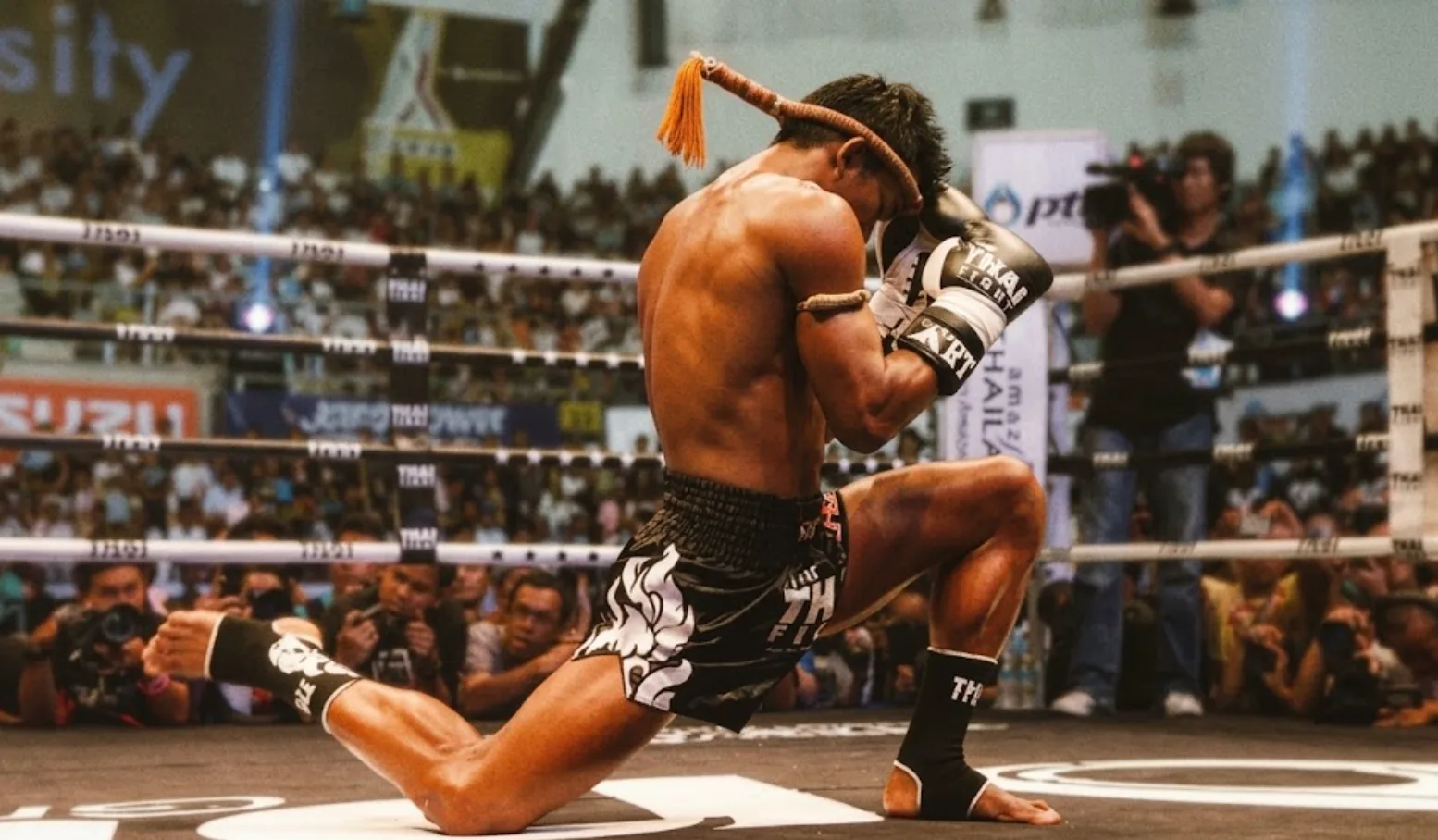
The fighter climbs through the ropes. And before a single strike is thrown, before the fight even begins, he kneels.
What follows is the Wai Kru Ram Muay. A pre-fight ritual that has survived five centuries of Muay Thai evolution, unchanged in spirit even as the sport itself changed around it. To understand what it is and why it matters is to understand what separates Muay Thai from every other striking art in the world.
Two Words That Say Everything
The name breaks into two parts. Wai Kru means to pay respect to the teacher. Ram Muay is the dance itself. Together they describe a ritual that every Muay Thai fighter performs before every fight, from amateur bouts at provincial Thai stadiums to world title fights on ONE Championship main cards.
The fighter moves around the ring in a slow, deliberate circuit. He touches each corner post, offering respect to the four directions. He prays, hands together, head bowed. Then he performs a fluid sequence of movements that is part dance, part prayer, part declaration.
Every gesture has meaning. Every movement is a sentence in a language passed down from trainer to fighter across generations. The fighter who performs it carelessly is saying something. So is the one who performs it with absolute focus.
The Mongkon and What It Carries
Before the fighter enters the ring, his trainer places a Mongkon on his head. This is a sacred rope headband, blessed through prayer, that carries the protection of the camp and the people who trained him. It holds the spiritual weight of everyone who wore it before.
The Mongkon stays on through the Wai Kru and is removed by the trainer just before the first bell. The act of removal is the last thing the trainer gives the fighter before the fight begins. It is a transfer, a final moment of connection before the fighter is completely on his own.
That removal is one of the most significant gestures in all of sport. Most people watching do not know that. Now you do.
Not a Formality. The Last Act of Preparation.
Some Western fighters treat the Wai Kru as something to get through before the real business starts. That is a fundamental misreading of what it is.
While performing it, the fighter is settling his mind. He is locating himself in something larger than one fight on one night. He is reminding himself where he came from, who trained him, and what he is representing when he throws that first kick.
The Sarama music begins at its slowest, most meditative pace during the Wai Kru and rises with the action as the fight develops. The fighter's breathing slows to match it. By the time the Mongkon comes off and the bell rings, he is not nervous. He is ready.
The Wai Kru is not pre-fight nerves being performed away. It is composure being built, deliberately, in public.
It Changes How You Watch
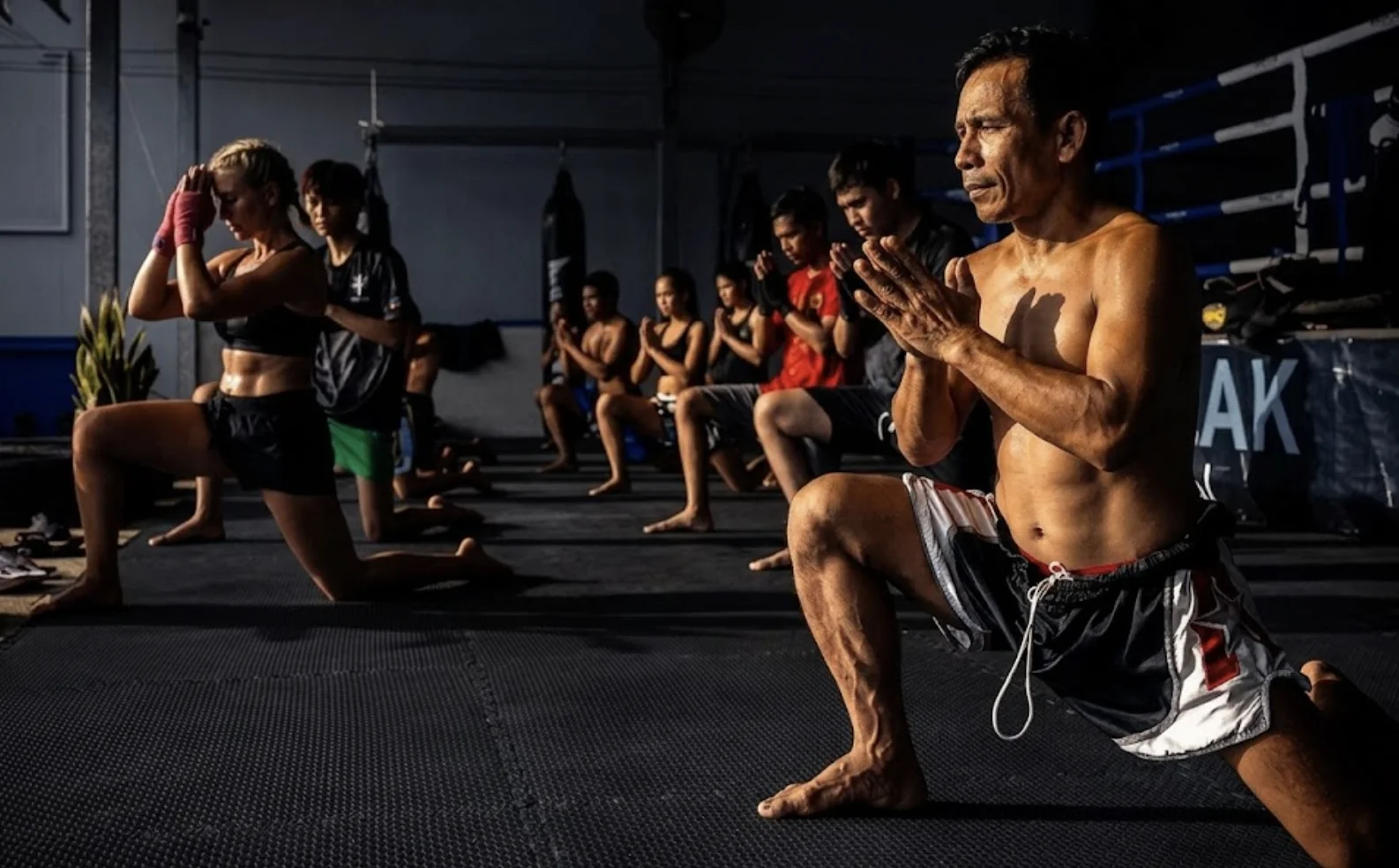
You do not have to be Thai to feel the weight of the Wai Kru. You do not have to understand every gesture or know every prayer.
But once you understand what it represents, watching a fight changes. The ritual is no longer filler before the action. It is the action. Two people demonstrating, in public, before they try to beat each other, that they understand what they are part of and that they respect the art, the occasion, and the opponent.
A fight between two fighters who genuinely believe in what they are doing in that ring looks different from one where the ritual is rushed. The difference is visible. It lives in the pace of the movement, the stillness of the face, the quality of attention given to something that nobody in the crowd can fully verify is real.
The Thread That Holds
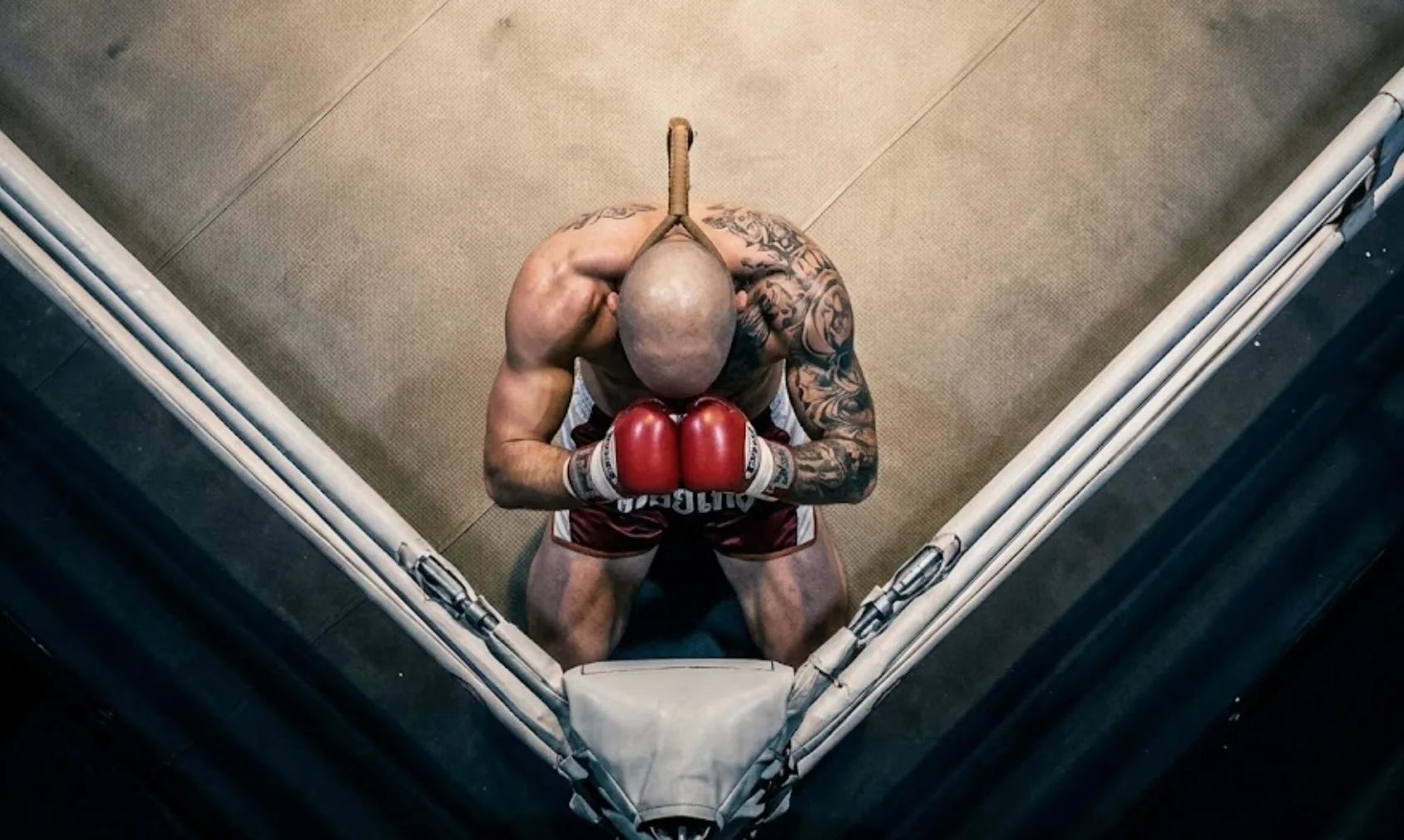
The Wai Kru is one of the things that makes Muay Thai impossible to fully separate from Thai culture. It cannot be extracted and dropped into a gym anywhere in the world without carrying some of that history with it.
Gyms in Europe, Australia, and the Americas all teach it. Some teach it properly. Some less so. But the fighters who learn it with genuine understanding carry themselves differently in the ring, and that difference tends to follow them outside the ring too.
There is a quality in a fighter who believes in what they are doing before the bell rings. The Thais call it jai dee. Good heart. And for fighters who take the Wai Kru seriously... it starts there.
Frequently Asked Questions
What is the Wai Kru in Muay Thai?
The Wai Kru is the pre-fight ritual performed by every Muay Thai fighter before a bout. The full name is Wai Kru Ram Muay. "Wai Kru" means to pay respect to the teacher. "Ram Muay" is the ritual dance itself. The fighter moves around the ring, touches each corner post, prays, and performs a sequence of deliberate movements that honour their trainer, their gym, and the art. It is one of several traditions rooted in Muay Boran, the ancient predecessor to modern Muay Thai.
What is the difference between the Wai Kru and the Ram Muay?
Wai Kru refers specifically to the act of paying respect to the teacher, including the kneeling, the prayer, and the acknowledgement of lineage. Ram Muay is the dance sequence that follows, a series of fluid movements that varies by gym and region. Together they make up the full pre-fight ritual. Some fighters and gyms use the terms interchangeably, though technically they describe different parts of the same ceremony.
Why do Muay Thai fighters perform the Wai Kru before a fight?
The Wai Kru serves both a spiritual and psychological purpose. The fighter is paying respect to their trainer and the lineage of the gym, while simultaneously settling their mind before the bout. It is the last act of preparation before the Mongkon is removed and the bell rings. Fighters who perform it with genuine focus enter the fight in a different mental state to those who rush through it.
What is the Mongkon in Muay Thai?
The Mongkon is a sacred rope headband worn by Muay Thai fighters during the Wai Kru. It is blessed through prayer and carries the spiritual protection of the camp and everyone who has worn it before. The trainer places it on the fighter's head before they enter the ring and removes it just before the first bell, one of the most significant gestures in the sport, though most spectators do not recognise it.
Is the Wai Kru mandatory in all Muay Thai fights?
In traditional Thai Muay Thai, yes. The Wai Kru is performed before every fight, from provincial amateur bouts to world title fights. In international kickboxing and MMA competitions that use Muay Thai rules, it is common but not always required. Some Western fighters perform a version of it as a personal ritual. In Thailand itself, skipping it entirely would be considered disrespectful to the art and the occasion.