
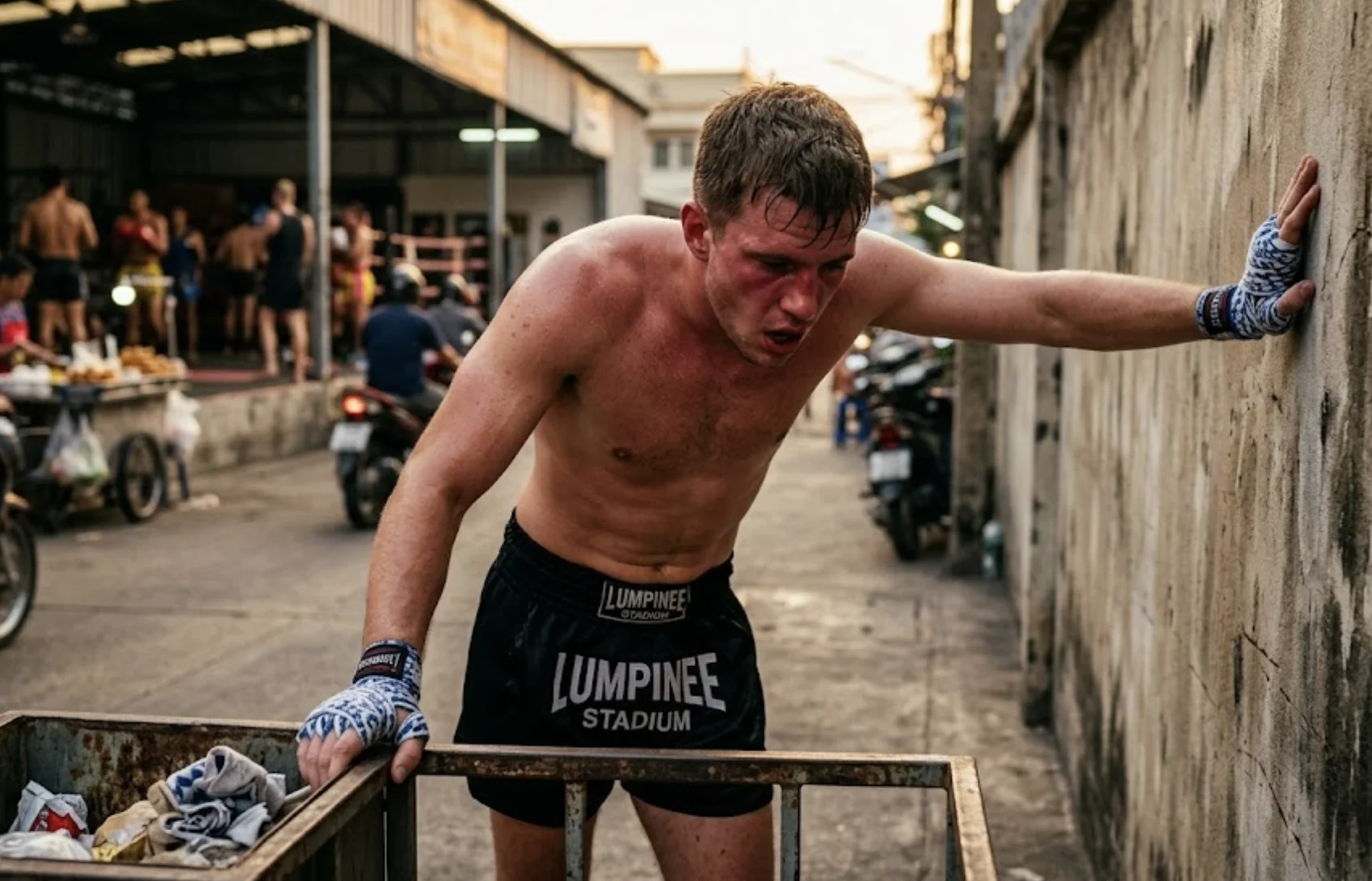
It happens to everyone. Somewhere in the first pad round of your first session, or possibly during the warm-up, your lungs start requesting a conversation with the rest of your body that goes something like: this is not what we agreed to. By round two you are working significantly harder than the person holding the pads, and by round three you are doing your best impression of someone who has never breathed before.
This is not a sign that you are uniquely unfit. It is not a sign that Muay Thai is not for you. It is the predictable experience of a body encountering a specific set of physical demands that it has never encountered before, and the fact that it is universal does not make it any less uncomfortable in the moment.
Here is why gassing out happens, what is actually going on physiologically, and what to do about it.
Why Muay Thai Is So Hard on the Cardiovascular System
The interval nature of the training is the first reason. Muay Thai rounds demand high-intensity effort, followed by a brief rest, followed by high-intensity effort again, repeatedly. This structure places specific demands on the aerobic and anaerobic energy systems that steady-state exercise, jogging, cycling, most gym work, does not train in the same way. Even a person who runs five kilometres three times a week will gas out in their first Muay Thai session, because running and Muay Thai are asking different things of the body.
The muscle recruitment is the second reason. The rotational power required for kicks and the shoulder and arm engagement of punching use muscles that most people have not loaded in the specific way Muay Thai demands. Untrained muscles fatigue faster than adapted ones, and the compound full-body demand of a combination means that several muscle groups are working at high intensity simultaneously.
Tension is the third reason and the most correctable one. New practitioners, especially in sparring, carry a level of physical tension that is energetically catastrophic. Clenched hands, hunched shoulders, a jaw set for impact that never comes: all of this burns through energy reserves at a rate that even a fit cardiovascular system cannot sustain. The ability to be physically relaxed under the pressure of someone trying to hit you is a skill that takes time to develop, and it is the single biggest energy saver available to a new practitioner.
Breathing is the fourth reason. Most beginners hold their breath during combinations. They inhale at the start of a combination and then nothing happens until it ends, at which point they have accumulated an oxygen debt that the body frantically tries to pay back. Exhaling sharply on each strike, keeping the breath moving, is technically important and is one of the first corrections an experienced coach at a good gym will make.
What Actually Fixes It
The most honest answer is time and consistent training. The specific cardiovascular and muscular adaptation that Muay Thai requires develops reliably with exposure. Most practitioners notice meaningful improvement within four to six weeks of training three times per week. The sessions that were barely survivable in week one become genuinely manageable. This is one of the most concrete and encouraging early experiences of the sport.
Some things accelerate the process.
Running is the most traditional and most effective supplementary conditioning. Thai fighters run significant distances every morning not because running and Muay Thai are the same activity but because the base cardiovascular fitness that running develops creates a larger reserve for the sport to draw from. Two to three runs per week of twenty to thirty minutes, including some interval-based running where you push the pace for short periods, will produce noticeable improvement in your Muay Thai sessions within a month.

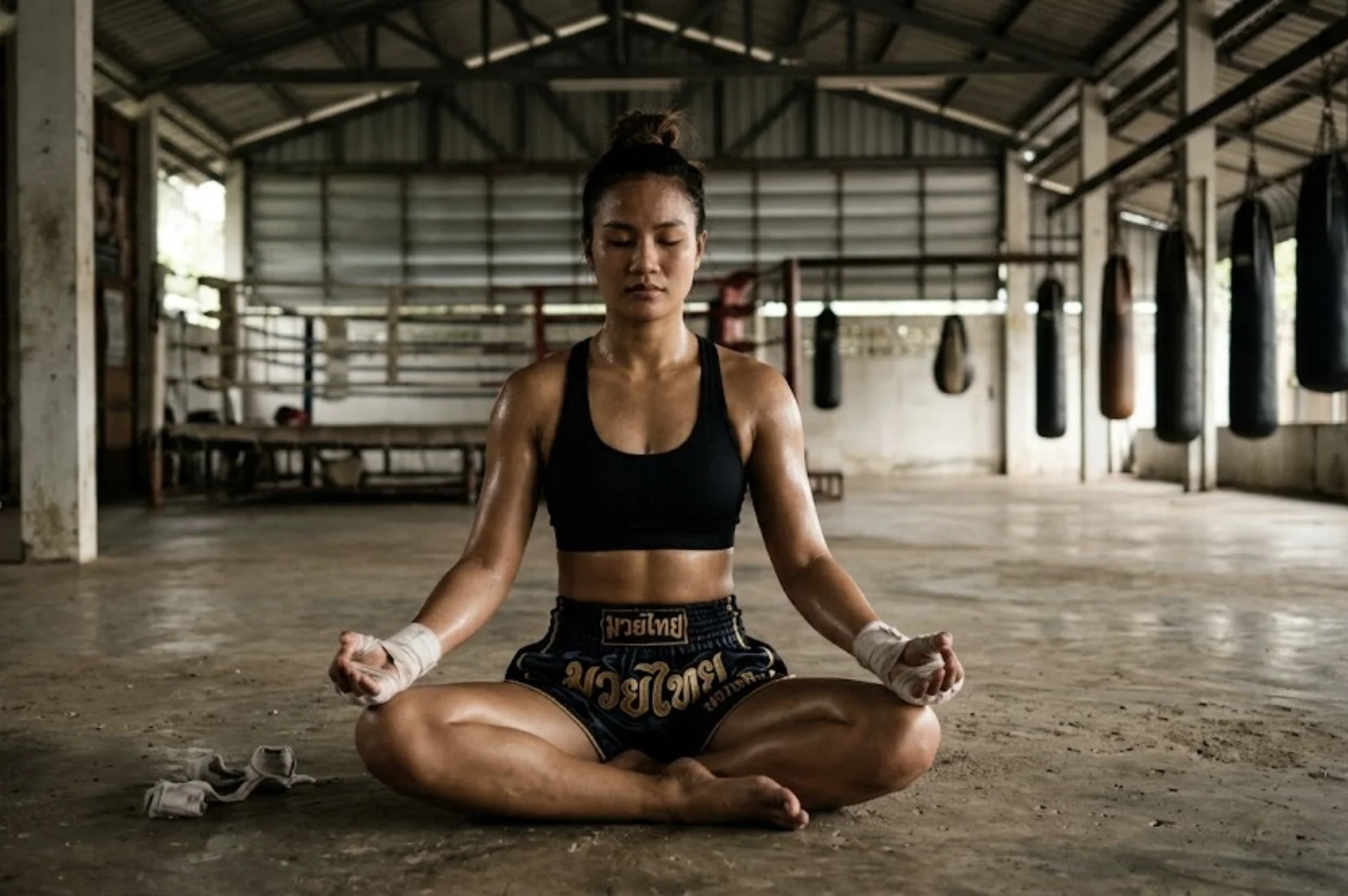
Deliberately practising relaxation during rounds is something most new practitioners do not think to work on, because it does not feel like training. It is. Between combinations, actively drop your shoulders. Unclench your hands. Let the breath move. The energy you save compounds across a round and across a session.
Breathing consciously during combination work is a technical drill worth practising during bag work when there is no pressure from a partner. Exhale on the jab. Exhale on the cross. Exhale on the kick. Build it as a habit on the bag before you need it in a pad round.
Pacing is a skill. New practitioners often go too hard in round one, which is the opposite of the right strategy. If you have five rounds ahead of you, round one should feel manageable. The body's energy systems are not infinitely replenishable in a session, and burning through reserves in the first two minutes of a five-round session is the fastest way to make the last three rounds useless. Experienced practitioners manage their output across a session intuitively. Beginners need to consciously hold back until they have developed enough aerobic base to sustain the effort.
The Timeline
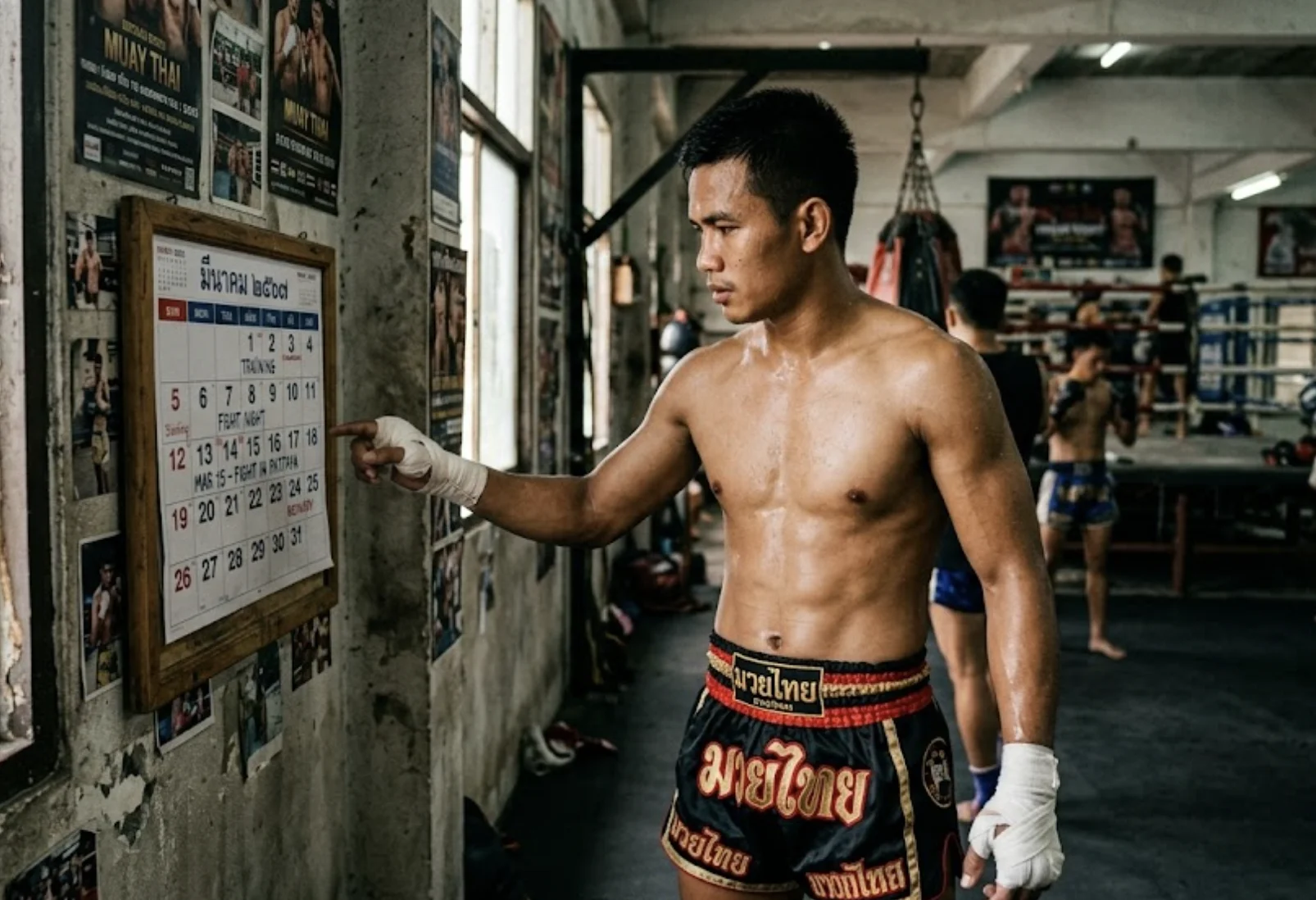
Most practitioners stop routinely gassing out within one to three months of consistent training at three sessions per week. The sessions do not become easy, because the training typically scales in intensity as you improve, but the desperate inability to sustain output that characterises the first weeks becomes a memory.
The fitness that Muay Thai builds is the fitness Muay Thai requires. Train consistently, run a few times per week, work on your breathing and your relaxation, and the problem solves itself. The only thing that does not fix it is avoiding the sessions where it happens.
Sources
- Physiological responses and energy cost during a simulation of a Muay Thai boxing match — Journal of Strength and Conditioning Research, 2009
- Energy System Contributions during Olympic Combat Sports: A Narrative Review — Sports, 2023
- Sports Performance and Breathing Rate: What Is the Connection? A Narrative Review on Breathing Strategies — International Journal of Environmental Research and Public Health, 2023
- Evaluating the progressive cardiovascular health benefits of short-term high-intensity interval training — Applied Physiology, Nutrition, and Metabolism, 2018
Frequently Asked Questions
Why do I gas out so quickly in Muay Thai?
Muay Thai's interval-based structure places a specific demand on your cardiovascular system that most other exercise does not replicate. The combination of high-intensity effort, unfamiliar muscle recruitment patterns, and the tension you carry as a new practitioner, particularly during sparring, depletes your energy reserves faster than most people expect. The good news is that this specific adaptation develops quickly with consistent training. Most practitioners notice significant improvement within four to six weeks. This is also why training frequency matters so much early on.
How do I build cardio for Muay Thai?
The most effective cardio training for Muay Thai is Muay Thai itself, because it develops the specific cardiovascular and muscular adaptations the sport requires. Supplementary running, particularly interval-based running rather than steady-state jogging, accelerates the base fitness that the training draws from. Thai fighters run significant distances daily for this reason. For recreational practitioners, two to three runs per week of twenty to thirty minutes alongside regular training sessions produces meaningful improvement within a few months. Many people who train in Thailand find the daily running culture there accelerates this faster than anything else. alongside regular training sessions produces meaningful improvement within a few months.
Does breathing technique help with gassing out in Muay Thai?
Yes, significantly. Most new practitioners hold their breath during combinations, exhaling only at the moment of impact, which creates oxygen debt much faster than controlled breathing. Exhaling sharply on each strike and inhaling in the brief pauses between combinations keeps oxygen moving through the system and delays fatigue. This sounds simple but takes consistent attention to become habit, and experienced practitioners and coaches consider it one of the most important early corrections to make.
Will I always gas out in Muay Thai?
No. The specific physical adaptation that stops you gassing out develops reliably with consistent training, typically within one to three months at three sessions per week. The sessions that had you bent over after round one will feel different at the six-month mark. The adaptation is real and it is one of the more encouraging early experiences of the sport: seeing concrete, measurable evidence of your own progress.
Does tension cause gassing out in Muay Thai?
Significantly. New practitioners, particularly during sparring, carry a level of physical tension across their shoulders, jaw, and hands that burns energy at a rate their cardiovascular system cannot sustain. Relaxing deliberately during rounds, dropping the shoulders, unclenching the hands between strikes, and breathing rather than holding: all of these reduce energy expenditure considerably. Learning to be physically relaxed under pressure is one of the technical skills of Muay Thai that is not a strike but is just as important.