
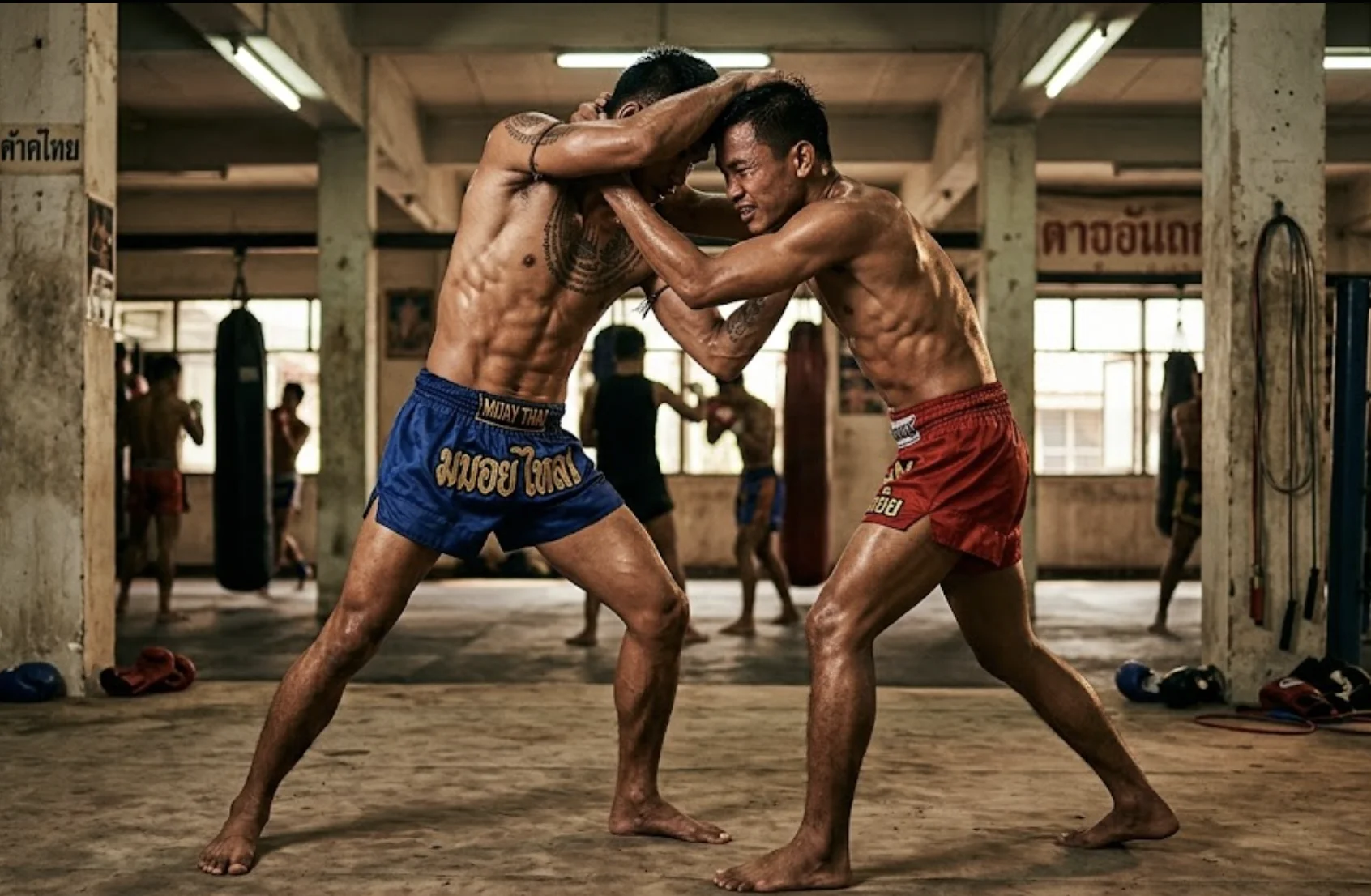
The physique of a professional Thai fighter is one of the first things people notice when they encounter the sport. Lean, functional, almost architectural in its efficiency: muscle present where it is needed, nothing carried that does not serve a purpose. It looks like the product of some specific and discoverable training secret, and the question of how to replicate it is one of the most common things new practitioners wonder about.
The honest answer is that the physique is real, it is hard-won, and it is produced by a lifestyle that most recreational practitioners are not living and have no intention of living. Understanding what actually produces it is the first step toward setting useful expectations and appreciating what recreational training genuinely delivers.
The Life That Produces the Body
Thai fighters in competitive training camps, particularly the fighters competing in major Bangkok stadiums, are professional athletes living inside a specific and demanding routine.
The morning begins before 6am with a long run, typically five to eight kilometres or more, sometimes followed by shadowboxing and technique work. The morning session is low intensity relative to the afternoon but it is volume, and it happens every day. The afternoon session is the serious one: pad rounds at high intensity, bag work, sparring, clinch practice, and conditioning. A full camp afternoon session runs two to three hours.
Between those sessions, they rest, eat, and recover. The food available around Thai gyms is not the problem it would be in a Western city. Family-run restaurants near the camp serve khao man gai, chicken rice dishes built around lean protein and complex carbs, and pad krapow, minced meat with holy basil over rice, the kind of simple, high-protein, carbohydrate-forward meals that fuel training without the caloric density of processed Western food. There is no reason to sit in a car for an hour in traffic. The choices available are different, and the default is clean.
The training volume accumulated over a week in a Thai camp is roughly equivalent to a month of recreational training. Twice daily, six days per week, fifty-two weeks a year, from an age that for many fighters began in childhood. The physique that results from this is not a mystery. It is compounded exposure over years of extraordinary volume.

What Recreational Training Actually Produces
A recreational practitioner training three or four times per week in Bangkok, London, or anywhere else is doing something genuinely different from what a camp fighter does, and comparing the expected physique outcomes is not a useful exercise.
What recreational training does produce is real and worth knowing.
Within six to eight weeks, cardiovascular fitness improves substantially. Within three months, body composition changes are visible: leanness across the shoulders and arms from punching, stronger through the hips and legs from kicking, tighter through the core from the constant rotational demand of the sport. After six months of consistent training at three or four sessions per week, the physical change is meaningful and sustained.
The physique of a recreational Muay Thai practitioner who trains consistently and pays some attention to their diet is genuinely impressive. Not a Thai stadium fighter, because that comparison requires a context that does not apply. A lean, capable, well-conditioned body that looks and feels the way it does because of what it has been asked to do. That is an honest and attainable outcome.
The Diet Variable
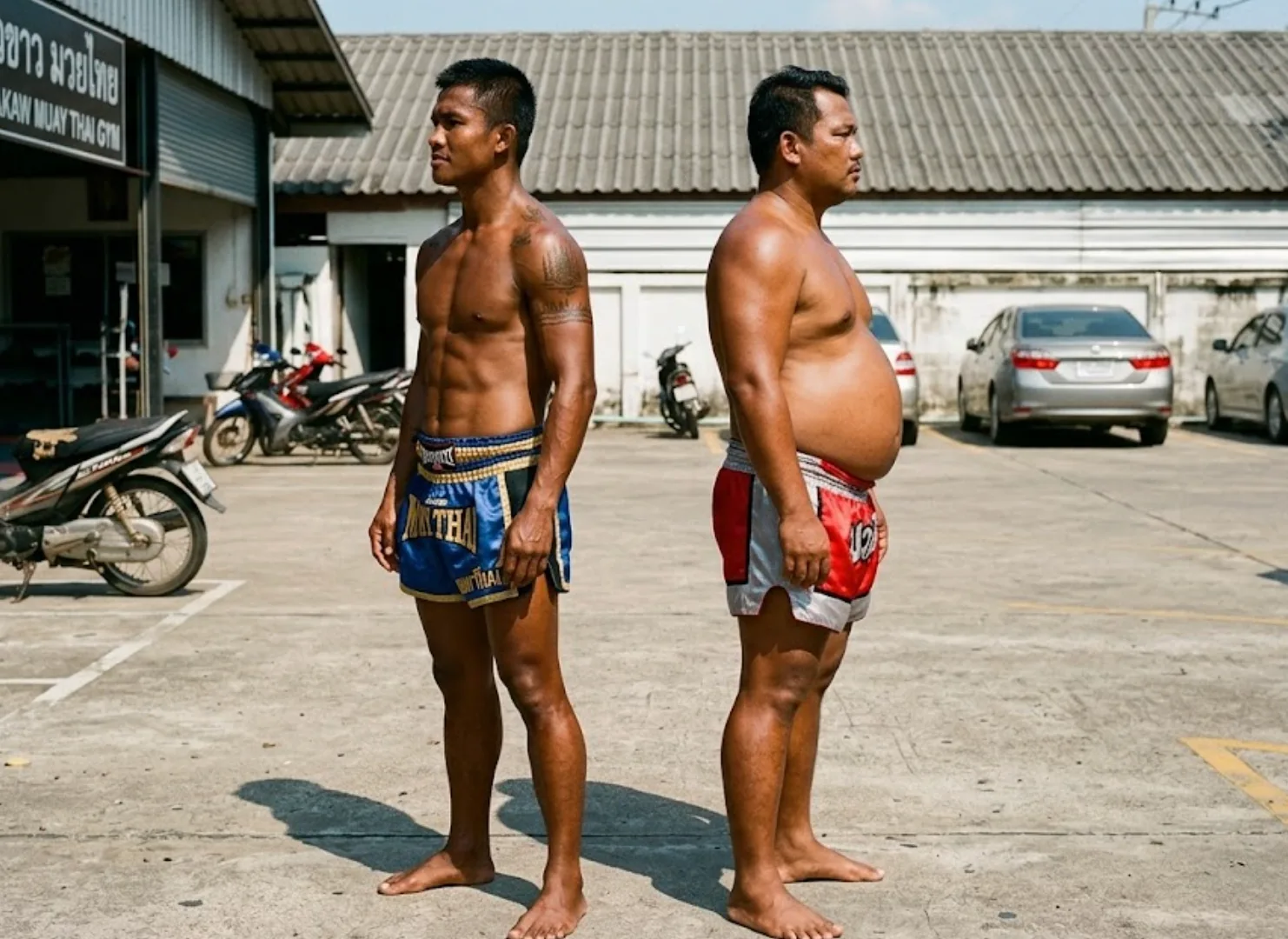
The food around Thai gyms is not a secret formula. It is simple, clean food in portions that match the energy demands of the training. The leanness of Thai fighters is not produced by the training alone. It is produced by the training plus the diet that the camp environment makes easy to maintain.
A recreational practitioner can train at a meaningful intensity and still eat in a way that prevents fat loss. The training burns significant calories. Poor dietary choices outside the gym can neutralise that burn and then some. The training opens the door. What you eat determines whether you walk through it.
No dramatic intervention is required. Some awareness of what you are eating around sessions, reasonable portion sizes, and avoiding the worst dietary habits will produce the combination that makes the training's calorie burn work in your favour. The gap between strict camp eating and the reasonable adjustments available to a recreational practitioner produces a gap in outcomes, but not an unbridgeable one.
Setting the Right Expectation
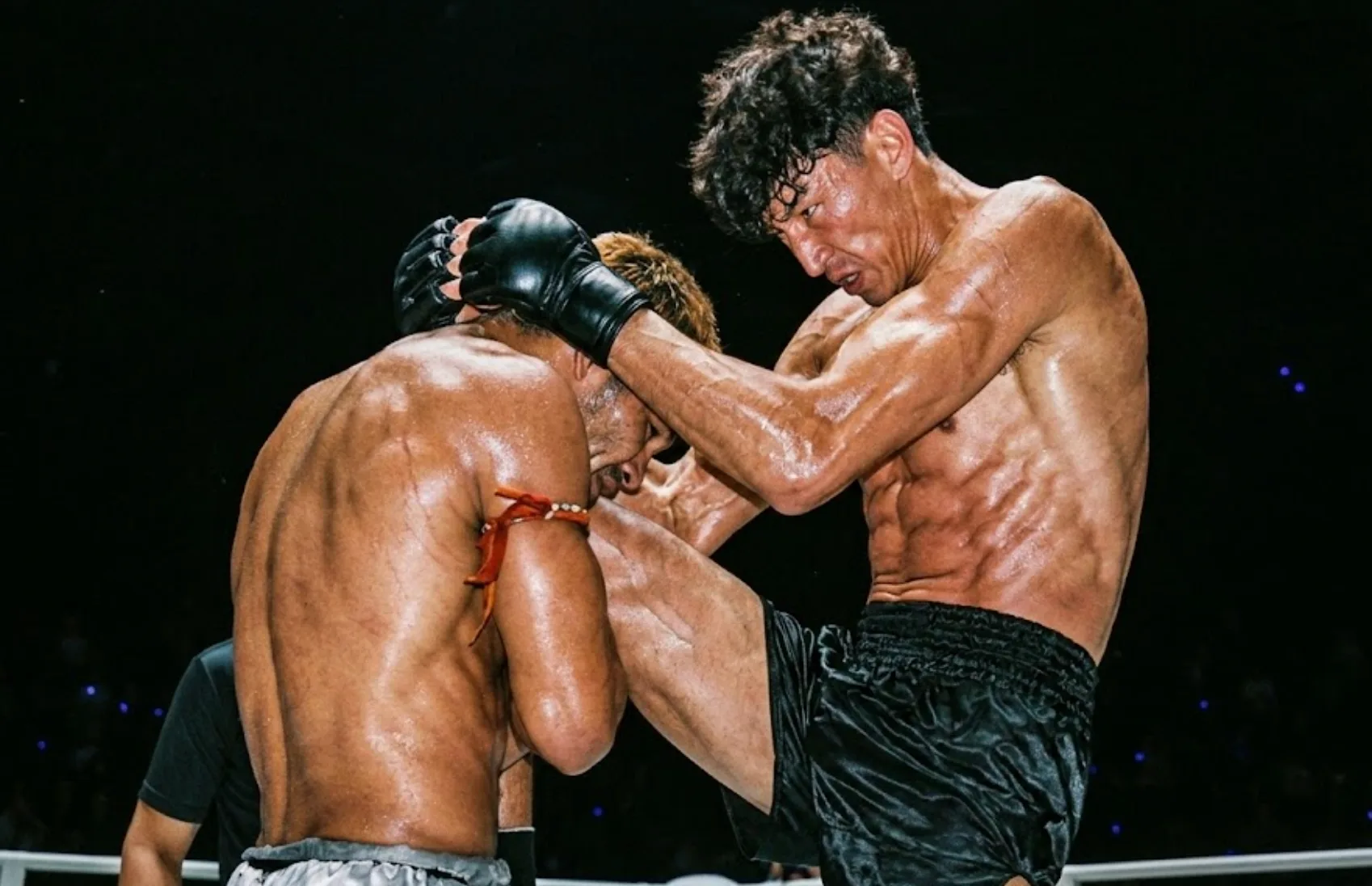
The lean physique of a Thai fighter is the product of extraordinary volume, a specific lifestyle, genetics shaped by generations of physical culture, and in many cases, training from a very young age. You are not starting at eight years old. You are probably not training twice daily. You are not living in a camp where every environmental variable is calibrated around performance.
What you are doing is a version of the same practice at a different intensity and volume, and the version of the outcome available to you, a genuinely lean, capable, and physically confident body that you earned through consistent effort, is worth more than the disappointment of an unfair comparison ever will be.
Train consistently. Pay reasonable attention to what you eat. The result will be real, visible, and yours. That is more than enough.

Frequently Asked Questions
Why are Muay Thai fighters so skinny?
Thai fighters in competitive training typically run several kilometres every morning, train twice daily, and eat modest, protein-forward diets calibrated around fight weight. The combination of extremely high training volume, significant daily calorie expenditure, and disciplined eating produces the lean physique associated with the sport. For more on what training does to your body, see how Muay Thai changes your body and mind. It is not thinness in a passive sense but an earned leanness built on a daily routine that most people do not live anywhere close to. If weight loss is your primary goal, that article covers the realistic timeline in more detail.
Can I get a Muay Thai fighter's physique from recreational training?
You can get significantly leaner, more defined, and more capable from recreational training three to four times per week, but the specific physique of a full-time Thai fighter reflects full-time training at a volume that recreational practice does not replicate. The honest expectation for a recreational practitioner is meaningful body composition improvement, a functional and capable physique, and genuine fitness: not the extreme leanness of a camp-based professional.
How many calories do Thai fighters burn per day?
Professional Thai fighters in training camp can burn 4,000 to 6,000 calories per day or more, combining long morning runs, two training sessions, and the general physical activity of camp life. This is a meaningfully higher daily expenditure than a recreational practitioner who trains for two hours three times a week. The difference in energy output, accumulated daily over years, is the primary explanation for the difference in physique.
What do Thai fighters eat to stay lean?
Thai fighters eat simply. Rice, vegetables, protein from chicken, fish, and eggs, fruit, and water. The family-run restaurants around gyms serve dishes like khao man gai and pad krapow, meals built around lean protein and complex carbohydrates that happen to be exactly what the training demands. Portions are modest by Western standards. The diet works not because of sophisticated nutritional planning but because the food culture and the environment make clean eating the default rather than an effort.
Will Muay Thai make me lose weight?
Yes, as part of a combined approach. Muay Thai burns significant calories and builds the kind of full-body lean muscle that elevates resting metabolism over time. Fat loss depends on overall calorie balance rather than exercise alone, but consistent Muay Thai training combined with reasonable dietary awareness produces meaningful weight loss and body composition change for most people who start with that as a goal.