
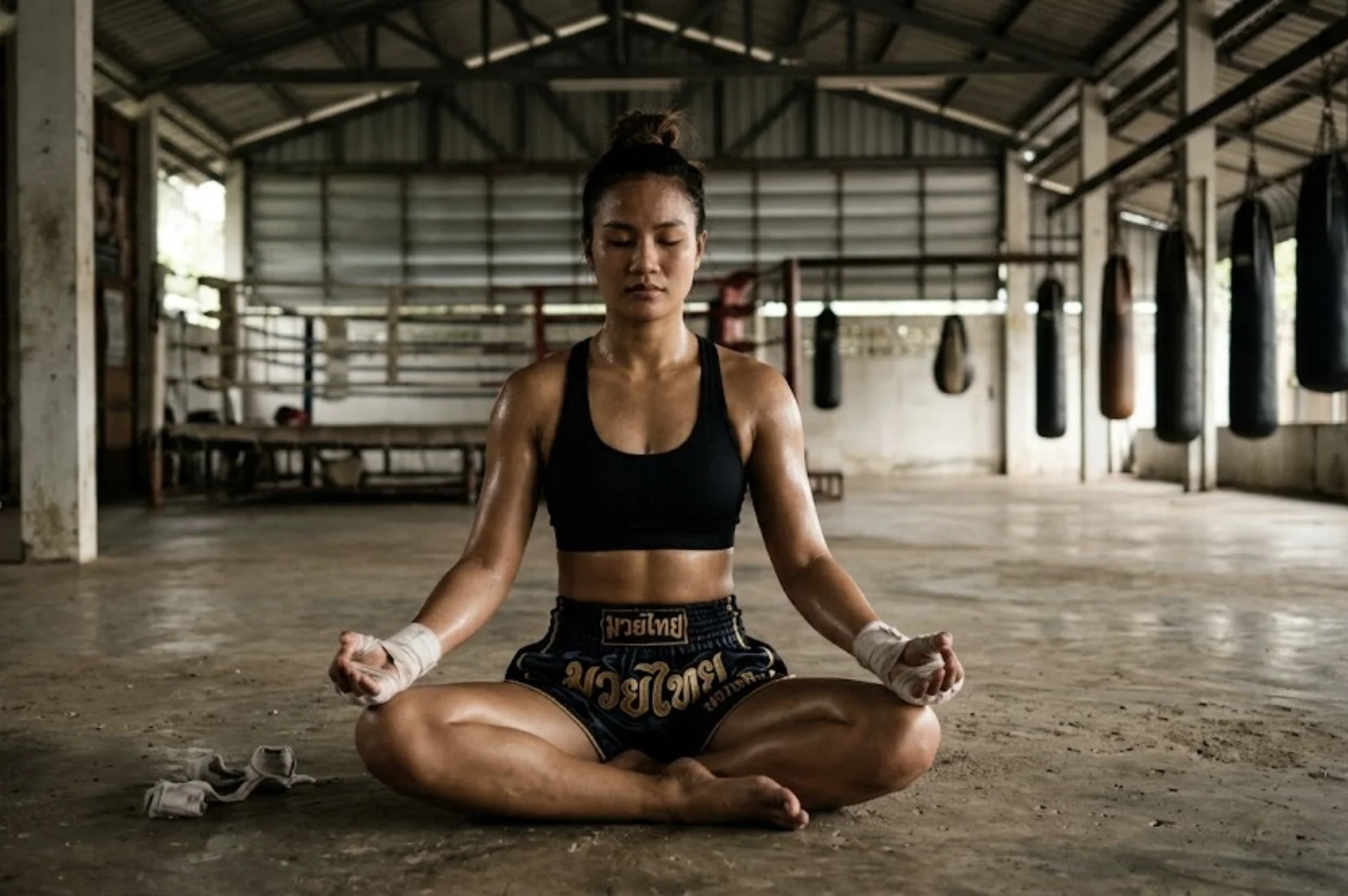
Somewhere around month three of consistent Muay Thai training, something shifts that is not entirely about the body. The physical changes are happening, the leanness building in the shoulders, the improved capacity to sustain physical effort, the way stairs require noticeably less thought than they did before. But alongside the physical changes, something else is developing that is harder to name and, in most people's experience, harder to expect.
The person who started training three months ago was managing something from a different position. Stress landed differently. The body felt like something that happened to them rather than something they lived in. The physical world was slightly more uncertain, the unpredictability of demanding situations slightly more disorienting. Three months of consistent training later, each of those things has changed by a meaningful degree.
This is what Muay Thai does. It changes your body, and in changing your body, it changes how you experience almost everything else.
The Physical Changes: What Actually Happens
The cardiovascular adaptation comes first. Within six weeks of training three times per week, the sessions that felt impossible in week one are manageable. The body has adapted to the interval demands of the training, and the resting cardiovascular fitness has improved accordingly.
Body composition changes follow. Muay Thai engages the legs and hips through kicking, the shoulders and arms through punching and clinch work, the core through every rotation in between. The total-body demand means that the muscle activation is comprehensive and the calorie burn is significant. The result, over months, is leanness rather than bulk. Defined through the shoulders, stronger through the hips, tighter through the core. The training does not isolate muscle groups for aesthetic development. It develops them for function, and the aesthetic is a by-product.
Posture changes in ways that are visible to people who know you. The guard position, held for thousands of repetitions across hundreds of sessions, builds awareness and strength in the upper back and shoulders. The hip mobility required for proper kicking develops a looseness through the hips and lower back that most people have lost through years of desk-based work. The way you stand and the way you walk carry the marks of the training whether you are aware of it or not.
Movement economy improves. The footwork work builds balance and spatial awareness. The coordination required for a clean combination develops proprioception that carries into everyday movement. Practitioners often describe feeling lighter, more deliberate, and more comfortable in their own bodies in a way that extends well beyond the gym floor.
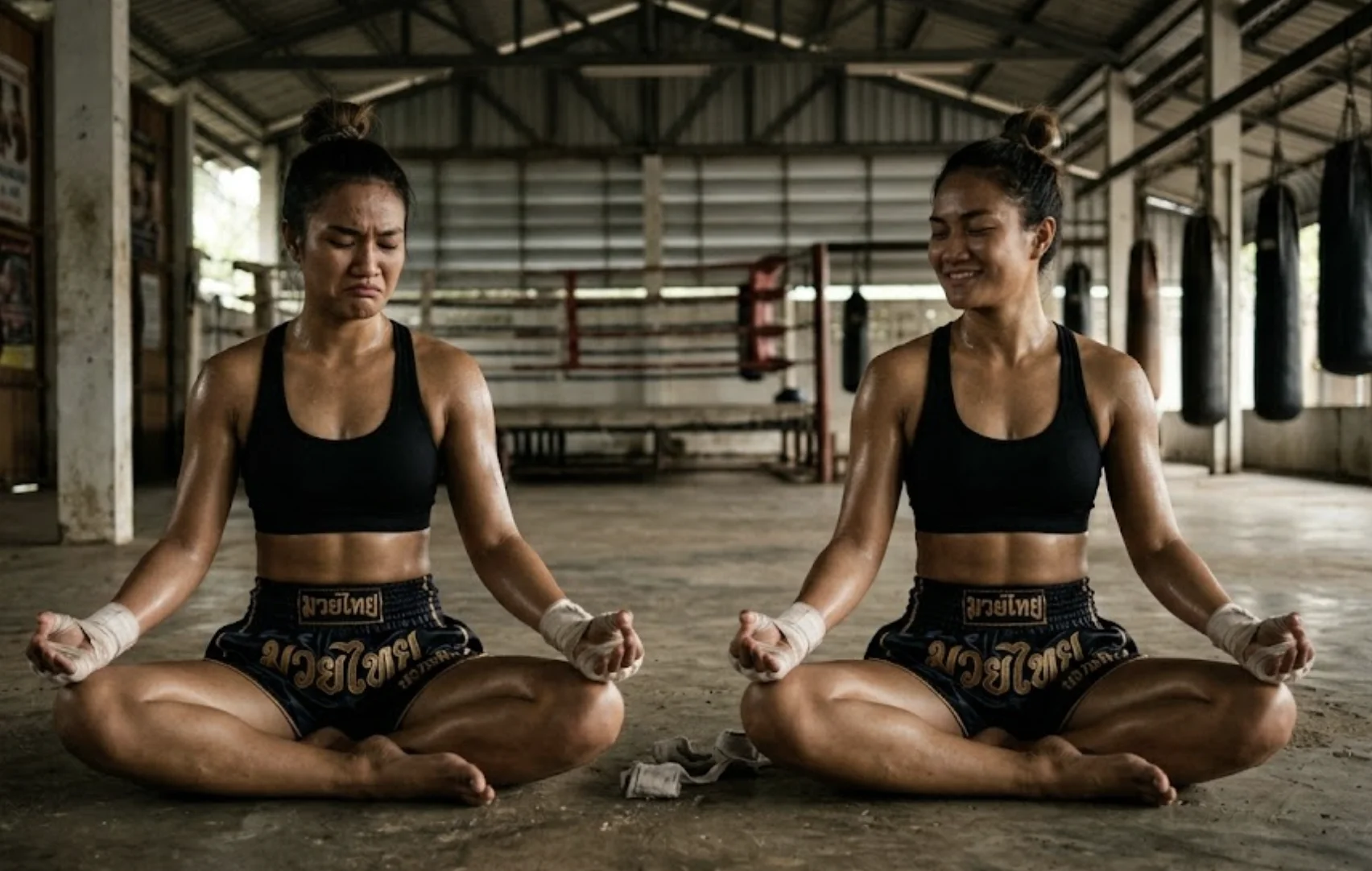
The Mental Changes: What Nobody Mentions
The physical changes get talked about because they are visible and measurable. The mental changes tend to arrive more quietly, and they tend to be more significant.
Composure under pressure is the one that practitioners mention most consistently when asked what training has done to them beyond the physical. Muay Thai sparring, even at a controlled level, requires you to think clearly while your heart rate is spiking, while something real is coming at you, while your body's threat response is flooding your system with adrenaline. The practitioner who has been through that experience regularly has a reference point that recalibrates their response to other stressful situations.
This is not a claim that Muay Thai makes you fearless. It is a claim that it changes your relationship with the physiological fear response by making it familiar. The practitioner who has managed their adrenaline through a hundred sparring rounds knows what it feels like and knows they can function through it. That knowledge transfers.
The meditative quality of drilling is underappreciated. Working a technique several hundred times in a session, trying to refine a single element of it with each repetition, demands a quality of present-moment focus that is genuinely rare in modern life. Practitioners who come from high-stress cognitive work often describe the training as the only time in their week when their mind is fully, unambiguously occupied by a single thing. That quality of attention has a restorative effect that accumulates.
The discipline required to show up consistently, to accept being a beginner, to acknowledge correction from a coach, and to return after a session that went badly: these develop habits of mind that extend beyond the gym. The person who has been doing this for a year has practised showing up under discomfort more times than most people experience that specific challenge in a decade of ordinary life.

The Thing That Is Hard to Describe
There is a quality that develops over consistent training that is difficult to name precisely. It is not arrogance and it is not aggression. It is closer to a settled kind of physical confidence, a sense of knowing what your body can take and what it can give.
Most people who have not done demanding physical training of this kind go through adult life with an uncertain relationship with their own physical limits. They do not know what they can endure because they have never been required to find out. Muay Thai answers that question in a very specific and reliable way. The person who has taken a hard round and kept their composure, who has been winded and recovered and continued, knows something about themselves that is difficult to acquire any other way.
That knowledge changes how you carry yourself. Not in a showy way. In the way that someone carries themselves when they are not particularly worried about being tested, because they have some experience of being tested and know how it goes. It is not a posture anyone is performing. It is a quality that training produces and that stays whether you are thinking about it or not.
Six months from now, you will be a different version of yourself. Leaner, fitter, more coordinated. Also calmer, more patient, more comfortable in your own body, and possessed of a specific kind of quiet confidence that you did not have before. The training produces all of it. Most people who experience it report that the second half is the more valuable.
Frequently Asked Questions
How quickly does Muay Thai change your body?
Most people notice functional physical improvements within four to six weeks of consistent training: better endurance, lighter movement, less effort on physical tasks. Visible body composition changes typically appear between eight and twelve weeks. If weight loss is your primary motivation, that article covers the realistic calorie math in more detail. for someone training three or more sessions per week. After six months, the changes in leanness, posture, and the way you carry yourself are noticeable to people who know you well.
Does Muay Thai change your personality?
It changes certain habits and responses without changing who you are. Practitioners commonly report improved composure in stressful situations, greater patience, more confidence in their own body, and a reduced anxiety response to physical confrontation or discomfort. These are adaptations built through consistent exposure to challenge rather than personality changes. You become more of yourself, but a version that has been tested in specific ways.
Does Muay Thai help with mental health?
Many practitioners report significant improvements in mood, stress management, and anxiety through consistent training. The combination of intense physical exercise, technical focus that displaces ruminative thought, and the community of a good gym addresses several dimensions of mental health simultaneously. While the research specifically on Muay Thai is limited, the evidence base for combat sports training and mental health outcomes is broadly positive.
Will Muay Thai make me more aggressive?
The opposite is more commonly reported. Practitioners who train consistently tend to develop greater emotional regulation rather than less, partly because the controlled environment of sparring provides a safe outlet for physical intensity and partly because the discipline of the art emphasises respect and control. The aggressive energy that the training demands is channelled and managed rather than amplified.
How does Muay Thai change the way you move?
Significant changes in posture, balance, and movement economy develop over months of training. The guard position builds shoulder and upper back awareness. The hip rotation required for kicks develops hip mobility and core strength that affects how you move in everyday life. The footwork drills build balance and spatial awareness. Practitioners often describe feeling lighter on their feet, more deliberate in how they place their weight, and less physically awkward in general.