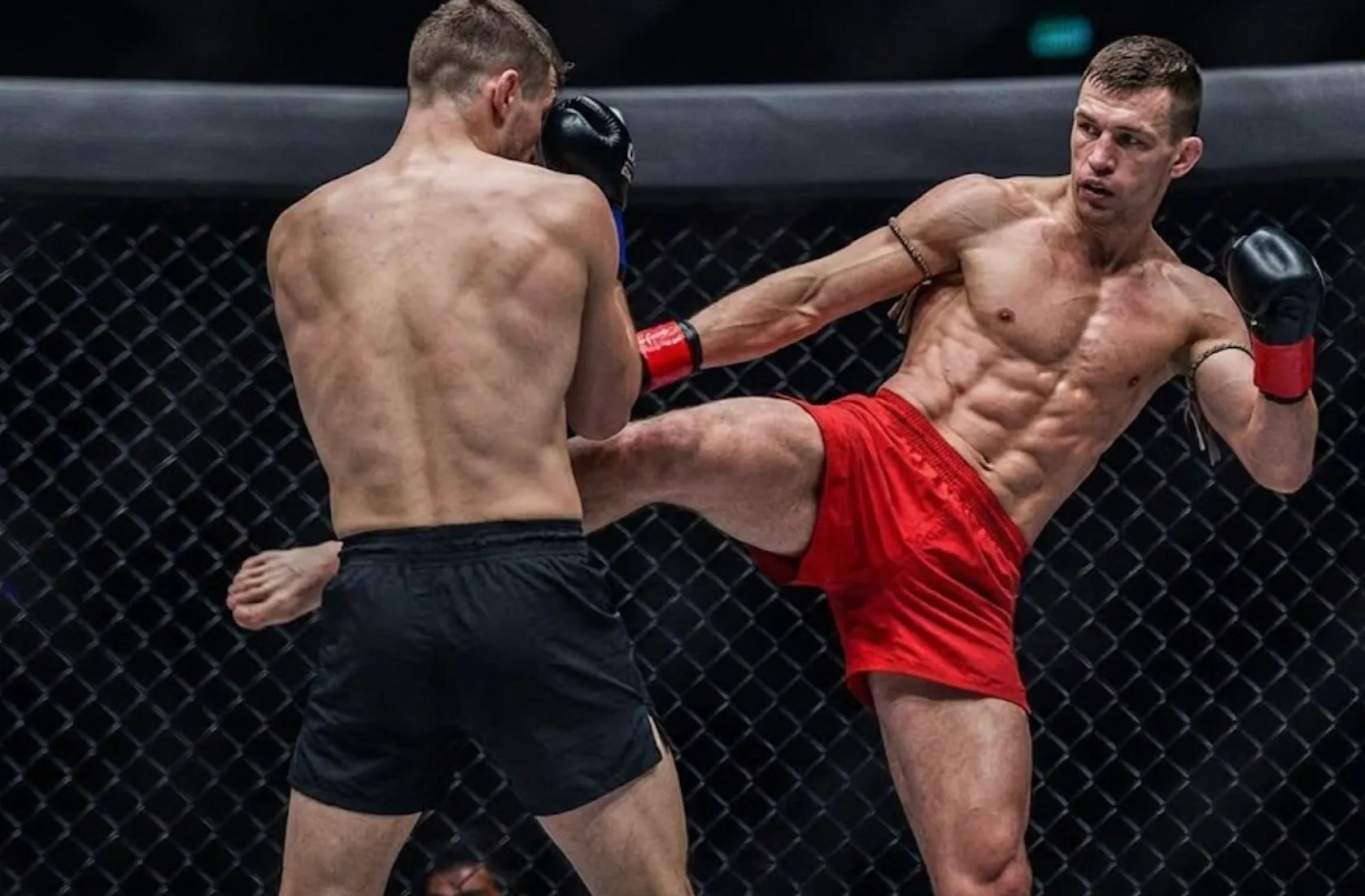
December 24, 1982. Rajadamnern Stadium, Bangkok. The fight that the Thai sporting press had spent the second half of that year anticipating was finally on the card: Dieselnoi Chor Thanasukarn against Samart Payakaroon, two champions of different kinds at the same weight, the best knee fighter against one of the most technically gifted fighters the sport had produced in a generation.
Samart was supposed to be the answer. Elegant, intelligent, a counter-fighter of rare quality with hands precise enough to deal with any attacking style. If anyone had the tools to neutralise Dieselnoi's clinch dominance, it was him.
Dieselnoi won. And then he kept winning. And then, eventually, there was nobody left.
The Fighter from Ayutthaya
Charin Sorndee was born on December 26, 1961, in Ayutthaya Province, the ancient capital of the Siamese kingdom, now a UNESCO World Heritage Site and home to some of the most storied ruins in Thailand. He began fighting under the name Dieselnoi at an age when most Thai fighters from the provinces were just entering serious training, and he moved through the lightweight ranks with a physical advantage that was immediately apparent to anyone watching.
He was tall. For the lightweight division, exceptionally so. And the height was not a disadvantage in the way that some fighters with length struggle at close range. Dieselnoi had trained to use it. From the clinch, his neck tie position was reached from above, giving him leverage that shorter opponents could not match. His knees, thrown from that height advantage, arrived at angles that the standard defensive responses did not account for.
He earned the nickname "Lord Sky-Piercing Knee." In Thai fight culture, where nicknames are earned through performance and reflect what opponents actually experience, this is a name with weight. It was not given. It was imposed by the evidence.
Lumpinee and the Unbeaten Run
Dieselnoi captured the Lumpinee Stadium lightweight championship in January 1981, defeating the reigning champion in a fight that signalled not a changing of the guard but something more disruptive: the arrival of a practitioner whose style had no obvious counter at the weight class.
Over the next four years, he defended the title repeatedly. The fighters who came forward to challenge him were good fighters. Muay Thai's lightweight division in the early 1980s was highly competitive, and the rankings were not short of credible contenders. What they lacked, when they entered the ring with Dieselnoi, was a way to keep him out of the clinch long enough to prevent the damage from accumulating.
His record in those years is extraordinary not because of the numbers alone but because of the quality. The December 1982 victory over Samart is the most cited, but the pattern held across opponents of different styles and strategies. He was awarded Thai Sports Writers' Fighter of the Year in 1982. This was not a consolation prize for longevity. It was recognition that he was the most dominant fighter in the country at that moment.
The Mechanics of Dominance
What made Dieselnoi's Muay Khao style so difficult to solve was the combination of physical attributes and technical refinement operating simultaneously.
The height gave him reach. The reach created a clinch entry that opponents had to fight through on the way to establishing any position of their own. Once the clinch was established in Dieselnoi's favour, which happened with striking regularity, the knee strikes arrived from a height and angle that made them simultaneously more powerful and harder to defend than the same strikes thrown by a fighter of standard lightweight dimensions.
But it was not purely physical. Fighters with physical advantages who lack the technical knowledge to exploit them lose to opponents who are better at the game. Dieselnoi was better at the game. His clinch control, the way he managed the neck tie, denied knee opportunities to the opponent while creating them for himself, was the product of training and intelligence rather than size alone. He was not simply bigger. He was better, and the combination made him something the division had no answer for.
The knee is a weapon that rewards sustained pressure. One or two knees to the body, properly landed, are meaningful. Twenty knees to the body over three or four rounds change how a fight breathes, how a fighter absorbs punishment in the later rounds, how much energy remains for offence when the final bell approaches. Dieselnoi did not need to finish fights in the first round. He built wins that were complete before the final bell, not because of any single moment but because of the accumulated weight of what he had done over the course of the bout.
The Retirement That Was Not a Defeat
By 1985, the problem was not that Dieselnoi had declined. It was that the division had declined around him. Challengers became harder to find, not because the lightweight ranks were thin but because the fighters in them assessed their chances against him and made a rational decision.
He was retired from competition at his peak, the title still in his possession, without the experience of losing it in the ring. This is unusual in the history of any combat sport. It is also, depending on how you read it, either the highest compliment the division could pay him or the most damning statement it could make about its own courage.
Both readings are probably true. And both cement Dieselnoi's position not just as the greatest knee fighter in the history of Muay Thai but as one of the most remarkable champions the sport has ever produced at any weight.
He left before anyone could take what he had. The belt was never pried from his hands. It went with him.
Sources
- Wikipedia — Dieselnoi Chor Thanasukarn
- Siam Fight Magazine — Dieselnoi Profile
- Lumpinee Stadium — Historical Championship Records
- IFMA — Muay Thai Hall of Fame
Frequently Asked Questions
Who is Dieselnoi?
Dieselnoi Chor Thanasukarn, born Charin Sorndee on December 26, 1961 in Ayutthaya Province, Thailand, is widely regarded as the greatest knee fighter in the history of Muay Thai. He held the Lumpinee Stadium lightweight championship from January 1981 and remained undefeated for over four years, eventually retiring at his peak because no fighter of comparable weight was willing to challenge him. His nickname, which translates loosely as "Lord Sky-Piercing Knee," describes his signature weapon and the height from which he delivered it.
Why did Dieselnoi retire?
Dieselnoi was forced into retirement not by defeat but by the absence of challengers. His dominance in the clinch and his knee game were so complete that fighters at the lightweight limit declined to face him. The record books do not contain a fighter who beat him for the title. He left the sport at his absolute peak with the belt still in his possession, which makes his story one of the more unusual in the history of combat sports, and one of the most compelling arguments for just how dominant he truly was.
What style did Dieselnoi use?
Dieselnoi was the archetypal Muay Khao fighter, building his game entirely around knee strikes from the clinch. His height, which was exceptional for the lightweight division, gave him a natural leverage advantage in the neck tie position, and he used it to control opponents at close range and punish them with upward and diagonal knees over sustained clinch exchanges. His style was less about spectacular finishes and more about the systematic accumulation of damage that made it impossible for opponents to compete in the later rounds.
Did Dieselnoi beat Samart Payakaroon?
Yes. On December 24, 1982, Dieselnoi faced Samart Payakaroon at Rajadamnern Stadium in a fight that drew extraordinary attention. Samart was one of the most technically gifted fighters of his generation and was considered a serious rival to Dieselnoi's dominance. Dieselnoi won convincingly. The bout is remembered as one of the defining performances of the era and cemented Dieselnoi's reputation as the leading fighter of his weight class.
How does Dieselnoi rank among the greatest Muay Thai fighters ever?
Dieselnoi is consistently placed in the highest tier of all-time Muay Thai fighters, alongside names like Samart Payakaroon, Namsaknoi Yudthagarngamtorn, and Somrak Khamsing. What makes the ranking discussion interesting is that his record includes no defeat at the peak of his career. The argument for placing him at the very top rests on the combination of his unbeaten run, the quality of the opponents he faced, and the specific form of his dominance: not winning narrowly but winning so thoroughly that the division ran out of challengers.