There is a question that comes up constantly in gyms, online forums, and conversations between people who are trying to decide where to begin. Muay Thai or jiu-jitsu? Two of the most widely trained martial arts in the world, with serious competitive scenes, passionate communities, and genuine practical value. They are also built around almost entirely opposite principles, and that difference matters when you are trying to work out which one fits what you are actually looking for.
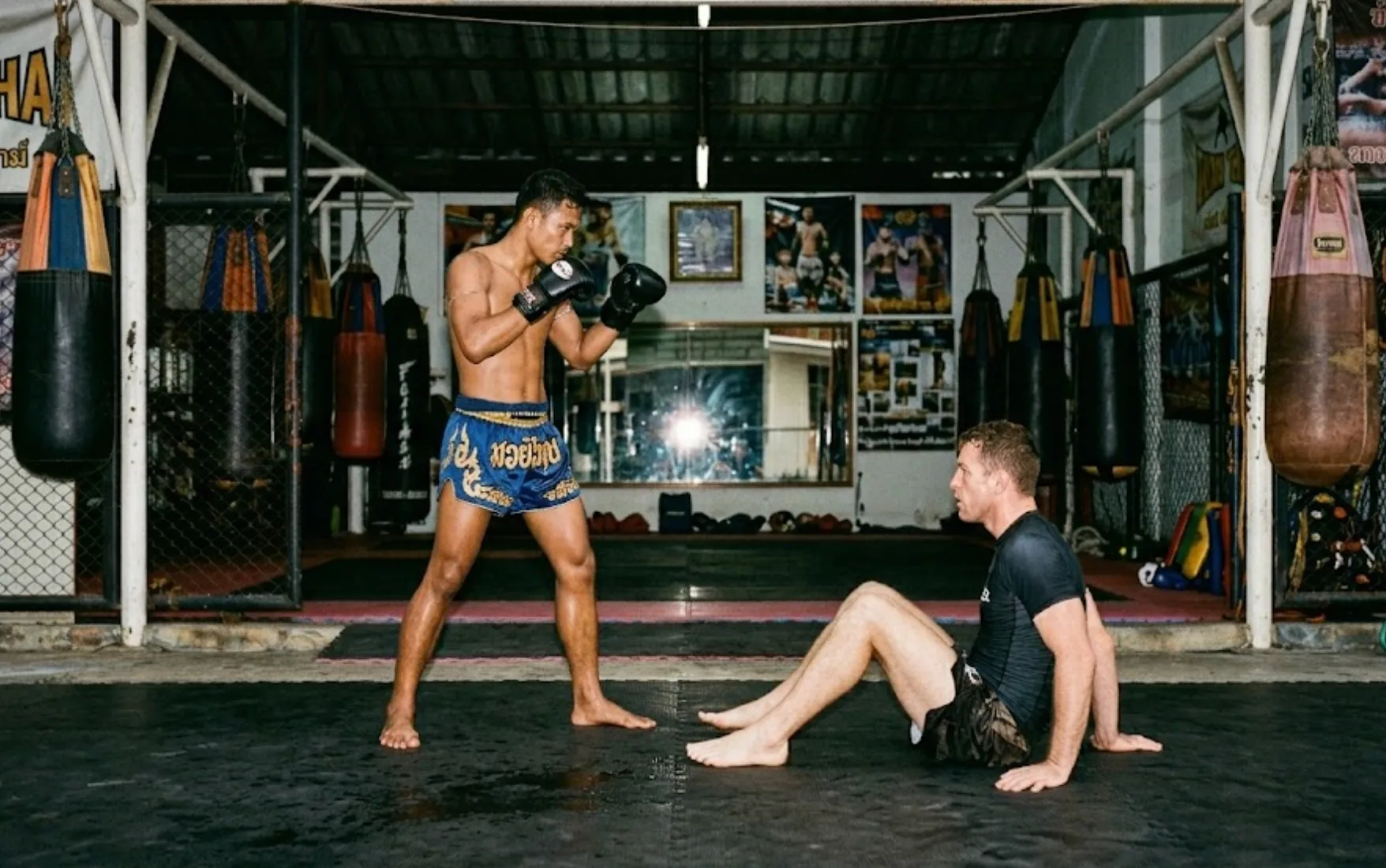
Muay Thai keeps you on your feet. It is a striking art built around the eight limbs: fists, elbows, knees, and feet. The goal is to generate and deliver power at range and in the clinch, to control the space between you and your opponent, and to find the precise angle that makes a technique land. It is a sport of distance, timing, and explosive force.
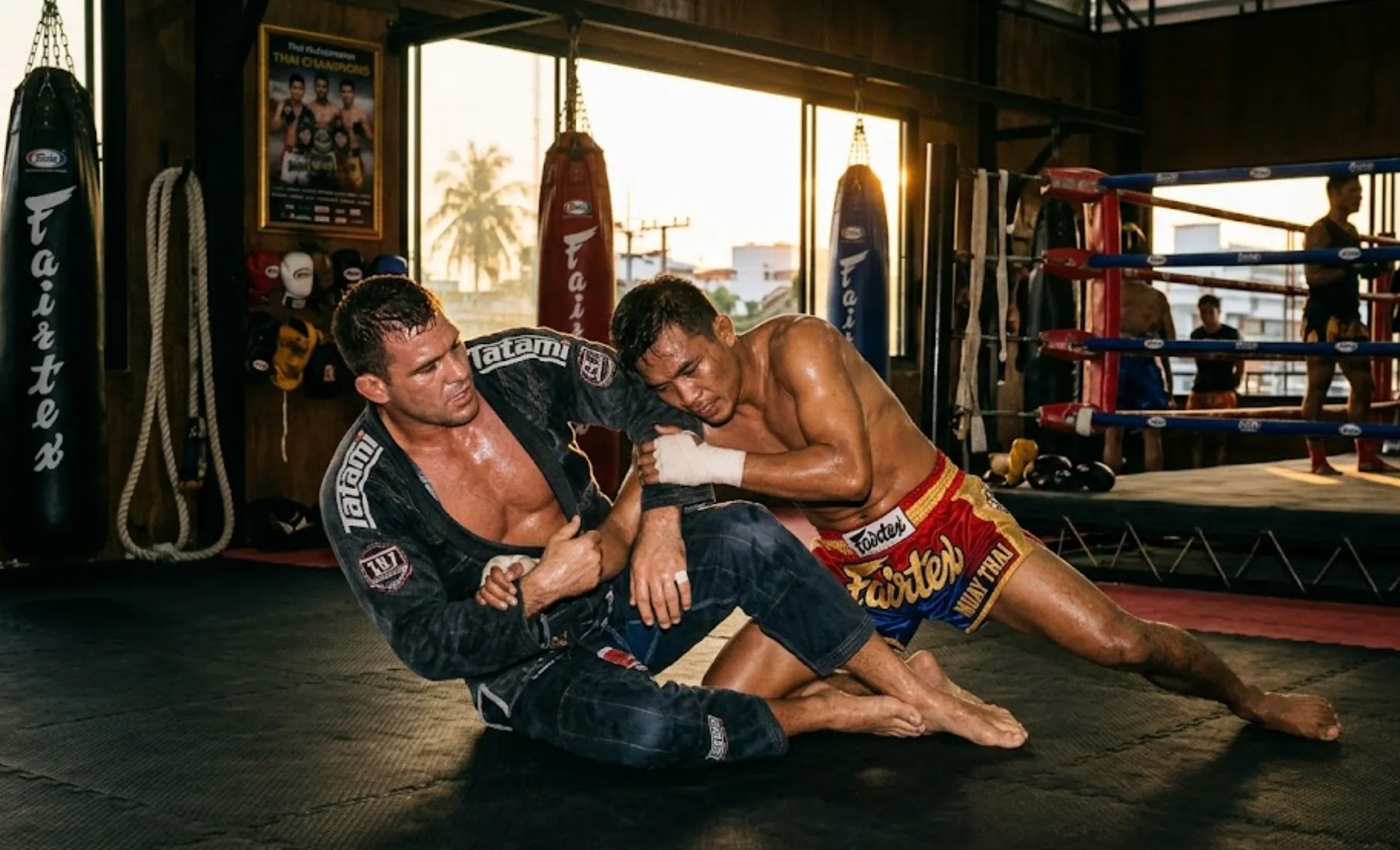
Brazilian jiu-jitsu takes you to the ground. It is a grappling art built around the principle that superior technique and positional control can neutralise a physically stronger opponent. The goal is to secure dominant position, control your partner, and apply joint locks or chokes that force a submission. It is a sport of leverage, patience, and problem-solving under pressure.
They are both extraordinary. They are asking different questions entirely.
What Muay Thai Gives You
The striking range is the thing people talk about first, and it deserves the attention it gets. Eight weapons, practised until they become instinct, covering the distance from long-range kicks to close-range elbows and knees. The variety is not just tactical. It changes how you understand space and movement. A practitioner who has spent a year learning to control distance through footwork and jab range is developing a spatial intelligence that carries into everything.
The fitness is genuinely exceptional. Muay Thai sessions are interval-based by nature: rounds of high-intensity work followed by short rests, repeated. The total-body demand of striking, from the hip rotation in a kick to the shoulder commitment in a cross, produces cardiovascular adaptation and body composition changes that are difficult to replicate in most other training contexts. People who train Muay Thai consistently tend to look like they train Muay Thai.
The culture has a particular warmth rooted in Thai tradition. The sport has been refined over centuries, and the respect that runs through it, the bow before and after sparring, the hierarchy of the ring, the sense of shared practice, is not cosmetic. It is structural. New practitioners encounter a community that, at its best, takes both its art and its people seriously.
What Jiu-Jitsu Gives You
The ground game is a dimension most people have never explored. Jiu-jitsu practitioners operate from positions that are entirely foreign to the untrained: guard, mount, back control, half guard. Learning to navigate these positions and find submission openings from any of them is a slow and genuinely absorbing process. The depth of the art is extraordinary. Practitioners with a decade of training are still learning.
The chess metaphor is overused but accurate. A jiu-jitsu round is a live problem-solving exercise with a partner who is actively trying to solve a different problem. The mental engagement it demands is distinct from what Muay Thai asks of you. Some people find this quality more compelling than anything a striking art offers. For them, the puzzle is the point.
The physical adaptation is different from Muay Thai. Jiu-jitsu builds specific kinds of grip strength, hip mobility, and the muscular endurance of sustained effort at lower intensity. Rolling for five or six rounds develops a particular kind of functional strength that weightlifting does not replicate. The fitness is real, but the profile is different.
The community tends to be tightly knit and deeply committed. People who have trained jiu-jitsu for years are evangelical about it in a way that is hard to manufacture. That says something about what the practice gives them.
The Self-Defence Question
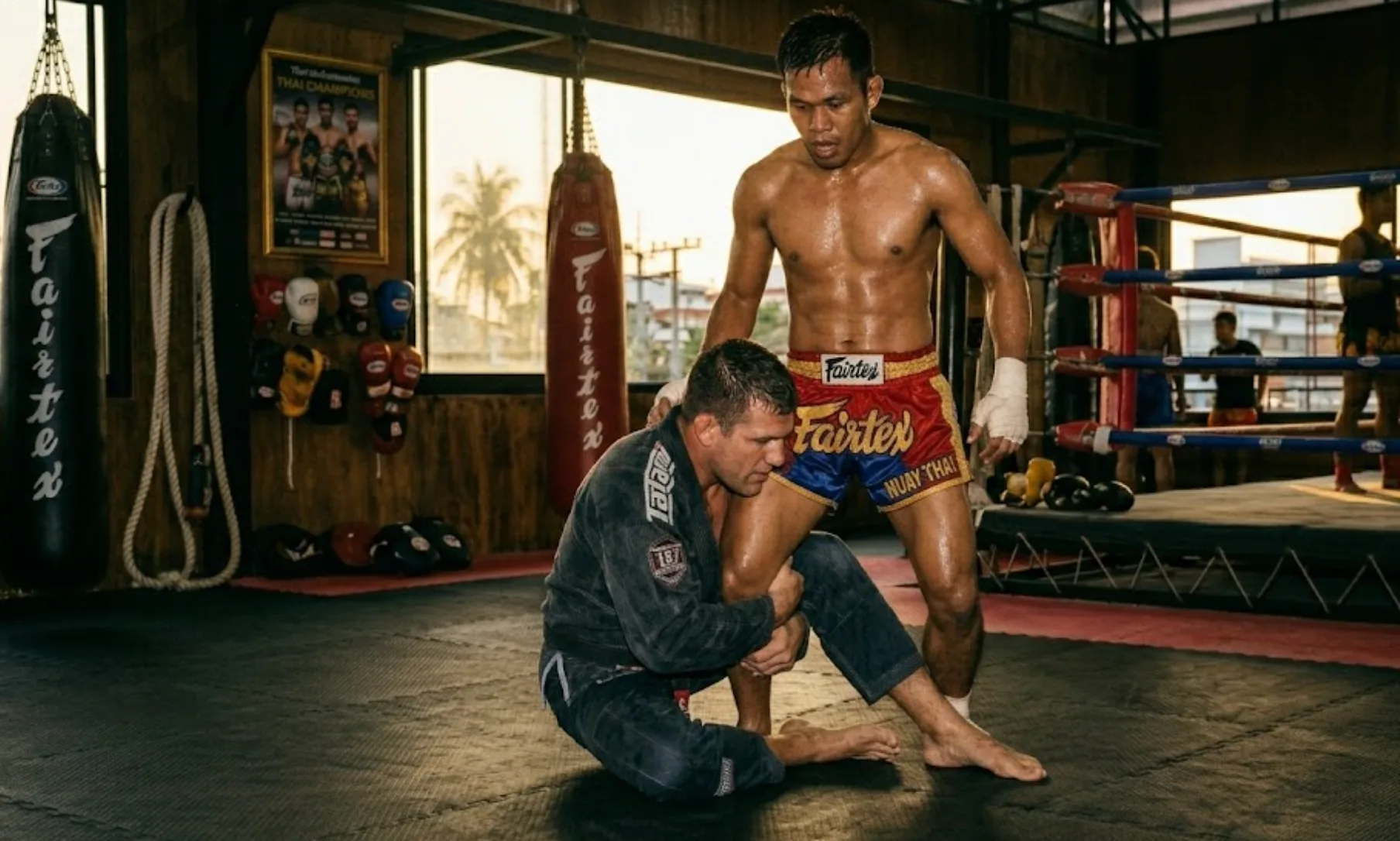
Both arts are frequently chosen by people who are thinking, at least partly, about practical self-defence capability. The honest comparison is not as clean as either community's marketing suggests.
Muay Thai gives you striking tools for the phase of a confrontation that happens standing up, at range or in the clinch. It develops composure under pressure through sparring, a quality that matters in real situations more than any specific technique.
Jiu-jitsu addresses what happens when a confrontation reaches the ground, which it frequently does. The ability to control a larger, stronger person from the ground without striking them has obvious practical advantages in scenarios where the goal is control rather than damage.
The practitioners who think most clearly about this tend to arrive at the same answer: both. The two arts cover different problems and complement each other almost perfectly. MMA as a discipline exists partly because the sport demonstrated, repeatedly, that striking without grappling or grappling without striking creates a clear and exploitable gap. Cross-training is the honest answer to the self-defence question.
How to Actually Choose
If the self-defence conversation does not settle it for you, the simpler version of the question is this: do you want to stay on your feet or go to the ground?
If you are drawn to the idea of striking, to the power and precision of a clean kick, to the rhythm of pad work, to the physicality of the clinch, Muay Thai is your art. If you are drawn to the idea of ground control, to solving problems with leverage rather than force, to the positional chess game that jiu-jitsu demands, go to jiu-jitsu.
Both decisions are correct. Both arts will reward the same qualities: consistency, patience, a willingness to feel lost before you find your footing, and enough ego to keep showing up and enough humility to listen when you get there.
The best version of this choice is the one that gets you into a gym and keeps you there. Try a class at each if both interest you. The one you cannot stop thinking about on the way home is probably the right answer.
Frequently Asked Questions
Is Muay Thai or jiu-jitsu better for self-defence?
Both have genuine self-defence value, but they address different scenarios. Muay Thai gives you striking capability at range and in the clinch. Jiu-jitsu gives you control and submission options once a confrontation reaches the ground. Since real confrontations often involve both phases, many self-defence-focused practitioners eventually cross-train in both. If you have to choose one, jiu-jitsu's ground control is arguably more universally applicable in a civilian context where delivering a decisive strike without further legal complication is difficult. For more comparisons, see Muay Thai vs MMA and Muay Thai vs Boxing.
Which is better for fitness, Muay Thai or jiu-jitsu?
Muay Thai tends to produce superior cardiovascular fitness due to the interval-based nature of the training and the full-body demand of striking. Jiu-jitsu builds functional strength, flexibility, and a specific kind of muscular endurance through live rolling. Both improve physical fitness significantly. Which produces better results for your specific goals depends on what those goals are: if cardiovascular fitness and body composition are the priority, Muay Thai has the edge.
Is Muay Thai or jiu-jitsu harder to learn?
Both have genuine depth that takes years to develop. Muay Thai technique has a steeper early curve in terms of coordination and power generation. Jiu-jitsu can feel overwhelming in the early months due to the sheer volume of positional knowledge required. Most practitioners report that both arts rewarded their patience over six to twelve months of consistent training. Neither is the easier option, they simply challenge you differently.
Which is better for MMA, Muay Thai or jiu-jitsu?
Both are fundamental to modern MMA. The sport has proven that striking without grappling or grappling without striking creates clear and exploitable gaps. Most serious MMA fighters develop a base in one and cross-train the other. Muay Thai's clinch work and striking range translate directly to MMA, while jiu-jitsu's submission and guard work from the ground are equally essential. If you are approaching MMA as the goal, you will need both eventually.
Can I do both Muay Thai and jiu-jitsu at the same time?
Yes, and many people do. The arts complement each other well, covering different ranges and different problems. The practical constraint is training time and recovery. Starting both simultaneously can dilute the progress you make in each. A common approach is to build a foundation in one for six to twelve months before adding the other. Which you start with comes down to which excites you more, which is always the better guide.