
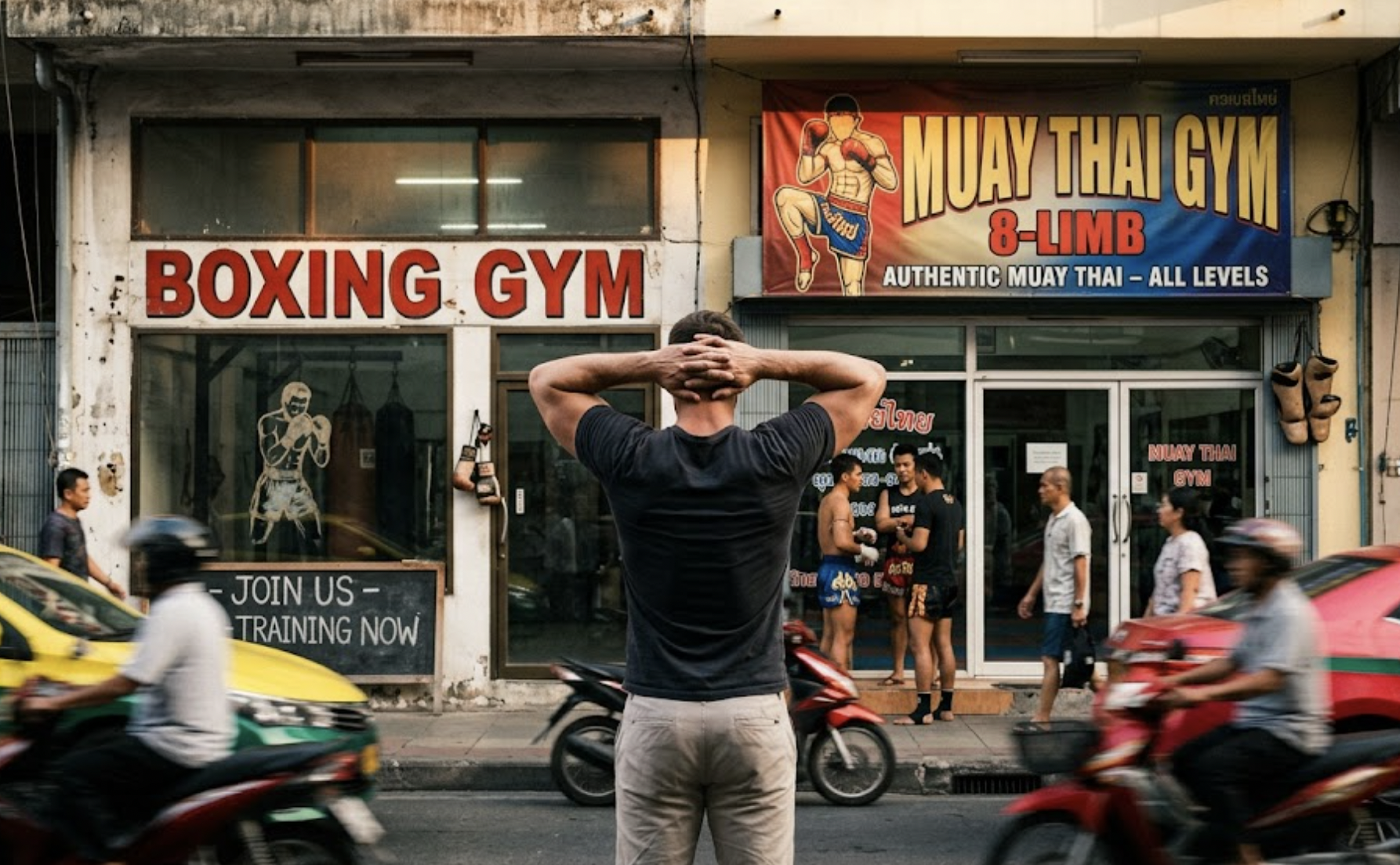
Two striking arts. Two gyms on the same street in most major cities. From the outside they look related, and they are, but the similarities disappear quickly once you understand what each is actually training you to do.
Boxing trains two weapons with extraordinary depth. Everything in the sport is built around the hands: jab, cross, hook, uppercut, and the footwork and head movement that make them land and make yours not. The range is narrow and the mastery within that range is genuinely profound. A skilled boxer has developed a level of hand-speed, timing, and combination fluency that most practitioners of other striking arts cannot match in the punching range.
Muay Thai trains eight weapons across a much wider range. It adds elbows, knees, and kicks to the punching game, and it adds the clinch, a close-range grappling position where elbows and knees become the dominant tools. The breadth is considerable. The depth within each weapon category is also real, though the training time is divided across more elements.
Both of them are serious physical disciplines that will change your body, your composure under pressure, and your understanding of what your own body can do. The question of which to train comes down to what you are actually looking for.
What Boxing Develops
The hands are extraordinary tools when properly trained. Boxing develops them to a level that is genuinely humbling to encounter. The speed of a disciplined jab from someone who has thrown ten thousand of them, the timing of a counter hook that arrives before you have finished your own punch, the head movement that makes your strikes disappear into empty space: these are the hallmarks of good boxing and they take years to build.
The footwork is underappreciated by people who have not trained it. Boxing footwork is not decorative. It is the foundation of every punch thrown and every punch avoided. The ability to control the distance between you and an opponent with small, precise movements, to create angles with half-steps and pivots, is a spatial intelligence that transfers into everything.
The culture of boxing is old and particular. The gym has its own rhythm, its own hierarchy, its own language. There is a seriousness to it, a weight of tradition, that is different from the warmth of Muay Thai but no less genuine. The sport has shaped cities, communities, and lives in ways that long pre-date its current popularity. Walking into a proper boxing gym for the first time, you feel its history.
What Muay Thai Develops
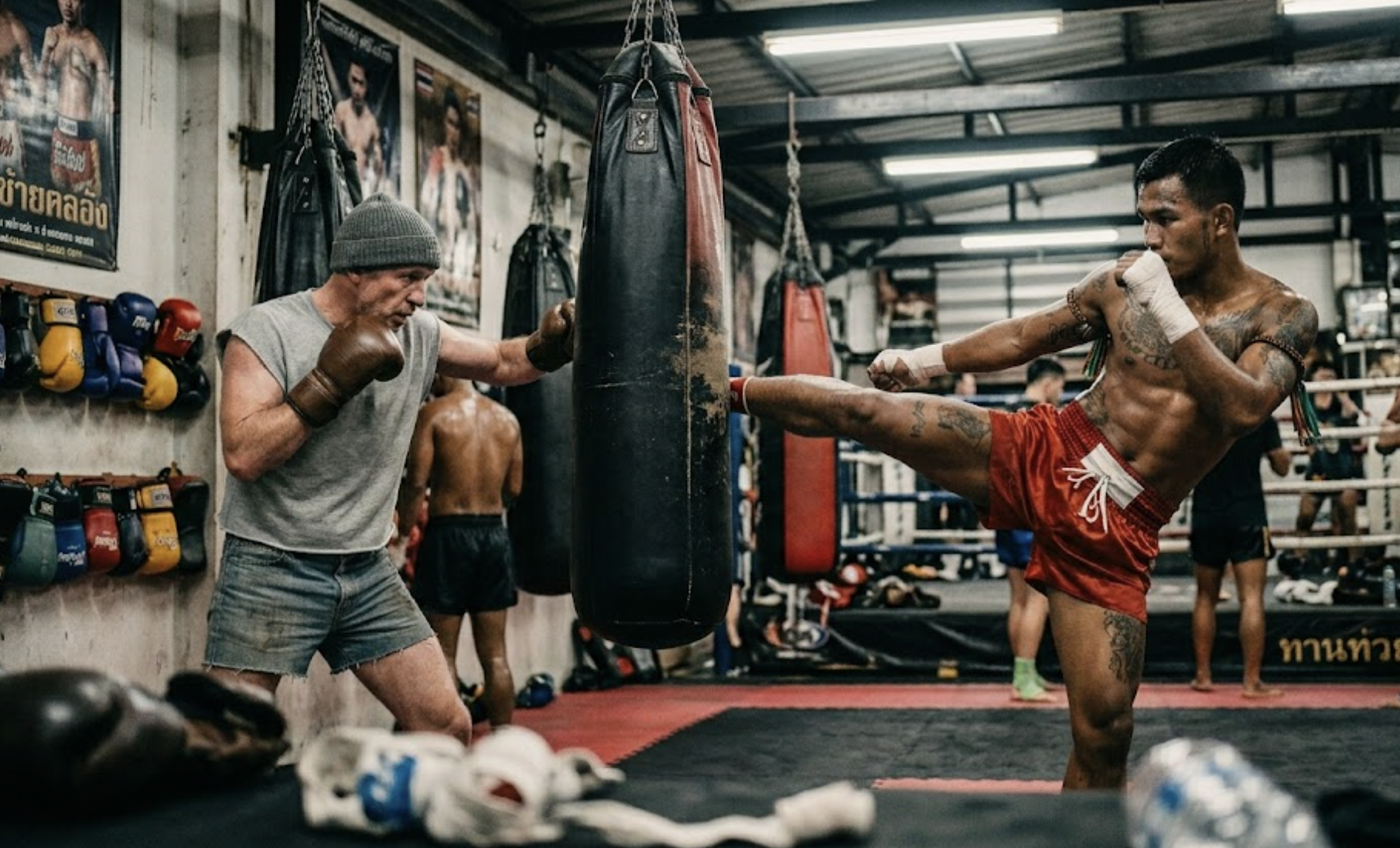
The additional weapons are not just a numerical advantage. They fundamentally change the problem you are solving when you are striking. Kicks keep an opponent at distance and generate power from the longest lever in the body. Elbows are the most immediately damaging close-range tool in any striking art, cutting as readily as they hurt. Knees in the clinch are precisely targeted and difficult to defend against once the position is established. Together, they create a complete striking system that addresses every range from long to close.
The clinch is arguably Muay Thai's most unique contribution to the striking arts, and the most underestimated. Most untrained confrontations close to short range quickly. Most striking arts have no good answer for what happens there. Muay Thai does. The neck tie, the arm control, the knee strikes from the inside: the clinch is a position of real offensive capability, not a pause in the action.
The training itself is physically extraordinary. The interval structure of Muay Thai sessions, rounds of full-body work with short rests between them, produces cardiovascular fitness that is difficult to match. The involvement of the hips and legs in every major technique means the calorie burn and muscle engagement are total-body in a way that boxing, which works primarily from the waist up, is not.
The Punching Depth Question
This is the one genuine area where choosing Muay Thai over boxing involves a trade-off.
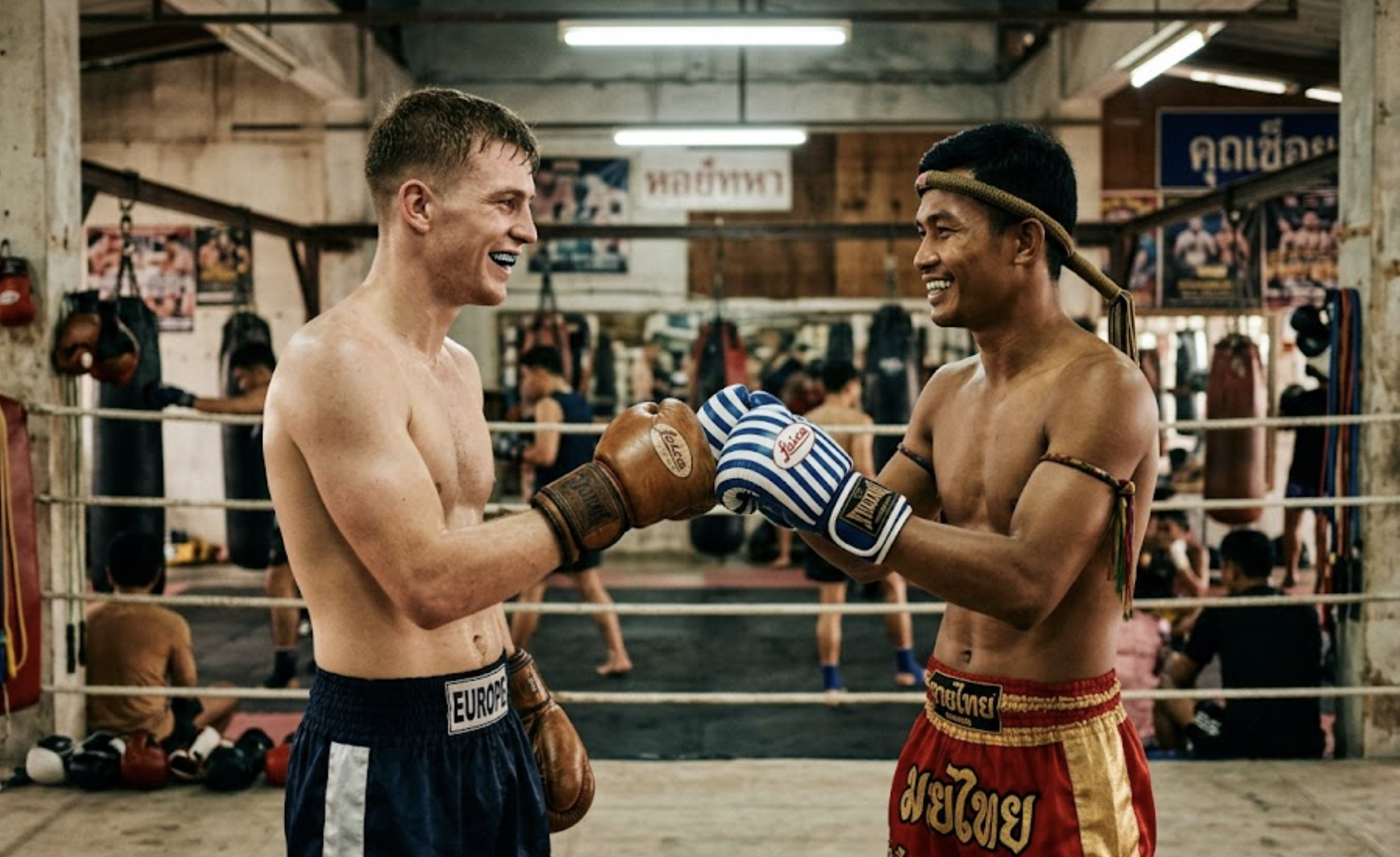
Because boxing dedicates all of its training time to the hands, a dedicated boxer will develop punching technique to a depth that a Muay Thai practitioner, whose training time is divided across eight weapons, may not match at the same training age. The timing within the punching range, the combination fluency, the reactive head movement: all of it is deeper in a practitioner whose entire practice is built around it.
This matters in sparring and in competition. It matters less in the broad physical development that most recreational practitioners are looking for. If the goal is competitive boxing, train boxing. If the goal is a complete striking education that includes but is not limited to the hands, Muay Thai is the fuller art.
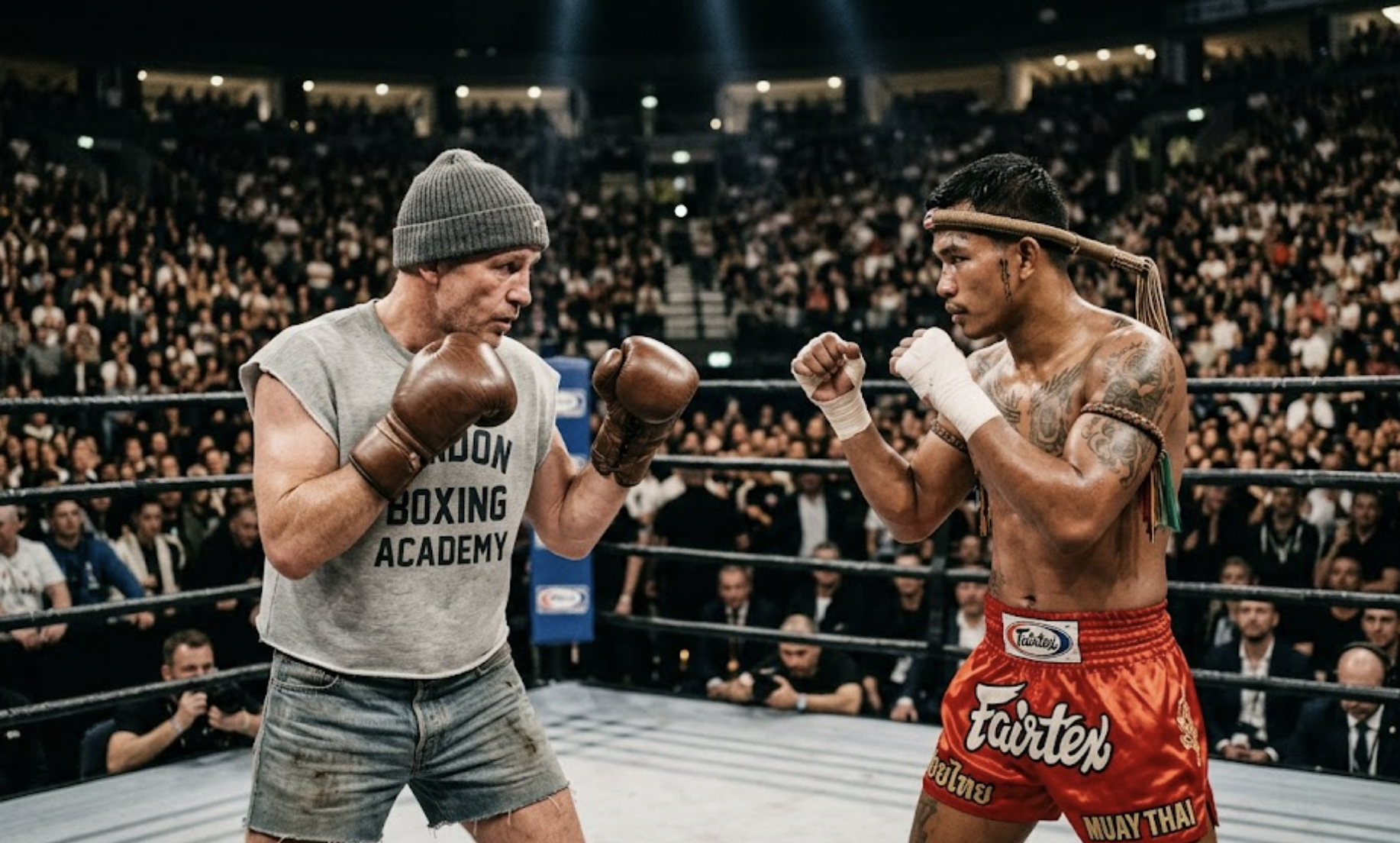
Many elite Muay Thai fighters recognise this and incorporate dedicated boxing training alongside their Muay Thai. The two are not in competition. They are complementary tools, and practitioners who understand both develop a striking game that covers every range with real depth.
Which One For You
The practical answer depends on two things: what draws you to the sport and what you want from it.
If you are drawn to the elegance and depth of hand combinations, the footwork, the head movement, the particular culture of the boxing gym, train boxing. The depth available within those two weapons is a lifetime's work.
If you want the broader canvas, the kicks, the elbows, the knees, the clinch, the Thai tradition that runs through every technique, train Muay Thai. The art is more complete across ranges, and it will continue to present new technical problems long after the basic techniques feel familiar.
Both will make you fitter, more disciplined, and more capable than when you started. Both will give you a community of people who take the same practice seriously. Both reward exactly the same qualities: showing up consistently, listening carefully, and staying humble in the face of something that never stops teaching.
Neither is the wrong choice. The wrong choice is standing outside both gyms, thinking about it, and going home without walking in.
Frequently Asked Questions
Is Muay Thai better than boxing for self-defence?
Muay Thai covers more range, more weapons, and includes clinch work with elbows and knees that boxing does not. The wider toolkit gives Muay Thai an advantage in self-defence scenarios where the exchange is not limited to punching. Boxing's advantage is depth: a dedicated boxer develops an extraordinary level of skill with the hands that a general Muay Thai practitioner may not match. For most people starting from zero, Muay Thai's breadth is the more practical choice. If you are also comparing other martial arts, see our breakdown of Muay Thai vs MMA and Muay Thai vs kickboxing.
Which burns more calories, Muay Thai or boxing?
Both are high-calorie training disciplines. Muay Thai tends to have a slight edge because the involvement of kicks and knees engages larger muscle groups and requires more full-body rotation. The difference is not dramatic at recreational training intensity. Both will produce significant cardiovascular adaptation and body composition change at three or more sessions per week.
Which is harder to learn, Muay Thai or boxing?
Boxing has fewer techniques to learn but demands exceptional mastery of each of them. The technical depth within boxing's narrow range, covering footwork, head movement, timing, and combinations, is genuinely extraordinary and takes years to develop. Muay Thai has more techniques to learn across more weapons and positions, which gives beginners more surface area to work on but also more to absorb. Neither is the easy option. They are difficult in different ways.
Is boxing or Muay Thai better for competitive fighting?
It depends entirely on what you mean by competition. Boxing has a larger professional infrastructure with more events, more weight classes, and more public recognition at the top level. Muay Thai has its own competitive circuit, both in Thailand and internationally, with amateur and professional categories. If competing in Muay Thai rules is the goal, train Muay Thai. If competing in boxing is the goal, train boxing. The overlap in the early stages of training is significant either way.
Can boxing training help my Muay Thai, or vice versa?
Significantly. Dedicated boxing training sharpens the punching mechanics, footwork, and head movement that Muay Thai uses but does not always develop to the same depth. Many elite Muay Thai fighters supplement their training with boxing sessions specifically for this reason. Conversely, boxers who add Muay Thai develop range awareness, clinch skills, and defensive responses to kicks and knees that expand their overall capability.