The two terms get used interchangeably in gym marketing, fitness class descriptions, and online discussions, and the conflation causes real confusion for people trying to understand what they are signing up to learn. Muay Thai and kickboxing are not the same thing. Depending on which version of kickboxing you are referring to, the differences range from meaningful to fundamental.
Here is what actually separates them, why the distinction matters, and how to work out which one you are actually training when you walk into a class.
What Muay Thai Is
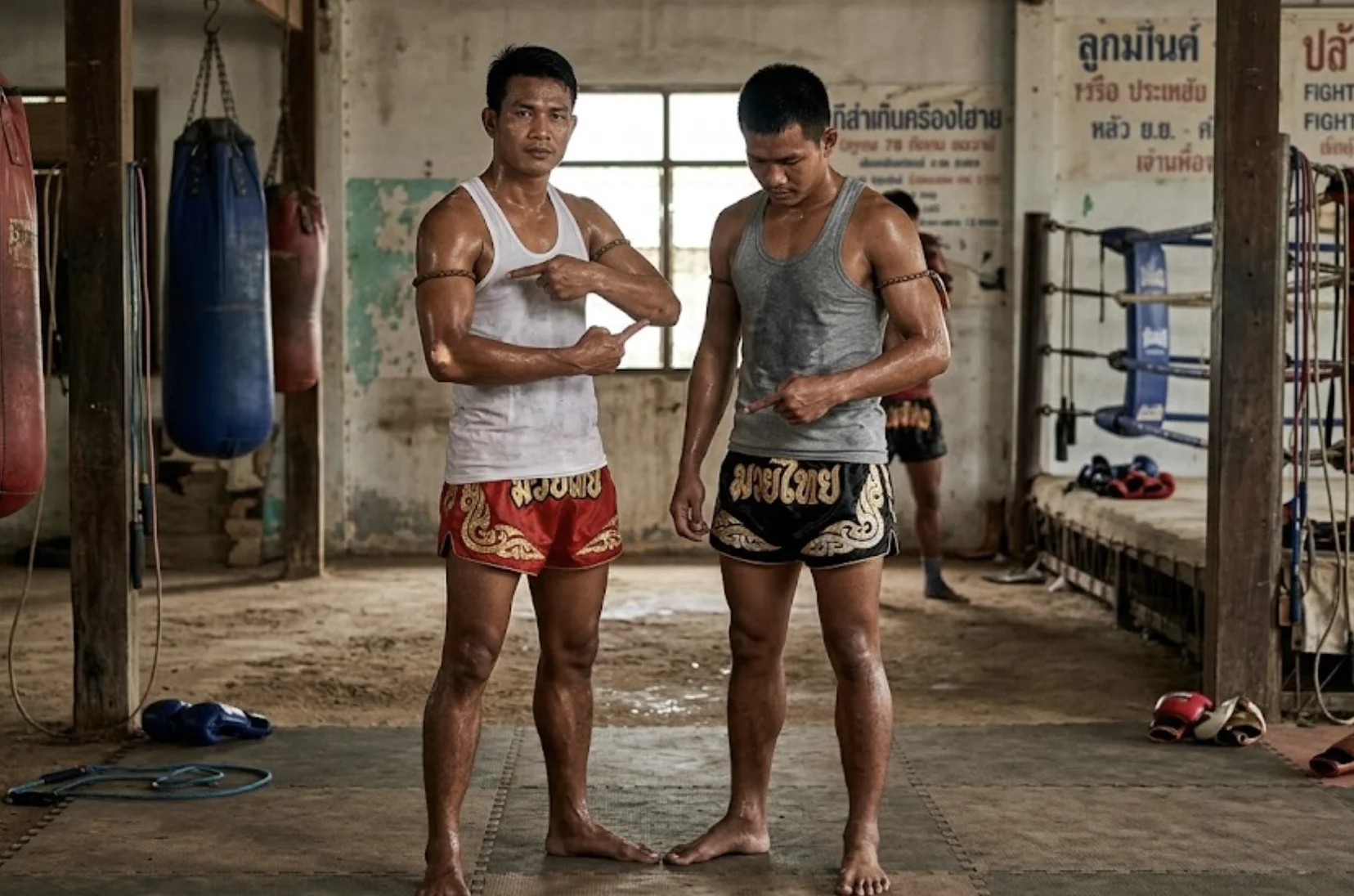
Muay Thai is a specific martial art from Thailand with a documented history spanning several centuries. It is built around eight weapons: the two fists, two elbows, two knees, and two feet. The clinch is an integral part of the system, a close-range grappling position where elbows and knees become the primary tools. The traditions around the sport, the Wai Kru ceremony, the Mongkol headband, the music of the Sarama that accompanies bouts, are as much a part of Muay Thai as any technique.
The competitive ruleset is defined by the major Thai sanctioning bodies and the stadium organisations in Bangkok, primarily Lumpinee and Rajadamnern. In the Thai tradition, fights are scored with particular emphasis on kicks and clinch work, with punches weighted less heavily than in Western combat sports. The style of a classically trained Muay Thai fighter differs noticeably from a Western or European practitioner, in part because of how Thai scoring rewards patient, economical, powerful striking.
Muay Thai is one specific thing. This is its advantage in terms of identity and clarity, and it is why the term has weight.
What Kickboxing Is
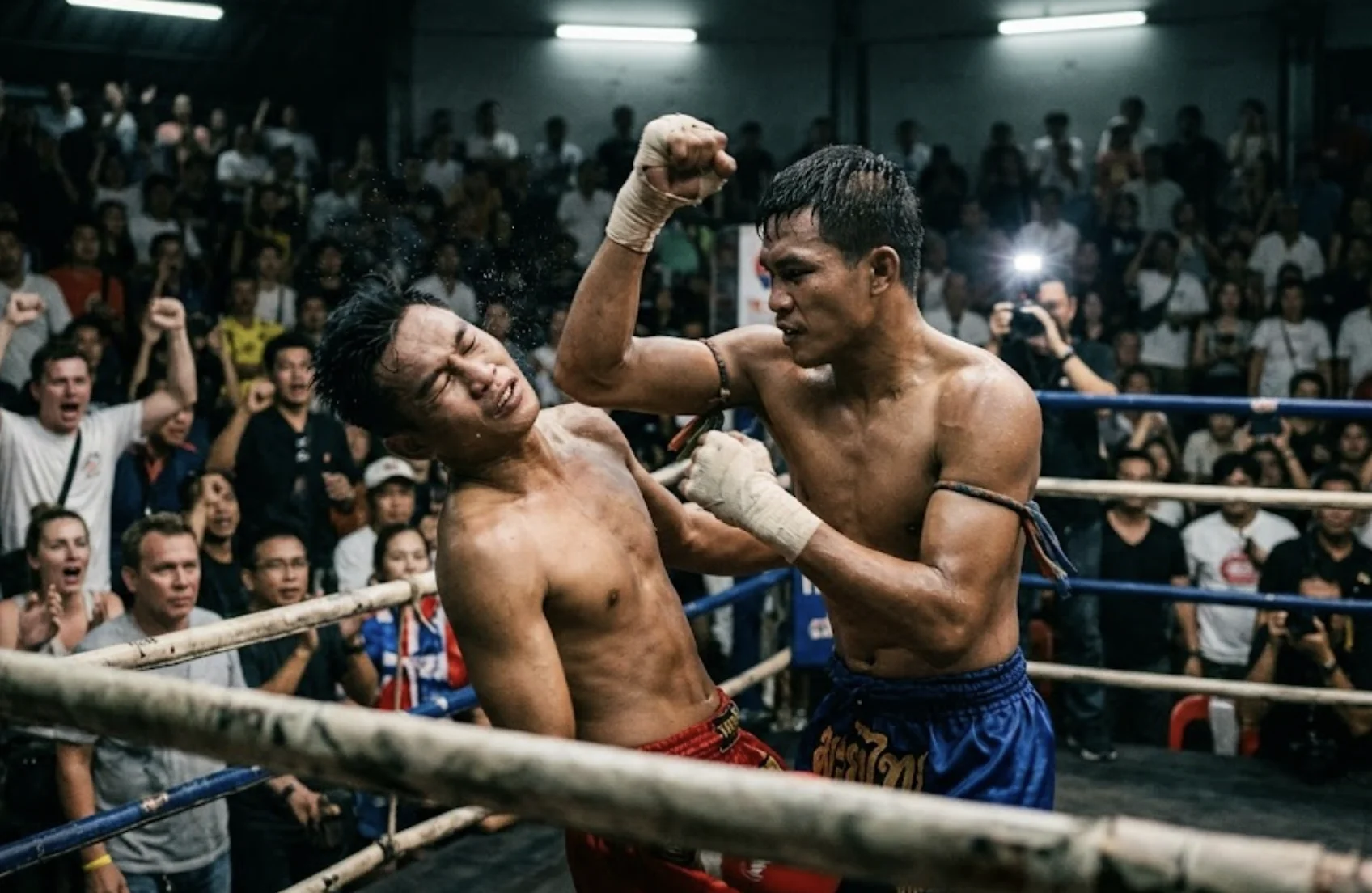
Kickboxing is not one specific thing. It is a broad category that covers several different styles and rulesets, which is where the confusion originates.
American kickboxing developed from karate in the 1970s and typically allows punches and kicks above the waist, with no elbows, no knees, and minimal clinch work. It is the style most commonly found in fitness-oriented kickboxing classes.
Japanese kickboxing, or K-1 rules, developed in the 1980s and allows punches and kicks including low kicks to the thigh, with limited clinch work. No elbows. This ruleset was the vehicle for some of the most technically sophisticated striking competitions of the 1990s and 2000s, and Dutch-style kickboxers in particular developed a formidable combination of boxing and kicking that influenced striking arts globally.
Dutch-style kickboxing is a training methodology as much as a ruleset, developing explosive punch-kick combinations with an emphasis on powerful hands. Many Dutch-style fighters have competed successfully in both K-1 and Muay Thai.
The class at your local leisure centre called "kickboxing" is most likely a fitness cardio session based on simplified striking movements. The K-1 bout between two serious competitors is something else entirely. Both travel under the same name.
The Key Technical Differences
The most significant practical differences are:
Elbows. Muay Thai uses them extensively. Most kickboxing rulesets ban them. The elbow is the most immediately damaging close-range weapon in any striking art, and it changes the entire geometry of close-range exchanges. A practitioner who understands elbows is in a different position at short range from one who does not.
Knees. Muay Thai uses them in the clinch and in transition, making them a primary offensive tool. Most kickboxing rulesets either ban them entirely or allow only limited knee strikes. The flying knee is permitted in Muay Thai and is a feature of competitive bouts. In most kickboxing formats, it does not exist.
The clinch. Muay Thai's clinch is a position of genuine offensive capability. The neck tie, arm control, and knee strikes make it a place where damage is done, not just where fighters hold each other while the referee separates them. Kickboxing referees typically break clinches very quickly, making it a brief, largely neutral position.
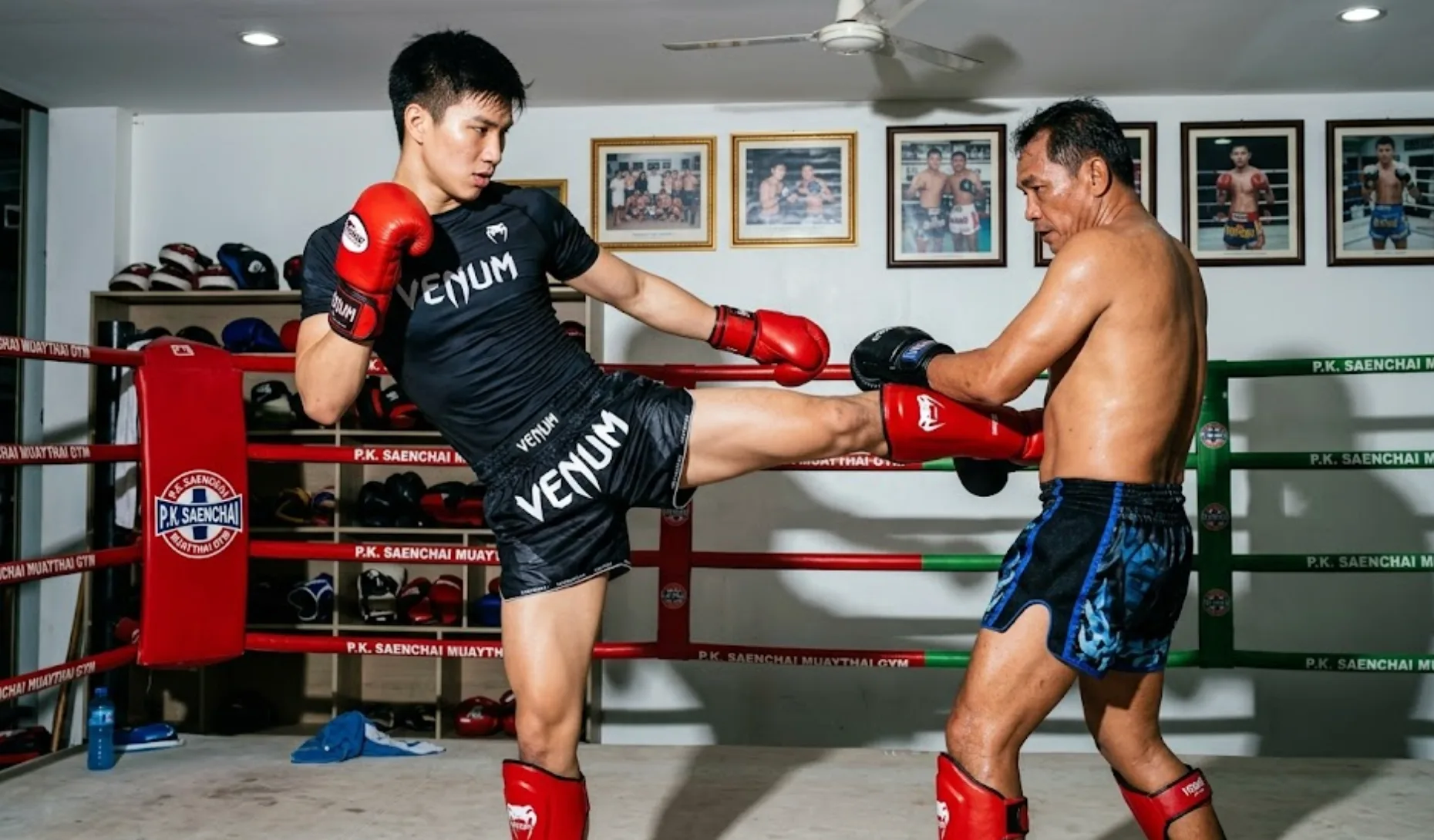
Low kicks. Muay Thai allows kicks to the thigh. K-1 rules also permit them. American kickboxing typically does not. The low kick is a meaningful and legitimate target, and a practitioner trained to use it has an option that someone trained in American kickboxing does not.
Which One Are You Training?
Walk into a class and ask. A trainer who knows their material will tell you clearly what ruleset or tradition they are teaching, and why. A class that cannot answer the question, or that uses Muay Thai and kickboxing interchangeably, is probably teaching a fitness-based hybrid that draws from both without committing to either.
That hybrid has value as a fitness pursuit. It is not the same as studying Muay Thai as a martial art, and it is worth knowing the difference before you commit to a gym expecting one and receiving the other.
If your interest is in the complete striking system, the elbows, the knees, the clinch, the Thai tradition and the competitive depth that comes with it, train Muay Thai specifically. If your interest is in striking-based fitness without the specific cultural and technical framework of Muay Thai, a good kickboxing class delivers that effectively.
Both are legitimate. Neither is the other. The clarity is worth having before you start. If you are also weighing up other striking arts, see Muay Thai vs Boxing and Muay Thai vs MMA.
Frequently Asked Questions
Is Muay Thai the same as kickboxing?
No. Muay Thai is a specific traditional martial art from Thailand that uses fists, elbows, knees, and feet, plus clinch work. Kickboxing is a broader term covering several different rulesets and styles, including American kickboxing, Japanese kickboxing (K-1 rules), and Dutch-style kickboxing. Most kickboxing rulesets exclude elbows, knees, and clinch work, which are central to Muay Thai. A class called "kickboxing" could mean several different things depending on where you are and who is running it.
Is Muay Thai harder than kickboxing?
Muay Thai has more weapons and more positions to learn, making it technically more comprehensive. The clinch work and elbow and knee techniques add significant complexity. Whether it is harder depends on the specific kickboxing ruleset you are comparing it to and what you mean by harder. K-1-style kickboxing, for instance, is a serious combat sport with a demanding technical game. American kickboxing cardio classes are considerably less demanding than either. Context matters.
Which is better for self-defence, Muay Thai or kickboxing?
Muay Thai, by most assessments. The additional weapons, particularly elbows and knees in close range, and the clinch work give Muay Thai practitioners more tools in the scenarios where most real confrontations occur. The clinch in particular, which most kickboxing rulesets break quickly, is highly applicable to close-range situations where two people end up in contact. Both are better than most alternatives for unarmed striking self-defence. For a fuller comparison of striking arts, see Muay Thai vs Boxing.
Can I compete in kickboxing if I train Muay Thai?
Yes, with some adjustment. Muay Thai practitioners can compete under kickboxing rules, but the absence of elbows, knees in most rulesets, and the limited clinch time requires a strategic adjustment. Many fighters compete under both rulesets with specific preparation for each. The punching and kicking mechanics transfer directly. The tactical approach changes depending on which tools the ruleset permits.
What is K-1 style kickboxing?
K-1 rules are a specific kickboxing ruleset that allows punches and kicks but restricts elbows and limits clinch work. It is named after the K-1 promotion founded in Japan, which popularised the style globally in the 1990s and 2000s. K-1 fighters are often highly skilled at combining punching with high and mid-level kicks, and the promotional era produced some of the most technically impressive striking on record. Many Dutch-style fighters, in particular, excelled under K-1 rules.