

This is the question that deserves a straight answer, not reassurance. Brain damage is serious. The research on combat sports and long-term neurological health is serious. Anyone asking this question before starting Muay Thai is thinking about it in the right way, and the answer they deserve is one that treats them as capable of handling honest information.
Repeated head trauma causes neurological damage. This is established by decades of research into multiple sports, not just combat sports. American football, rugby, boxing, ice hockey, and heading in football have all been associated with long-term brain health concerns. Muay Thai, which involves head punching in sparring and competition, sits within this category and cannot be honestly removed from it.
The more important question is not whether the risk exists but how large it is, what determines it, and how much of it is within your control. Those answers are considerably more nuanced than a blanket yes or no, and they matter.
What the Research Actually Shows
The most significant neurological risk in combat sports is associated with repeated subconcussive and concussive head impacts, accumulated over years of training and competition. The condition most associated with this is chronic traumatic encephalopathy (CTE), which has been found in post-mortem examination of athletes in multiple contact sports.
CTE cannot currently be diagnosed in living patients, which creates a genuine challenge for research and for individual risk assessment. What the research does establish clearly is that the risk is dose-dependent: the more head contact, the more frequently, and the more intensely, the greater the accumulated damage. A professional fighter who has contested forty bouts, trained at high intensity for a decade, and sparred hard several times a week is in a fundamentally different risk category from a recreational practitioner training three times a week with controlled sparring.
The exposure variable is the critical one. The sport does not damage everyone who practices it to the same degree. It damages in proportion to contact volume and intensity over time.

Where the Risk Actually Lives
Not all Muay Thai training involves head contact. Technical drilling, pad work, bag work, and fitness conditioning carry no neurological risk beyond the ordinary risk of any physical activity. The risk concentrates specifically in sparring and competition.
Hard sparring, by which I mean rounds at significant intensity where clean punches to the head are regularly landing, is the primary source of cumulative neurological exposure in any striking art. A practitioner who spars hard three or four times per week is accumulating a meaningfully different level of head-impact exposure than one who spars lightly once a week or does not spar at all.
Competition adds another dimension. A fighter who competes regularly is absorbing impacts at a level that is categorically different from sparring, and who accumulates a fight record over years is building an exposure profile that recreational practitioners simply do not share.
The structure of risk in Muay Thai looks something like this: no sparring carries minimal neurological risk, light technical sparring carries low risk, regular hard sparring carries moderate risk, and high-volume competition over many years carries significant risk. These are meaningfully different exposures that require honest differentiation.
Muay Thai Compared to Boxing
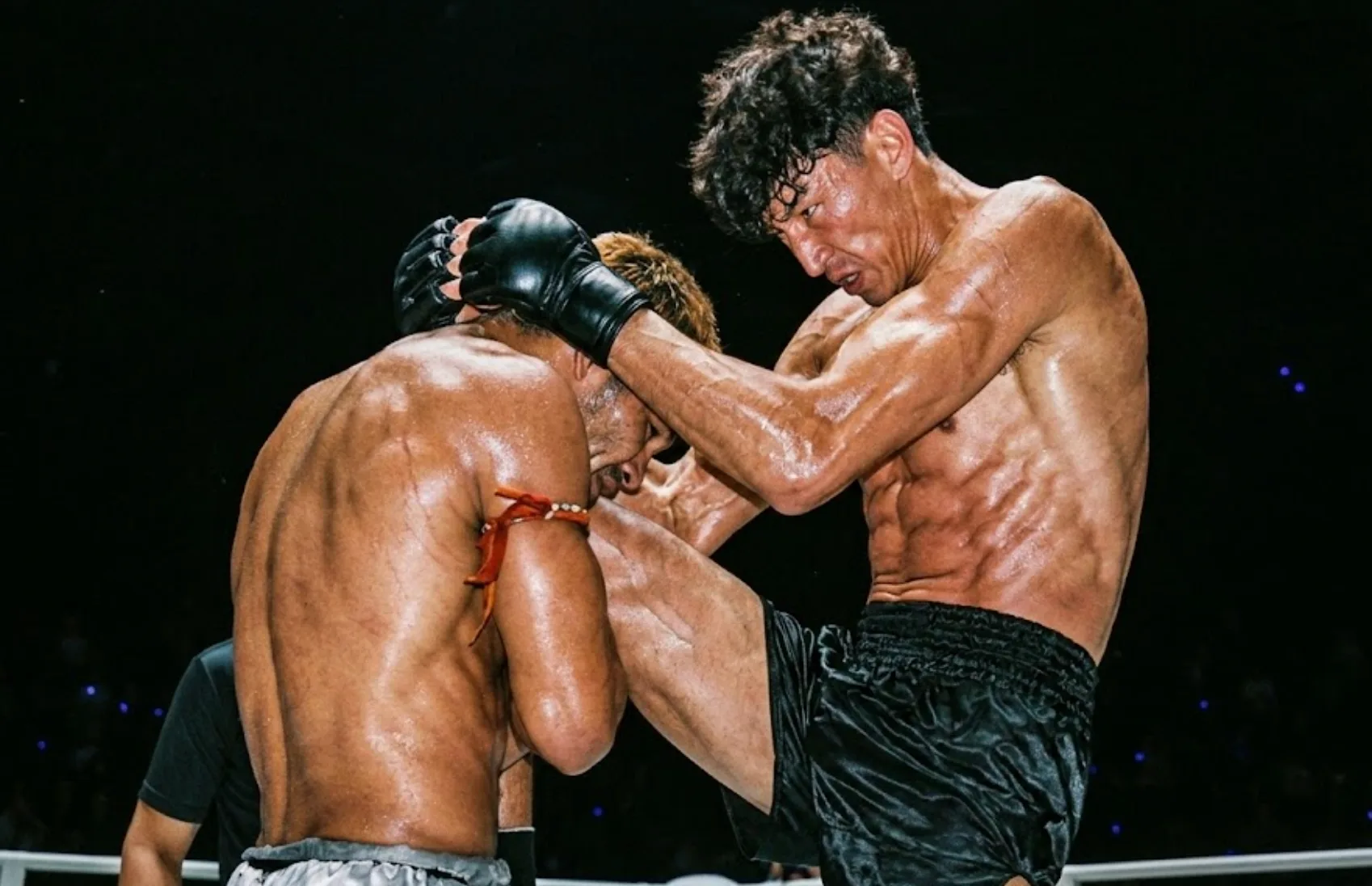
Several studies have compared head-impact frequency across combat sports, and the general finding is that boxing tends to produce higher rates of head punching during sparring than Muay Thai does. The presence of kicks, knees, elbows, and clinch work in Muay Thai changes the rhythm of exchanges and means that practitioners spend less time in the short-range punching pocket, absorbing punch combinations to the head.
This does not make Muay Thai safe for the brain. It suggests that the specific risk profile may differ from boxing's, and that the head-punch volume accumulated in a Muay Thai career or training life may be somewhat lower. The gym culture variable remains more significant than the ruleset. A Muay Thai gym with hard sparring culture and a boxing gym with technical sparring culture may produce inverse neurological outcomes.

What You Can Actually Do
Several things within your control have a significant effect on your exposure.
Gym selection matters enormously. A gym that treats sparring as a controlled, technical learning tool rather than a test of toughness produces meaningfully less head contact. Ask about sparring culture before you join. The answer tells you a great deal about what kind of exposure you are signing up for.
Headgear reduces direct impact force but does not eliminate rotational acceleration, which is the primary mechanism of concussion. Wear it in harder sparring sessions. Do not assume it makes hard sparring as safe as technical sparring. It is a partial mitigation, not a solution.
Concussion management is non-negotiable. If you take a head impact that produces any concussion symptoms, rest and do not train until you are symptom-free and have sought medical advice. The cumulative damage from training through concussion is disproportionate. A subsequent impact during the recovery window can cause damage far beyond what the initial impact alone would have produced.
The most powerful control you have is sparring intensity and frequency. Technical sparring, prioritising clean technique at reduced power, develops skill with a fraction of the neurological exposure of hard sparring. Many experienced practitioners train for years at this level and never find a reason to go harder.
The Honest Position
Muay Thai carries neurological risk when it involves frequent, hard head contact over years. That is a true statement and it deserves to be said plainly.
It is also true that the risk is substantially within your control, that recreational training with sensible sparring practices carries a meaningfully different risk profile from professional competition, and that the people most affected by combat sport-related brain damage are those who have accumulated very large amounts of head contact over very long careers.
Training at three sessions a week, in a gym with a technical sparring culture, without competing at high intensity for many years, is a different activity from the one that produced the most serious cases in the research literature. Understanding that difference allows you to make an informed decision about how you want to train, rather than either dismissing the risk entirely or letting it prevent you from a practice that most people find transformative.
The risk is real. So is the ability to manage it. Both things are true at the same time.
Sources
- Chronic Traumatic Encephalopathy in Contact Sports: A Systematic Review of All Reported Pathological Cases — PLOS ONE, 2015
- Chronic traumatic encephalopathy in sport: a systematic review — Brain, 2013
- Repeated head trauma is associated with smaller thalamic volumes and slower processing speed: the Professional Fighters' Brain Health Study — Brain, 2015
- Repeated Sub-Concussive Impacts and the Negative Effects of Contact Sports on Cognition and Brain Integrity — Frontiers in Sports and Active Living, 2022
- Understanding the Consequences of Repetitive Subconcussive Head Impacts in Sport: Brain Changes and Dampened Motor Control Are Seen After Boxing Practice — Frontiers in Human Neuroscience, 2019
- Epidemiology of Muay Thai fight-related injuries — BMC Sports Science, Medicine and Rehabilitation, 2016
Frequently Asked Questions
Can Muay Thai cause CTE?
Chronic traumatic encephalopathy (CTE) is associated with repeated head trauma, and Muay Thai does involve head-contact sparring and competition. The honest answer is that any striking sport that involves regular blows to the head carries some risk of cumulative neurological damage. The degree of risk is directly related to the volume and intensity of head contact over time. Practitioners who spar with control, limit hard head contact, and do not compete at a high level for many years accumulate significantly less exposure than those who do.
Is Muay Thai safer for the brain than boxing?
The evidence suggests that Muay Thai may involve somewhat less head-punch volume than boxing during sparring, partly because the presence of kicks, elbows, and knees changes the dynamics of exchanges and reduces time spent in the punching pocket. Studies comparing combat sports have generally found boxing associated with higher rates of head trauma. That said, both sports carry meaningful neurological risk with sustained hard sparring, and this is one reason choosing the right gym matters so much, and gym culture matters more than ruleset in determining an individual practitioner's exposure.
How can I reduce the risk of brain damage from Muay Thai?
The most effective measures are: avoiding hard sparring, especially in the early stages of training; choosing a gym with a technical, controlled sparring culture; wearing appropriate headgear during sparring; limiting overall sparring frequency; and taking any symptom of concussion seriously rather than training through it. The risk is not zero, but it is substantially shaped by how you train rather than simply by the fact that you train. For a broader look at the risk question, see is Muay Thai dangerous.
Do recreational Muay Thai practitioners face the same brain damage risk as professional fighters?
No. The risk profile of a professional fighter who has contested dozens of bouts, trained at high intensity twice daily, and sparred hard hundreds of times per year for many years is fundamentally different from a recreational practitioner training three times a week with controlled sparring. The neurological risks associated with combat sports are strongly dose-dependent. Exposure volume and intensity are the critical variables, not the sport itself.
What are the signs of concussion I should watch for after Muay Thai training?
Headache that persists after training, pressure in the head, nausea, sensitivity to light or noise, confusion, difficulty concentrating, or feeling slowed down mentally. If any of these follow a session involving head contact, rest and seek medical advice before returning to training. Training through concussion symptoms allows a subsequent head impact to cause disproportionate damage. No training session is worth that risk.