
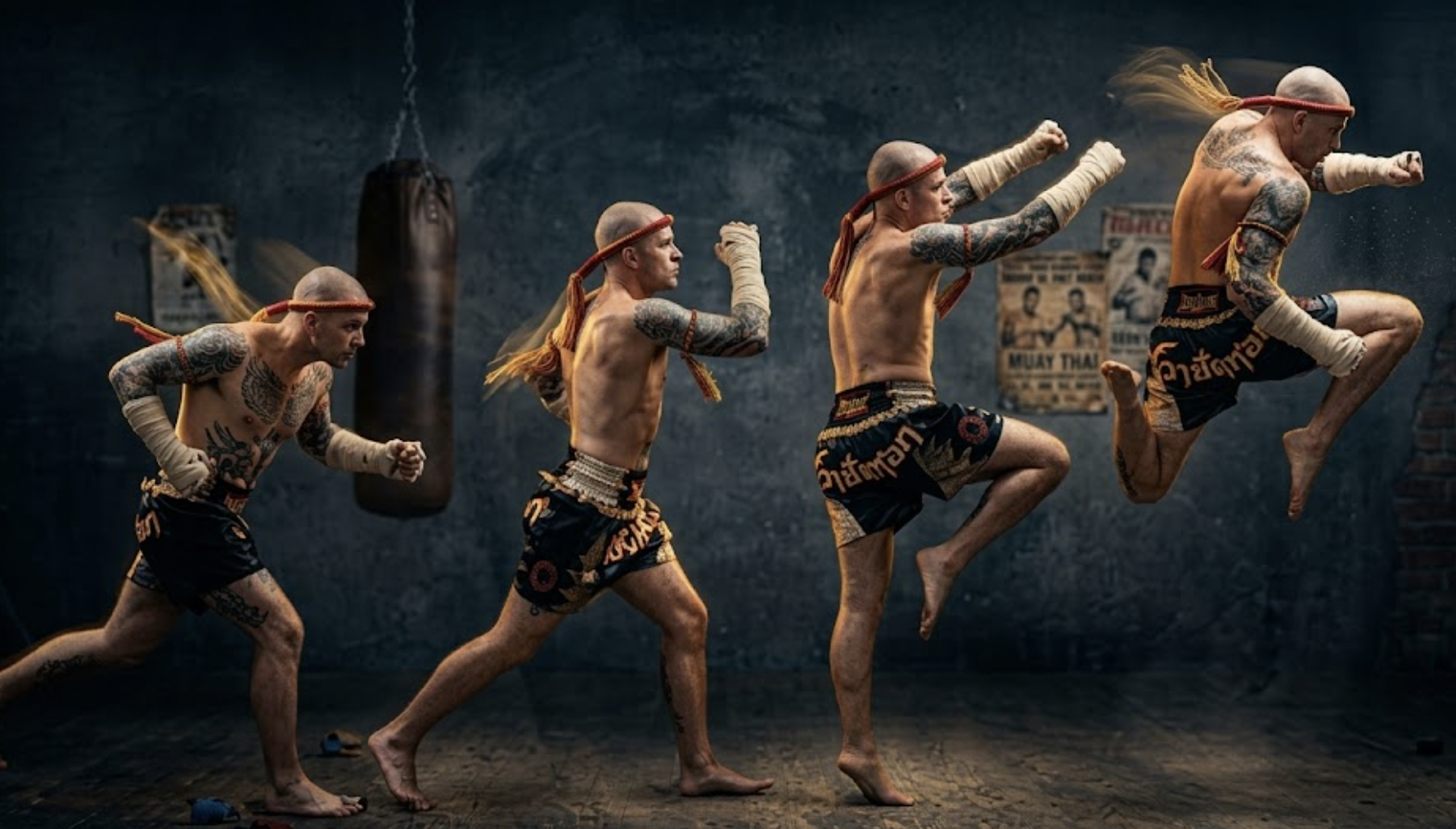
The question gets asked in every beginner class, in every online forum, and in most conversations where someone is seriously considering starting. How long will it take to learn? It is a reasonable thing to want to know before you commit to something new and demanding.
The honest answer is that it depends almost entirely on what you mean by learn. If you mean: how long before I can survive a session without feeling completely lost? A few weeks. If you mean: how long before my technique is clean enough to make a good trainer nod with satisfaction? Several years. The space between those two endpoints is where most of the interesting development actually happens, and it is worth mapping it out with some precision.
Here is what the learning curve actually looks like, stage by stage, from the first session to the point where the sport becomes something you feel at home with.
The First Month: Survival Mode
Nobody is graceful in the first month of Muay Thai. The stance feels strange. The guard position is uncomfortable. The jab goes in the wrong direction. The roundhouse kick is a complicated multi-stage movement that requires your hip, your knee, your ankle, and your supporting foot to all do different things at the same time, and in the first few attempts they will not cooperate.
This is normal. It is not a sign that you are particularly unsuited to the sport. It is what the beginning of motor learning looks like in any physically demanding discipline.
What you will build in the first month is familiarity. The positions start to feel less foreign. The basic combinations begin to connect. Your cardiovascular system begins to adapt to the demands of the training, which are significant. By the end of the first month, a session that left you gasping on the first day will feel meaningfully more manageable.
The first month is about showing up, not getting it right. The only real skill you are developing is the habit of returning to the gym.
Three to Six Months: The Foundations Set
This is where training starts to feel like learning rather than surviving. The basics are no longer entirely new, which means some of your cognitive attention is free to focus on execution rather than simply remembering what to do.
The roundhouse kick starts to have some actual rotation in it. The jab-cross combination flows without the conscious effort it required in week two. You begin to understand footwork as a tool rather than an obstacle. The combinations called in a pad round are executed rather than assembled, piece by piece, from first principles.
Three to six months of consistent training at three sessions per week is also where the physical changes become visible. The cardiovascular fitness has adapted significantly. The body composition is changing. The sport starts to feel like yours in some small but tangible way.
This is also the phase where the first technique clicks. There will be a moment, usually somewhere in this window, where something lands exactly as it was supposed to. A kick that connects with proper hip rotation for the first time. A combination that flows at the speed the coach demonstrated rather than at the slower speed your coordination had previously allowed. These moments are significant. They are the sport rewarding the effort that preceded them.

Six to Twelve Months: A Real Practitioner
A practitioner with six to twelve months of consistent training is not a beginner in any meaningful sense. They have a solid technical foundation, understand the basic vocabulary of the sport, can work a pad round without needing constant correction, and can participate in controlled sparring without being entirely reactive.
They are also aware of how much they do not yet know, which is one of the most useful things the sport teaches. The six-month practitioner has enough competence to appreciate the depth of what they are still learning. The art has revealed itself as properly deep, and that depth is compelling rather than daunting because they have already experienced what consistent effort produces.
Physically, the practitioner at this stage is in real shape. The fitness is real, the technique is functional, and the difference between them and someone who started training at the same time but trained inconsistently is significant. Consistency is the variable with the most leverage at every stage of the learning curve.

One to Three Years: Technical Competence
Somewhere in the one-to-three-year window, depending on training frequency and coaching quality, a practitioner develops what experienced trainers recognise as technical competence. The techniques are not just being executed correctly in isolation. They are beginning to work together as a system. The timing improves. The defensive instincts develop. The ability to set combinations up, to use the jab to create an angle for the kick, to read an opponent's weight and respond to it: these are the higher-level skills that take real time.
The fighters you see in stadiums competing at a serious level have usually been training for several years before they step into competition. That timeline is not incidental. The sport requires it.
What You Cannot Learn on a Timeline
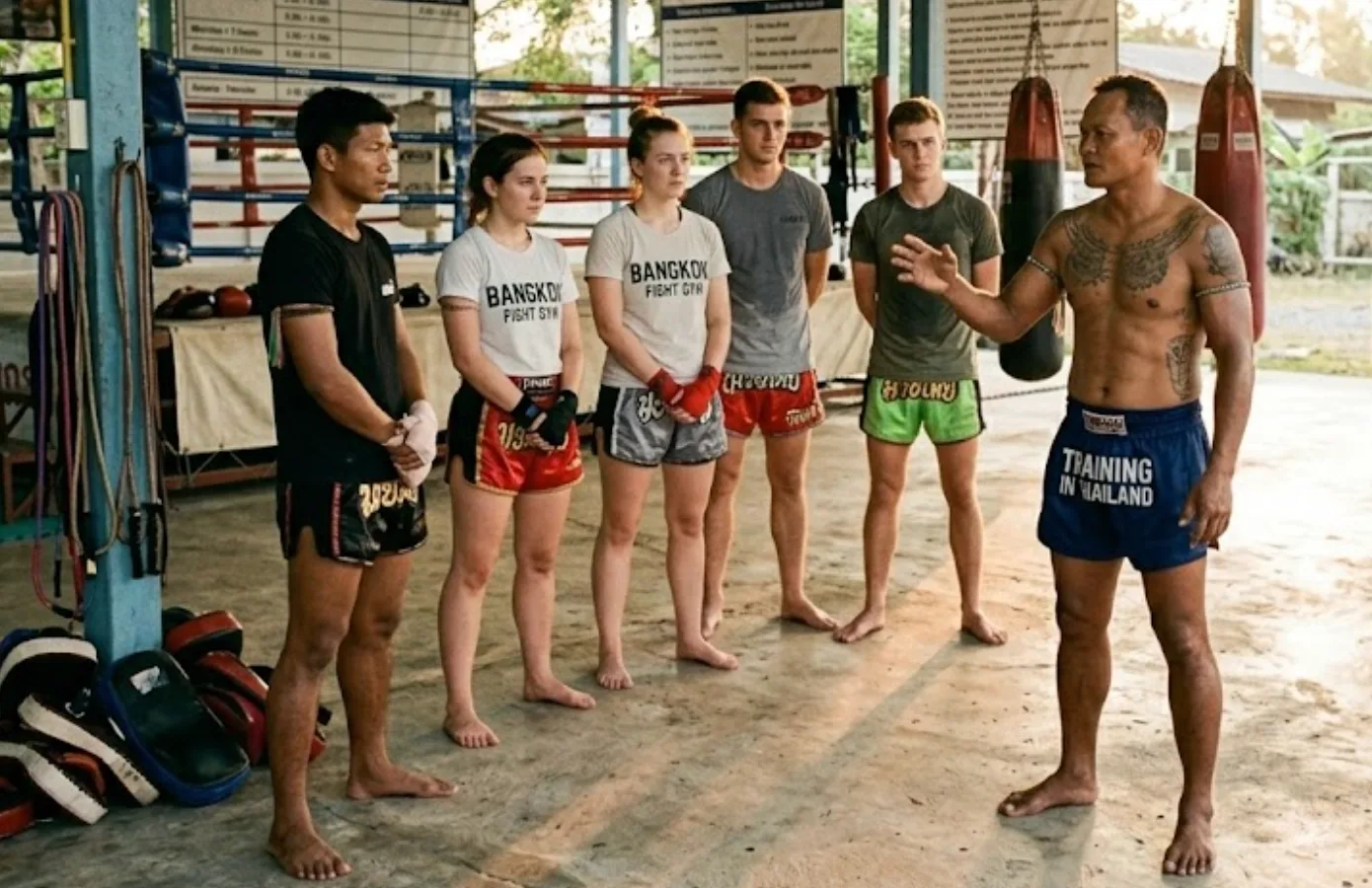
Muay Thai is not a skill that is ever fully acquired. Thai kru (trainers) who have spent their lives in the art will tell you, with complete conviction, that there is always something more to develop. The technique is inexhaustible. The tactical understanding deepens with every year of training. The physical capacity changes with age but does not disappear.
The timeline above describes when you will feel capable, when you will have a real foundation, when the sport will feel like something you do rather than something happening to you. What it cannot describe is a finish line, because there is not one.
What Actually Determines Your Pace
Training frequency is the single most influential variable. The practitioner training four times a week will develop roughly twice as fast as one training twice a week, because the skill is reinforced more often and the physical adaptation accumulates faster.
Coaching quality matters considerably. A skilled trainer who can identify and correct specific technical problems saves you months of grooving a habit that will later need to be undone.
Physical attributes help at the margins but are not decisive over time. Someone with prior athletic background may adapt faster in the first three months. Over two years of consistent training, that head start is largely irrelevant.
The one factor that consistently separates the practitioners who develop quickly from those who stagnate is attention during training. The person who is actively thinking about what they are doing, asking questions, paying attention to corrections, and working with intention on the bag gets more from every hour on the mat than the one who is simply going through the motions.
Show up consistently, pay attention, ask questions, and trust the process. That combination does not guarantee fast progress. It guarantees that the progress you make is as fast as your effort deserves.
Frequently Asked Questions
How long does it take to get good at Muay Thai?
That depends on what good means. Most people can hold a competent training session within three to six months of consistent training. Within a year, a practitioner training three or more times per week will have developed a solid technical foundation and real physical capability. What Thai trainers often describe as "real" Muay Thai, where technique, timing, and tactical understanding come together, takes several years of dedicated practice.
Can I learn Muay Thai in 3 months?
Three months of consistent training will develop your basic striking technique, improve your cardiovascular fitness substantially, and give you a working foundation in the core positions and combinations. You will not be a complete practitioner in three months, but you will be capable, noticeably more so than when you started, and the development in that window is usually faster than people expect.
How long before I can spar in Muay Thai?
Most gyms introduce sparring after four to eight weeks of technical foundation work. Your first class will feel nothing like sparring, and that is entirely by design., depending on your development and the gym's approach. Initial sparring is typically very light, technical, and controlled. Full-intensity sparring comes later, if that is something you want. There is no set timeline because it depends on both your individual progress and the specific culture of your gym.
Does age affect how fast you learn Muay Thai?
Younger practitioners may adapt slightly faster in certain physical aspects. For more on this, see our dedicated piece on whether you are too old to start Muay Thai., particularly cardiovascular conditioning and some elements of motor learning. Adult learners often compensate through more deliberate technical focus, greater consistency, and a patience with process that younger students do not always have. Over a twelve-month training period, a consistent adult beginner will typically develop a strong foundation that reflects their commitment rather than their age.
How many hours does it take to learn Muay Thai?
There is no defined hour count because proficiency in a combat sport is not linear. A rough guide used by experienced coaches is that a practitioner with 100 to 150 hours of training, roughly one to two years at three sessions per week, will have developed a strong technical foundation. The first 50 hours produce the most dramatic visible change. Progress continues to compound for as long as you train, and the upper limit is effectively unlimited.