
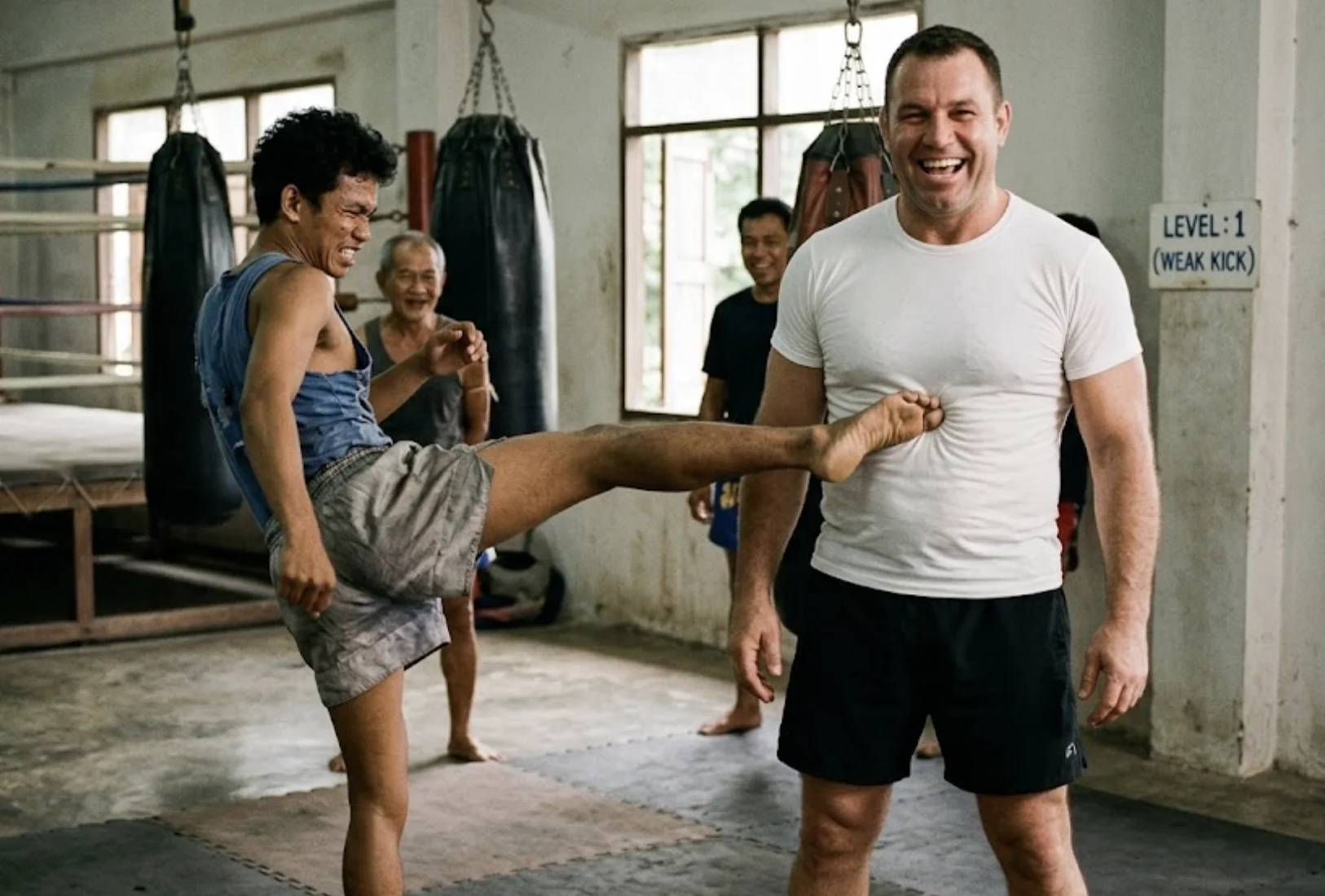
You throw the kick. It hits the bag and makes a soft, unconvincing sound. The pad holder barely moves when you connect. You watch someone across the gym throw the same technique and the bag swings hard, the pad lands with a crack that you can hear from the other side of the room. You are using your legs. They are using something else.
The something else is the hip.
Almost every power problem in Muay Thai kicking traces back to the same root cause: the hip is either not rotating or not rotating fully, and the leg is doing all the work by itself. A leg kicking without hip rotation is generating force from one muscle group. A leg following a rotating hip is generating force from the entire kinetic chain from the ground up, through the foot, the ankle, the knee, the hip, and into the target. The difference in force production between the two is not small.
Here is the honest breakdown of the four most common causes of weak kicks, and what to do about each one.
Problem One: The Hip Is Not Rotating
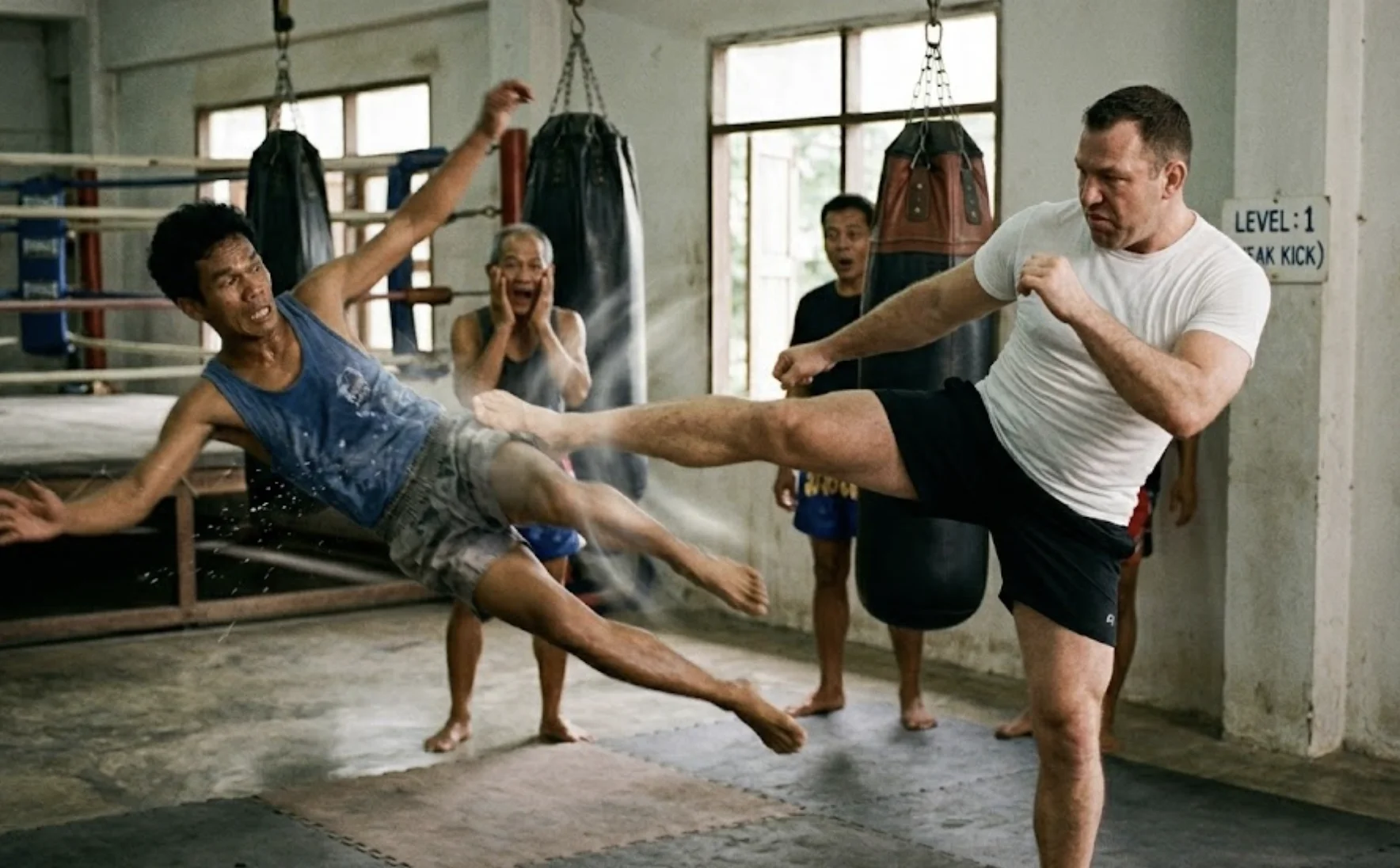
This is the most common and the most fixable. In a Muay Thai roundhouse kick, the supporting foot pivots outward as the hip of the kicking side rotates toward the target. The leg follows the hip. If you are kicking without the pivot, you are kicking without the rotation, and you are leaving the majority of the available power on the floor.
The fix: Stand at the bag and throw the kick in slow motion. Pay attention only to the supporting foot. Does it pivot? Watch where your toes are pointing before the kick and where they are pointing when it lands. If the answer is the same direction, your hip is not rotating. Practise the pivot in isolation first: stand in stance, kick side foot forward, and simply pivot the back foot and rotate the hip without throwing the leg at all. Feel where the hip ends up. That is the rotation you need to replicate at speed.
The pivot is not a small movement. It is close to 90 degrees of supporting foot rotation. Many beginners make a partial pivot and consider it done. Watch a Thai fighter's supporting foot in slow motion and you will see what full rotation looks like.
Problem Two: Kicking With the Foot Instead of the Shin
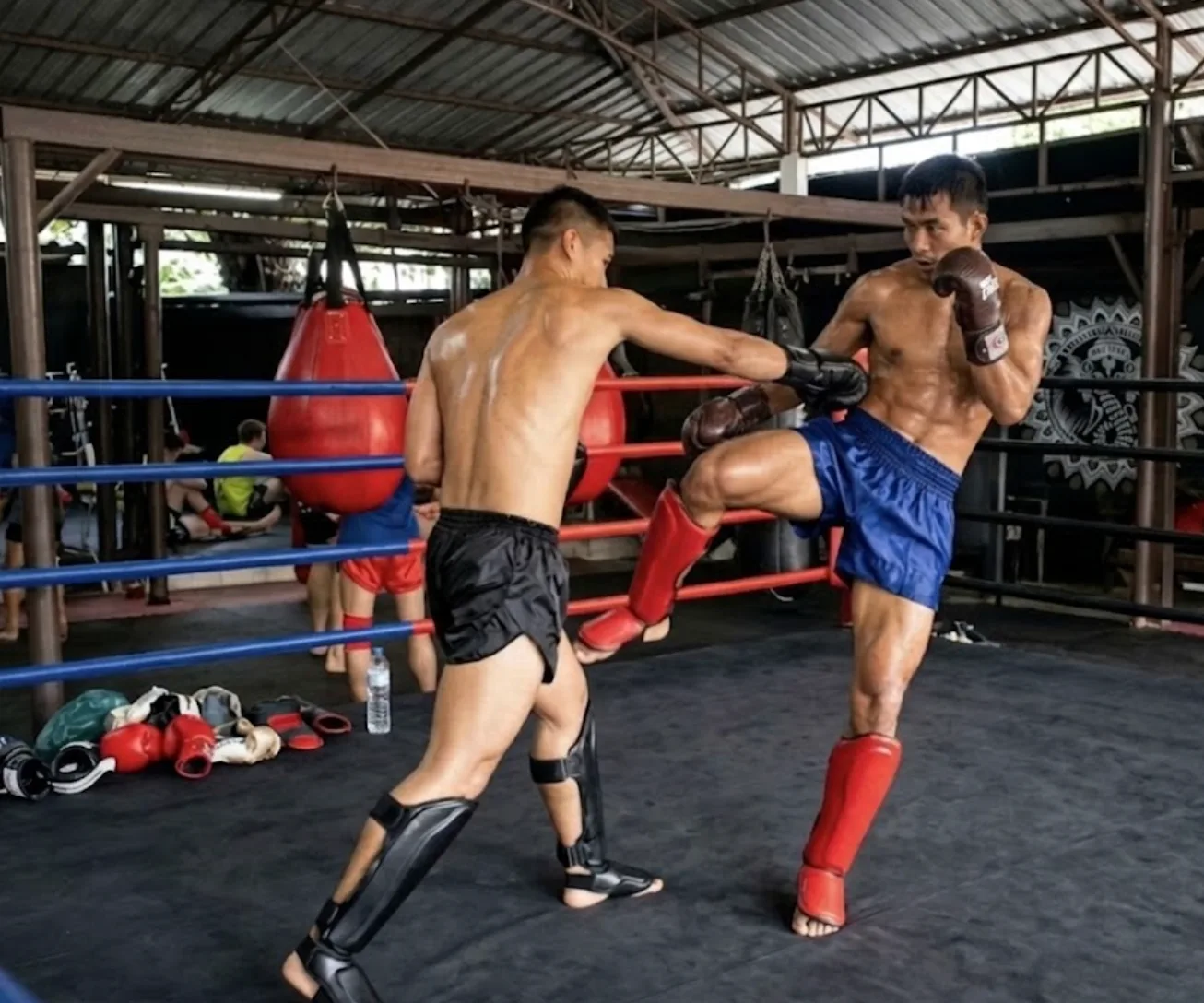
The striking surface in Muay Thai is the shin, specifically the lower third of the tibia. Kicking with the foot or ankle disperses impact over a softer, more fragile surface and produces a fraction of the force that a properly conditioned shin delivers.
The foot-kick happens when practitioners do not extend the leg sufficiently or when they are kicking from the wrong distance. If you are too close to the bag, the foot connects before the shin can reach. If the leg is not fully extending through the kick, the foot arrives first.
The fix is twofold. First, ensure you are kicking from the right distance. The shin should be the first thing to make contact, which means you need to be far enough away for the leg to be nearly fully extended at the point of impact. Step back further than feels intuitive. Second, actively think about driving the shin through the target rather than the foot. The mental cue of "shin first" sounds simple and is genuinely effective.
Problem Three: No Weight Commitment
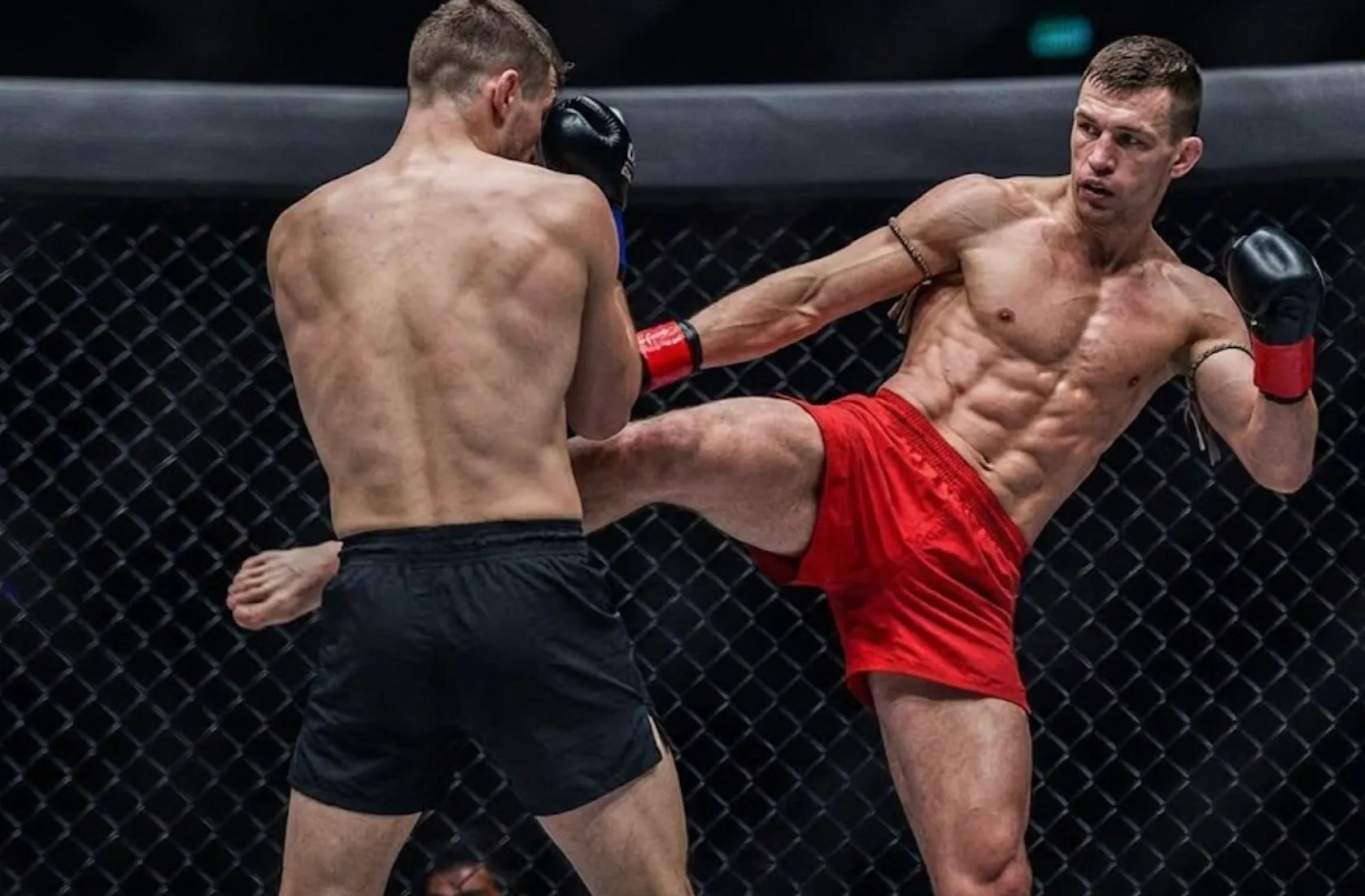
A kick that does not commit bodyweight into the target will always feel light, regardless of how fast the leg moves. Power in striking comes partly from velocity but also from mass behind the strike. If your bodyweight is still on your back foot at the moment of impact, you are kicking with a leg rather than a body.
In a properly thrown roundhouse kick, the practitioner's weight transfers into the kick as it lands, creating the sensation of falling into the target rather than reaching toward it. This is the quality that separates a kick that stings from one that moves the target.
The fix: Lean into the kick deliberately. Your kicking shoulder should be moving toward the target as the kick lands, not pulling away from it. This feels counterintuitive because you are moving toward something that is capable of hitting back, but the weight commitment is exactly what produces the force that makes the kick effective. Practise on the bag with the specific intention of following through rather than recoiling.
Problem Four: Pulling the Kick at Impact
Many beginners pull the kick back at the moment of contact, either from instinct or from a misunderstanding of controlled training practice. Pulling the kick converts what could be a fully committed strike into a tap. The bag barely registers it. The pad holder does not need to brace.
The fix is to mentally aim for a point beyond the target rather than the target surface itself. If you are kicking a bag, aim for a point 20 centimetres behind the bag. This is the technique that combat sport coaches across all disciplines use to correct pulling, because the motor pattern of reaching through the target prevents the deceleration that happens when the surface itself is the aim point.
Allow the leg to follow through after impact. A roundhouse kick that lands correctly will continue its arc slightly past the point of contact. A pulled kick stops at impact. The follow-through is the evidence that the kick was committed.
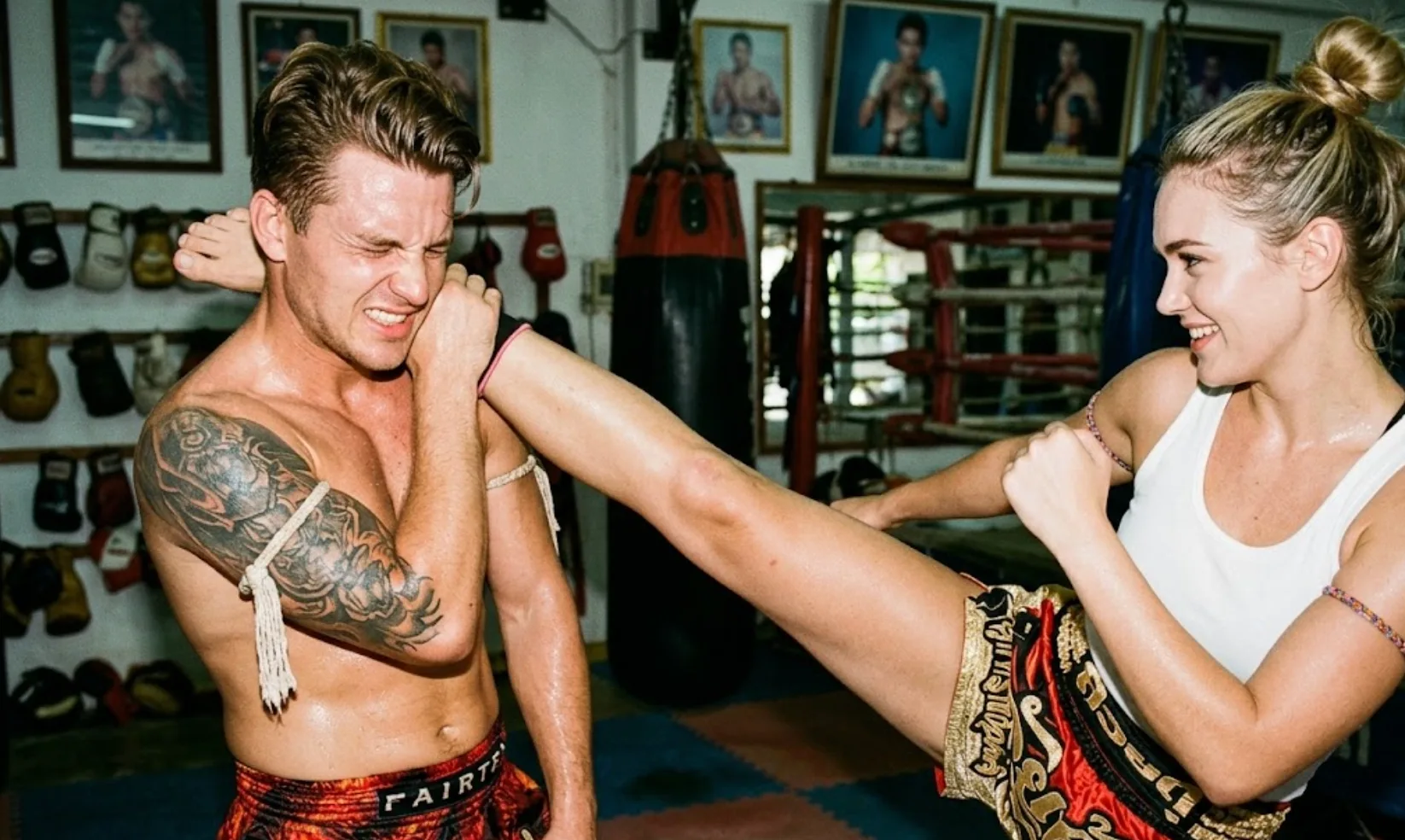
The One Drill That Fixes Most of This
Stand at the heavy bag. Throw roundhouse kicks at 50 percent power. Focus only on the sequence: pivot, rotate, shin through the target, follow through. No concern about speed or force. Just the sequence, done correctly, slowly enough that you can feel each stage.
Do 20 kicks per side like this. Then build to 60 percent and repeat. Then 70 percent.
The power emerges from correct mechanics executed consistently. Throwing harder kicks with broken mechanics does not produce power; it produces habit. Throwing mechanically correct kicks at moderate intensity, hundreds of times, builds the motor pattern that generates real force when the intensity increases.
Your kicks do not lack power because you are not strong enough. They lack power because the mechanics that produce power in a Muay Thai kick are not yet in place. Once they are, the kick changes completely. You will feel it when it happens. The bag will move differently and you will understand immediately what you were missing before.
Frequently Asked Questions
How do I make my Muay Thai kick more powerful?
Power in a Muay Thai roundhouse kick comes primarily from hip rotation rather than leg strength. The hip drives the kick, the leg follows. Most beginners generate power with the leg alone and bypass the hip rotation that produces real force. Practising the pivoting motion of the supporting foot and the corresponding hip turn in slow motion, with attention to the sequence, builds the motor pattern that generates power. Strength helps at the margins, but technique is the primary lever.
Why does my kick sound weak on the bag?
Several possible causes: you are kicking with the foot or ankle rather than the shin, the hip is not rotating through the kick, you are not committing your body weight into the strike, or you are pulling the kick at the last moment rather than following through. The shin is the striking surface in Muay Thai, and a kick that lands on the shin with proper rotation and weight commitment produces a fundamentally different impact than one thrown with the foot alone.
Should I kick hard in Muay Thai training?
In training, prioritise technique over power. A mechanically correct kick at 60 percent power is more valuable for development than a full-power kick with poor form. The power develops naturally as the mechanics become ingrained. Throwing hard kicks with poor technique grooves bad habits into the motor pattern and produces diminishing returns on effort. Save full-power kicks for bag work and sparring once the technique is solid.
How long does it take to develop a powerful kick in Muay Thai?
Most practitioners notice their kicks beginning to generate real impact somewhere between one and three months of consistent training, when the hip rotation starts to become intuitive rather than deliberate. A genuinely powerful kick, thrown with proper mechanics, committed weight transfer, and controlled timing, typically develops over six to twelve months of regular practice and correction. The timeline accelerates significantly with specific bag work and good coaching.
What is the most common mistake beginners make when kicking in Muay Thai?
Kicking with the leg rather than the hip. The roundhouse kick looks like a leg movement from the outside, and beginners treat it as one. In reality, the hip rotation initiates the kick and the leg follows. The supporting foot pivots, the hip turns, and the leg swings as a consequence. Beginners who skip the hip rotation are generating force with the hamstring and glute alone, which is a fraction of what the full rotational chain can produce.